
TL;DR:
- Walk-in freezers offer significantly larger storage capacity ideal for bulk purchasing and seasonal surges.
- Proper organisation, maintenance, and technology improve efficiency, food safety, and energy savings.
- Customizable designs and careful planning ensure flexible, cost-effective solutions for growing hospitality businesses.
Running a busy hospitality operation means every square metre of kitchen space counts. When your reach-in freezer fills up mid-service, or a last-minute bulk delivery has nowhere to go, the ripple effect hits your entire team. Refrigeration bottlenecks are one of the most underestimated drains on operational efficiency in restaurants, hotels, and catering businesses. Walk-in freezers offer a scalable, purpose-built answer to these daily pressures. In this article, we cover the practical advantages, key technology features, and a clear comparison to help you decide whether a walk-in freezer is the right investment for your business.
Table of Contents
- Greater storage capacity for growing businesses
- Improved efficiency and food safety through organisation
- Energy savings and advanced technology features
- Customisation and flexibility for business growth
- Comparing walk-in freezers to other commercial refrigeration solutions
- Our take: Avoiding common mistakes when investing in walk-in freezers
- Enhance your operations with EcoFrost’s walk-in freezer solutions
- Frequently asked questions
Key Takeaways
| Point | Details |
|---|---|
| Maximise storage efficiency | Walk-in freezers let you store more and purchase in bulk, reducing costs. |
| Streamline food safety | Organised storage means easier rotation and less waste in busy kitchens. |
| Slash running costs | Modern technology and maintenance deliver big energy savings compared to older units. |
| Grow with your business | Flexible walk-in freezer designs support future expansion and adaptation. |
Greater storage capacity for growing businesses
The first and most immediate advantage of a walk-in freezer is sheer volume. For any hospitality business handling large quantities of food, the limitations of reach-in units become apparent very quickly. A single reach-in freezer might hold enough stock for a quiet week, but it will let you down during peak seasons, large events, or when a supplier offers a bulk discount you cannot afford to miss.
Walk-in freezers provide significantly greater storage capacity than reach-in units, enabling bulk purchasing, reduced delivery frequency, and lower costs per cubic foot of storage. That last point is particularly important. When you calculate the true cost of storage per cubic foot, walk-in units consistently outperform their smaller counterparts, especially once you factor in the savings from buying in bulk and reducing the number of deliveries you need each week.
Here is what greater capacity means in practice for your operation:
- Bulk purchasing power: Buying larger quantities from suppliers typically unlocks better pricing. With a walk-in freezer, you have the space to act on those deals without compromising your existing stock.
- Fewer deliveries: Reducing delivery frequency lowers your logistics costs and frees up staff time spent receiving and checking in stock.
- Seasonal flexibility: Hospitality businesses face predictable surges around Christmas, summer holidays, and bank holidays. A walk-in freezer lets you build up stock in advance rather than scrambling for last-minute supply.
- Reduced spoilage risk: When stock is not crammed into an overfull reach-in, airflow remains consistent and temperatures stay stable, protecting product quality.
You can also explore the broader walk-in cooler benefits for chilled products alongside frozen goods, which gives you a complete picture of how cold storage can transform your back-of-house operations.
“A walk-in freezer is not just a storage upgrade. It is a structural change to how your business manages food supply, cost control, and kitchen workflow.”
Pro Tip: Before specifying the size of your walk-in freezer, map out your peak-week stock requirements and add a 20% buffer. Businesses consistently underestimate how quickly they fill available space once bulk buying becomes routine.
Improved efficiency and food safety through organisation
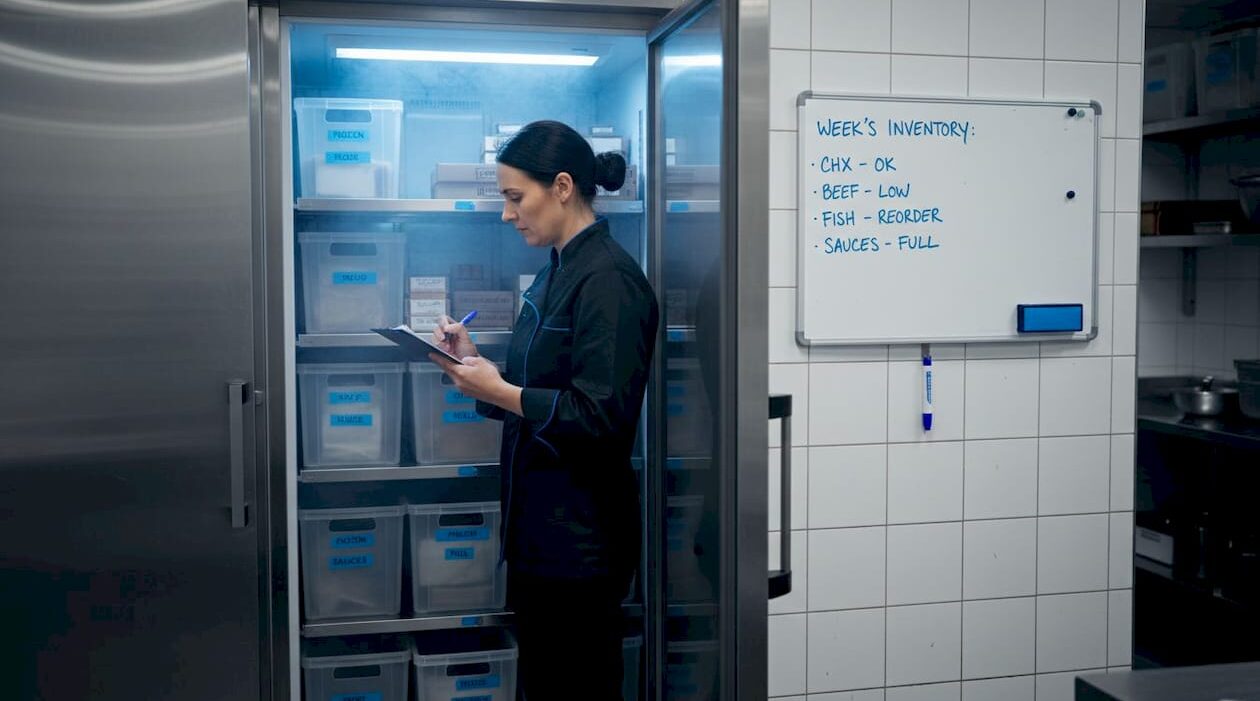
While increased capacity is a clear benefit, the way you organise that space impacts every aspect of kitchen efficiency. A walk-in freezer gives you the physical room to implement proper shelving systems, zone your stock by category, and create clear pathways for staff to move safely and quickly.
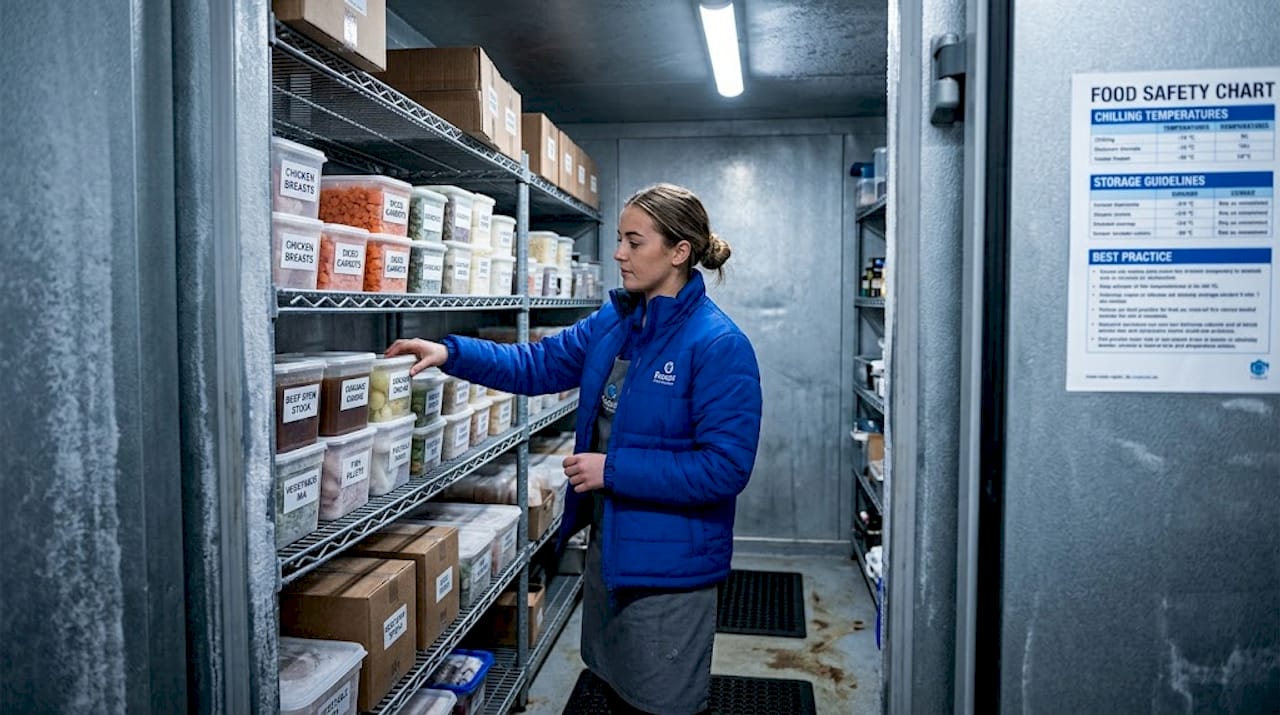
Systematic storage allows quick access, supports FIFO (First-In, First-Out) inventory rotation, reduces prep time, and cuts food waste. FIFO is a foundational principle in food safety management. It means older stock is always used before newer deliveries, which directly reduces spoilage and keeps you compliant with HACCP (Hazard Analysis and Critical Control Points) food safety standards.
Practical organisation strategies that work well in walk-in freezers include:
- Dedicated zones: Separate raw proteins, ready-to-eat items, and pre-prepared meals into clearly labelled sections to prevent cross-contamination.
- Colour-coded shelving or labels: Helps kitchen staff identify stock categories at a glance, speeding up retrieval during busy service periods.
- Date labelling systems: Pair with FIFO rotation to ensure nothing gets buried and forgotten at the back of a shelf.
- Clear pathways: Wide enough aisles inside the unit allow staff to move safely, especially when carrying heavy trays or containers.
Good walk-in freezer maintenance also plays a direct role in food safety. A well-maintained unit holds its set temperature consistently, which is critical for compliance with UK food hygiene regulations. Temperature fluctuations in an overworked or poorly maintained freezer can compromise entire batches of stock, leading to costly write-offs and potential regulatory issues.
For businesses that take restaurant refrigeration food safety seriously, a walk-in freezer with a proper organisation system is not optional. It is the foundation of a safe, efficient kitchen. You can also find useful organised freezer storage tips that apply directly to commercial settings and help you get the most from your available space.
Pro Tip: Assign a dedicated member of staff to manage stock rotation at the start of each shift. This small investment of time prevents costly waste and keeps your food safety records clean.
Energy savings and advanced technology features
Organisation and capacity contribute to efficiency, but energy-saving technology can further cut costs and improve sustainability. Modern walk-in freezers are far removed from the energy-hungry units of a decade ago. Advances in compressor technology, insulation materials, and control systems have made them significantly more economical to run.
VSD compressors and demand defrost yield 20 to 40% energy savings, and regular maintenance cuts energy use by a further 10 to 30%. VSD stands for Variable Speed Drive. Rather than running the compressor at full power continuously, a VSD compressor adjusts its output to match the actual cooling demand at any given moment. Demand defrost systems work similarly, only initiating a defrost cycle when sensors detect it is genuinely needed, rather than on a fixed timer.
| Feature | Traditional freezer | Modern walk-in with VSD |
|---|---|---|
| Compressor type | Fixed speed | Variable speed drive |
| Defrost system | Timer-based | Demand-based sensors |
| Estimated energy saving | Baseline | 20 to 40% reduction |
| Maintenance impact | Standard | Additional 10 to 30% saving |
| Insulation standard | Basic panels | High-density foam panels |
Additional technology features worth considering include:
- LED lighting: Consumes significantly less energy than fluorescent tubes and generates less heat inside the unit.
- Electronic door closers and strip curtains: Minimise cold air loss every time staff enter and exit, which is one of the biggest sources of energy waste in a busy kitchen.
- Remote temperature monitoring: Allows you to track conditions in real time via a connected device, alerting you immediately if temperatures drift outside safe ranges.
- Eco-friendly refrigerants: Modern units increasingly use lower global warming potential (GWP) refrigerants, supporting your sustainability commitments and keeping you ahead of evolving UK and EU regulations.
Investing in energy-saving freezer features at the point of installation is almost always more cost-effective than retrofitting later. And pairing your equipment with a structured refrigeration maintenance cost savings programme ensures those efficiency gains are sustained over the full lifespan of the unit.
Pro Tip: Ask your refrigeration supplier to provide an estimated annual running cost based on your expected usage pattern. This figure, compared against the purchase price, gives you a realistic payback period to justify the investment to stakeholders.
Customisation and flexibility for business growth
Efficient technology is just one angle. Walk-in freezers also offer a level of customisation that no reach-in unit can match. Whether you are fitting out a new kitchen, expanding an existing operation, or working with an awkward space, there is a walk-in configuration designed to meet your exact requirements.
Prefab units suit flexibility and expansion, while built-in designs maximise the use of specific spaces. Understanding the difference between these two approaches helps you make the right choice from the outset.
Prefabricated (prefab) walk-in freezers arrive as modular panel systems that are assembled on site. They are ideal for businesses that may need to relocate, expand, or reconfigure their cold storage in the future. Adding extra panels to increase the footprint is straightforward, making prefab units a practical choice for growing hospitality businesses.
Built-in walk-in freezers are constructed as a permanent part of the building fabric. They make the most of irregular spaces, low ceilings, or purpose-built cold rooms and are typically the preferred choice for new-build restaurants or large hotel kitchens where the layout is fixed.
Here is a structured approach to choosing between the two:
- Assess your space: Measure the available footprint carefully and identify any structural constraints such as drainage points, electrical supply locations, and ceiling height.
- Project your growth: If you anticipate expanding your operation within the next three to five years, a modular prefab system gives you the flexibility to scale without a full reinstallation.
- Consider your lease: If you are renting your premises, a prefab unit may be more practical as it can be removed or transferred if you relocate.
- Review your menu: High-volume frozen food operations need more capacity than businesses that rely primarily on fresh produce. Your menu mix should directly influence the size and configuration you specify.
- Consult a specialist: Before committing, speak with a refrigeration engineer who can assess your kitchen layout, workflow, and compliance requirements.
Exploring your freezer customisation options with a specialist ensures the unit you install is genuinely built around your operation, rather than a compromise.
Pro Tip: Think about door placement carefully during the design phase. A poorly positioned door creates traffic flow problems during service and increases the risk of cold air loss. Involve your head chef in the planning conversation.
Comparing walk-in freezers to other commercial refrigeration solutions
With customisation and advanced technology in mind, it is important to compare walk-ins directly with other refrigeration types to confirm they are the right fit for your business.
| Criteria | Walk-in freezer | Reach-in freezer | Under-counter freezer |
|---|---|---|---|
| Storage capacity | Very high | Moderate | Low |
| Upfront cost | Higher | Lower | Lowest |
| Running cost per cubic foot | Lower | Higher | Highest |
| Bulk purchasing suitability | Excellent | Limited | Not suitable |
| Workflow integration | High with planning | Moderate | Limited |
| Scalability | High (modular) | Low | Very low |
| Space requirement | Significant | Moderate | Minimal |
Walk-in freezers provide significantly greater storage capacity than reach-in units, and the cost-per-cubic-foot advantage becomes more pronounced as your volume grows. That said, a reach-in or under-counter unit remains a sensible choice for smaller operations with limited space and modest stock requirements.
Ask yourself these questions to determine the best fit:
- Do you regularly run out of freezer space during peak periods?
- Are you missing out on bulk purchasing discounts because you lack the storage to take advantage of them?
- Is your current freezer arrangement creating bottlenecks during service?
- Are you planning to expand your menu, covers, or catering output in the next two years?
- Do your current units require frequent maintenance or temperature recovery after heavy use?
If you answered yes to two or more of these, a walk-in freezer is almost certainly the right direction. The next step is to speak with a specialist about commercial freezer installation to understand the practical requirements for your specific site.
Our take: Avoiding common mistakes when investing in walk-in freezers
After years of commercial refrigeration projects across the UK, Qatar, and India, we have seen the same mistakes repeated by otherwise well-run hospitality businesses. The most common is focusing almost entirely on the purchase price while underestimating the total cost of ownership.
A walk-in freezer that is poorly sized, inadequately maintained, or installed without proper staff training will cost you far more over five years than a well-specified unit with a structured maintenance programme. Businesses that size down to save money on installation frequently find themselves back in the same position within eighteen months, either overfilling the unit or missing out on bulk buying opportunities.
Equally, over-sizing creates its own problems. A freezer that is too large for your actual stock levels runs less efficiently, as the compressor works harder to maintain temperature in a space that is not fully utilised. The sweet spot is a unit sized for your realistic peak demand, with a modest buffer for growth.
The insight that most business owners overlook is the value of involving your kitchen team in the planning process. Your head chef and senior kitchen staff know exactly how stock moves through your operation. They know which items are retrieved most frequently, where bottlenecks occur during service, and how deliveries are typically handled. That knowledge is invaluable when specifying shelf layouts, door positions, and zoning arrangements.
We also see businesses underestimate the importance of staff training. A walk-in freezer only delivers its full efficiency benefits if the team using it understands proper stock rotation, door discipline, and temperature monitoring. A brief induction at installation and a refresher every six months makes a measurable difference to running costs and food safety compliance.
For a broader view of what can go wrong and how to address it proactively, our guide to common refrigeration challenges is a practical resource for any hospitality operator.
Enhance your operations with EcoFrost’s walk-in freezer solutions
Armed with these practical insights, the next step is putting them into action with a refrigeration partner who understands the specific demands of hospitality operations.
EcoFrost has delivered professional refrigeration solutions to restaurants, hotels, catering businesses, and food service operators across the UK, Qatar, and India for over a decade. From initial consultation and site survey through to professional freezer installation and ongoing support, we work with you at every stage. If your existing equipment needs attention, our refrigeration repair services keep your operation running without costly downtime. Contact EcoFrost today to discuss your requirements and find the right walk-in freezer solution for your business.
Frequently asked questions
How do walk-in freezers help reduce food waste?
Walk-in freezers provide the space to implement proper FIFO stock rotation and clear labelling systems, which directly reduces spoilage. Systematic storage supports FIFO rotation and reduces both prep time and food waste across the operation.
Are walk-in freezers more energy efficient than reach-in units?
Modern walk-in freezers equipped with advanced technology can be significantly more economical to run per cubic foot of storage. VSD compressors and demand defrost yield energy savings of 20 to 40%, with regular maintenance delivering a further 10 to 30% reduction.
Can walk-in freezers be customised for unique kitchen spaces?
Yes, walk-in freezers are available in both prefab modular designs and fully built-in configurations. Prefab suits flexibility and expansion, while built-in units are ideal for maximising the use of a specific, fixed space.
What maintenance do walk-in freezers require?
Walk-in freezers need regular cleaning of condenser coils, door seal inspections, temperature log checks, and periodic professional servicing to maintain efficiency and regulatory compliance. A structured maintenance programme also extends the working life of the equipment considerably.
When should a business choose a walk-in over a reach-in freezer?
A walk-in freezer is the right choice when your storage demands consistently exceed reach-in capacity or when bulk purchasing is central to your cost strategy. Walk-ins provide significantly greater storage capacity, enabling lower costs per cubic foot and reduced delivery frequency for growing hospitality operations.
Recommended
- What is a walk-in cooler? Key benefits for hospitality
- Walk-in freezer maintenance: 5 steps for safer kitchens
- Hotel freezer maintenance: ensure safety and optimise performance
- Single Glass Door Display Commercial Freezer – EcoFrost Hvac
- Turnkey Production Kitchen with Take-Out Window / Retail | PepperLot