

TL;DR:
- Cooling expenses significantly impact retail energy costs, but many savings are entirely avoidable. Implementing targeted maintenance, system controls, and operational discipline can reduce energy use by up to 67.5%, leading to substantial long-term savings. Regular monitoring, staff engagement, and coordinated upgrades ensure sustained efficiency improvements and lower costs.
Cooling is one of the largest energy costs a retail business faces, yet a significant portion of that spend is entirely avoidable. Research suggests that retail fridge energy use could be reduced by as much as 67.5% compared to business-as-usual operation. That figure is not a distant ambition for large supermarket chains alone. It applies to independent shops, convenience stores, and food retailers across the UK right now. This guide sets out practical, proven steps you can take to assess where your cooling budget actually goes, act on the biggest opportunities, and sustain those savings over time.
Table of Contents
- Understand your cooling costs and opportunities
- Step-by-step actions to cut your cooling costs
- Optimise operations and prevent cooling waste
- Track, verify and optimise long-term savings
- Our take: Why most UK retailers miss easy cooling wins
- Professional support for lasting cooling savings
- Frequently asked questions
Key Takeaways
| Point | Details |
|---|---|
| Major savings possible | UK retailers can reduce cooling energy use by up to 67% with proven strategies. |
| Smart interventions first | Regular maintenance and controls yield fast returns before investing in new hardware. |
| Operational tweaks matter | Simple habits and staff engagement continuously reduce wasted energy. |
| Track improvements | Ongoing monitoring ensures cost reductions are real and sustained. |
Understand your cooling costs and opportunities
With the scale of potential savings made clear, the next step is to work out exactly where your store’s cooling budget goes. Many retailers pay high energy bills without knowing which specific piece of equipment or behaviour is responsible. That makes it very difficult to target spending reductions effectively.
Where cooling costs typically come from
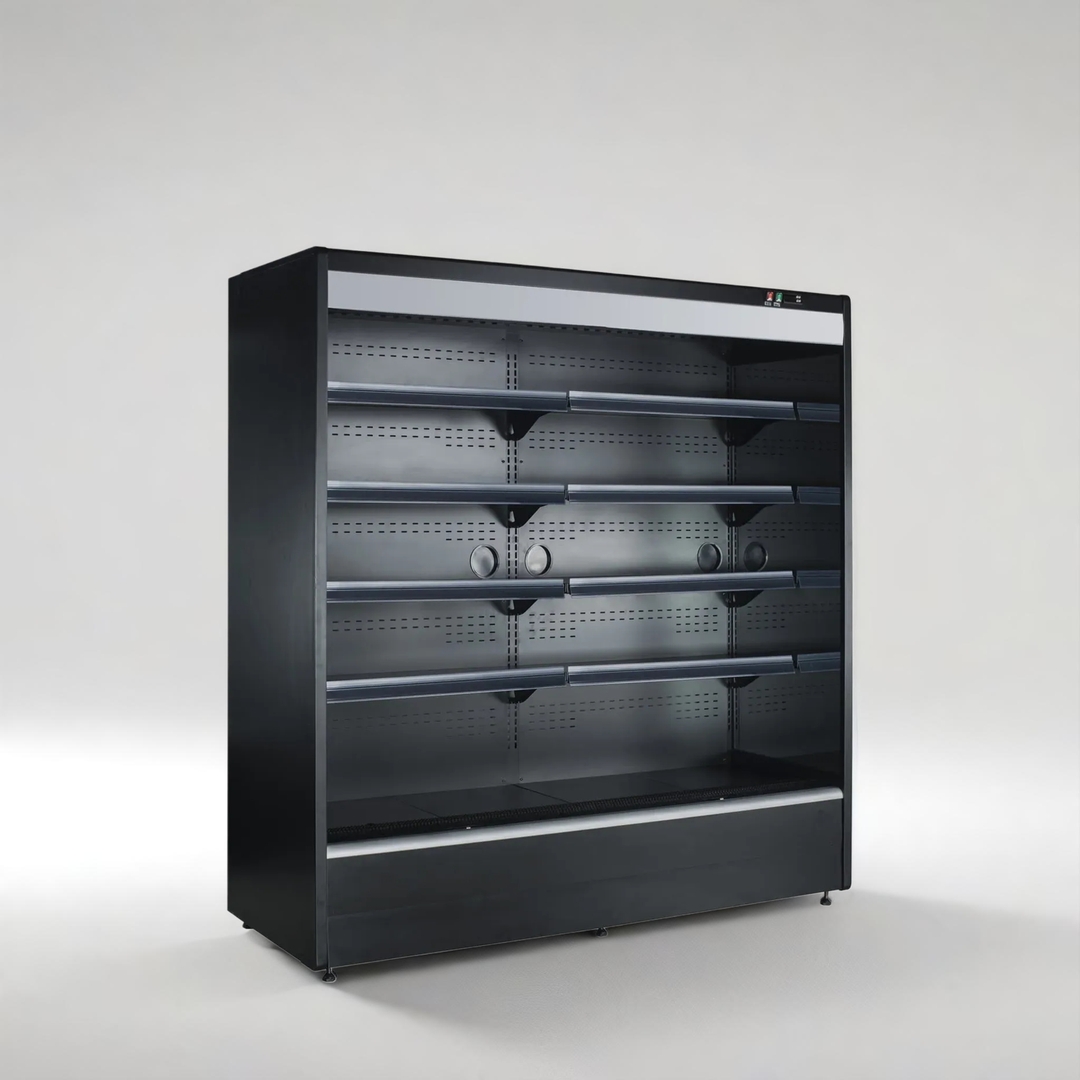
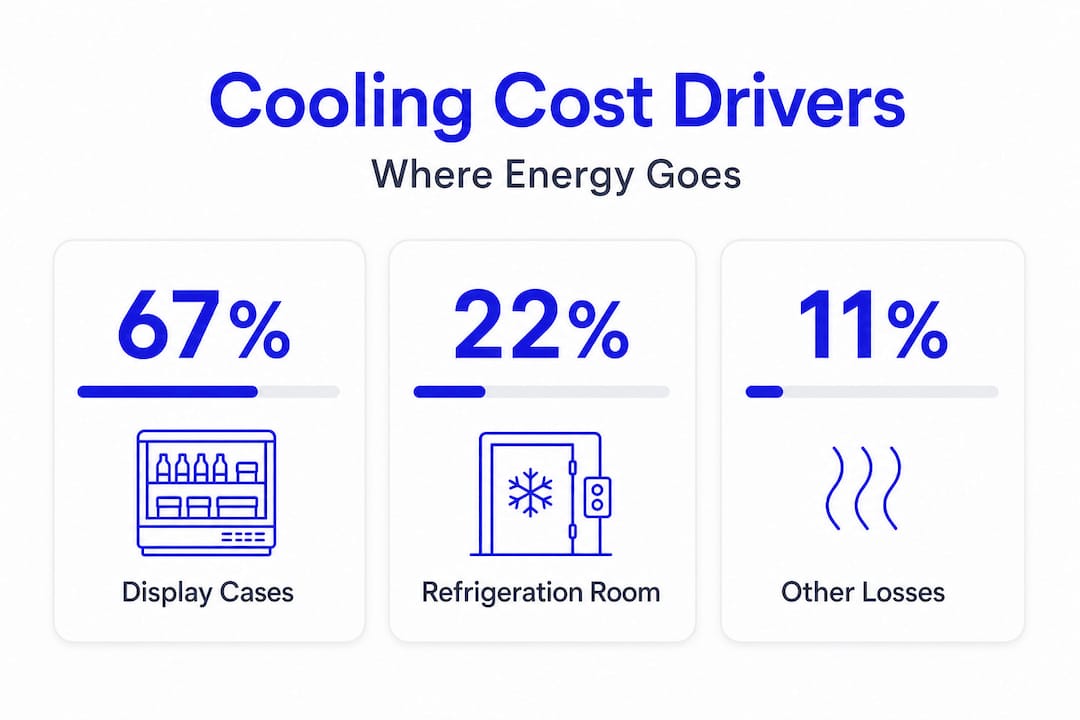
In a typical UK retail environment, cooling costs break down across several areas. Open display cabinets are among the worst offenders, because they work continuously against the ambient temperature of your sales floor. Ageing compressors draw far more electricity than modern equivalents. Poorly sealed door gaskets allow cold air to escape, forcing the system to run longer. And HVAC systems that are not coordinated with refrigeration end up competing against each other, driving up both electricity use and wear on components.
Retail refrigeration maintenance and system optimisation can deliver very large energy reductions, and the design of the cabinet and the wider system matters as much as the hardware itself. A well-designed layout with properly specified equipment will always outperform a poor layout with expensive components.
Signs your cooling system is working harder than it should:
- Your electricity bills have risen without a clear operational reason
- Temperature drift inside cabinets or display cases between morning and afternoon
- Compressors running almost continuously rather than cycling on and off
- Customer complaints about warm products or unpleasant odours near display units
- Visible ice build-up on evaporator coils or frosted door frames
- Condensation forming on the outside of cabinet doors
Exploring cost-efficient refrigeration solutions can help you identify which parts of your operation have the most room for improvement before you commit any capital.
Main cooling cost drivers at a glance
| Component | Example source of loss | Quick check method |
|---|---|---|
| Display cabinets | Open fronts, worn door seals | Feel for cold air escaping at door edges |
| Refrigeration compressors | Oversized or undersized units running inefficiently | Check run hours against manufacturer spec |
| Evaporator coils | Ice build-up blocking airflow | Inspect coils monthly for frost |
| HVAC units | Oversized systems short-cycling | Review runtime logs from building management system |
| Pipework and insulation | Heat gain through uninsulated lines | Check pipe insulation for gaps or damage |
Pro Tip: A system that is “just working” is not necessarily efficient. A compressor that keeps temperature stable but runs for 22 hours a day is wasting money compared to a well-maintained unit cycling for 14 hours. The difference might not show up in product temperature, but it absolutely shows up on your electricity bill. Looking at refrigeration efficiency gains through targeted upgrades can help you close that gap.
Step-by-step actions to cut your cooling costs
Once you have identified where losses occur, take these practical steps to curb them. Some deliver returns almost immediately. Others require planning but pay back significantly over two to three years.
Immediate and short-term actions
-
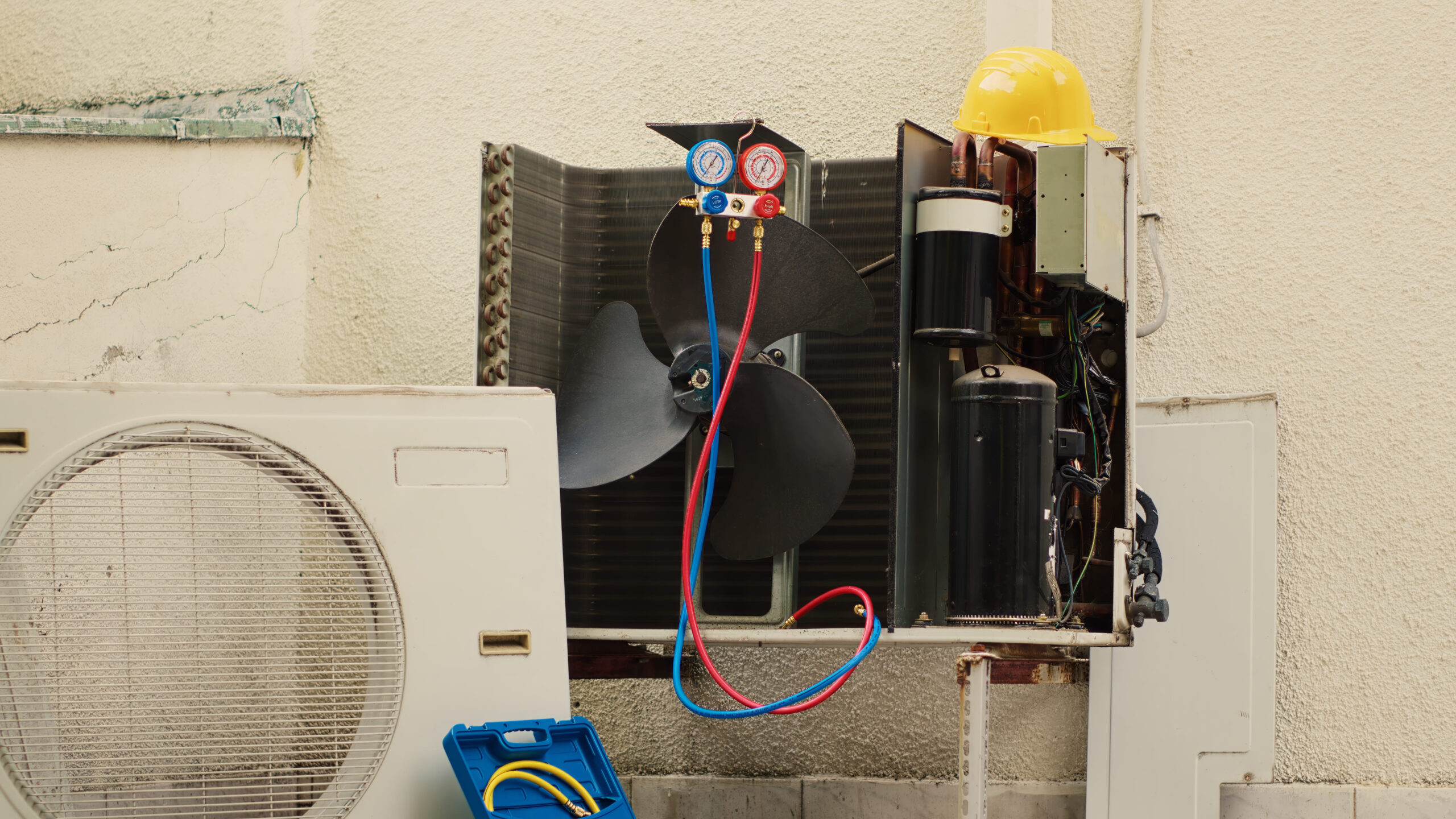
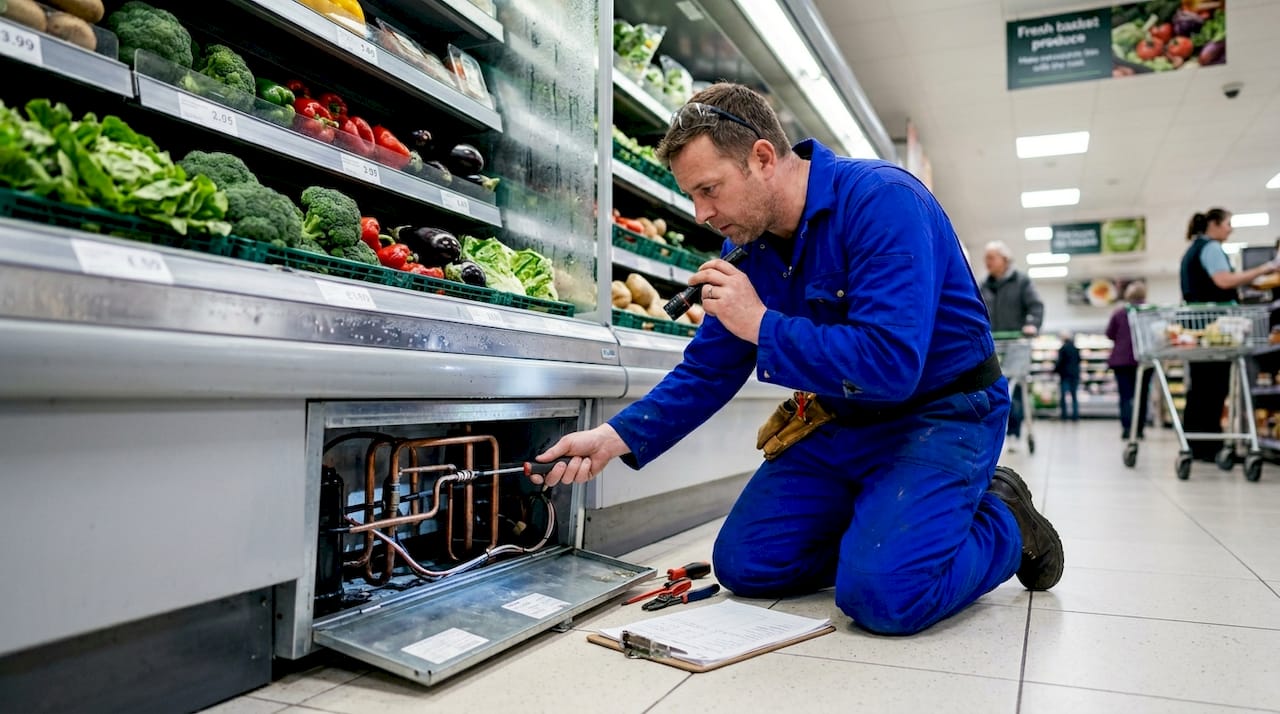
Schedule a full maintenance check. Clean condenser coils, inspect door seals and gaskets, check refrigerant levels, and verify thermostat calibration. Reducing unnecessary runtime and aligning operation to real demand is one of the fastest ways to cut bills without spending heavily on new equipment.
-
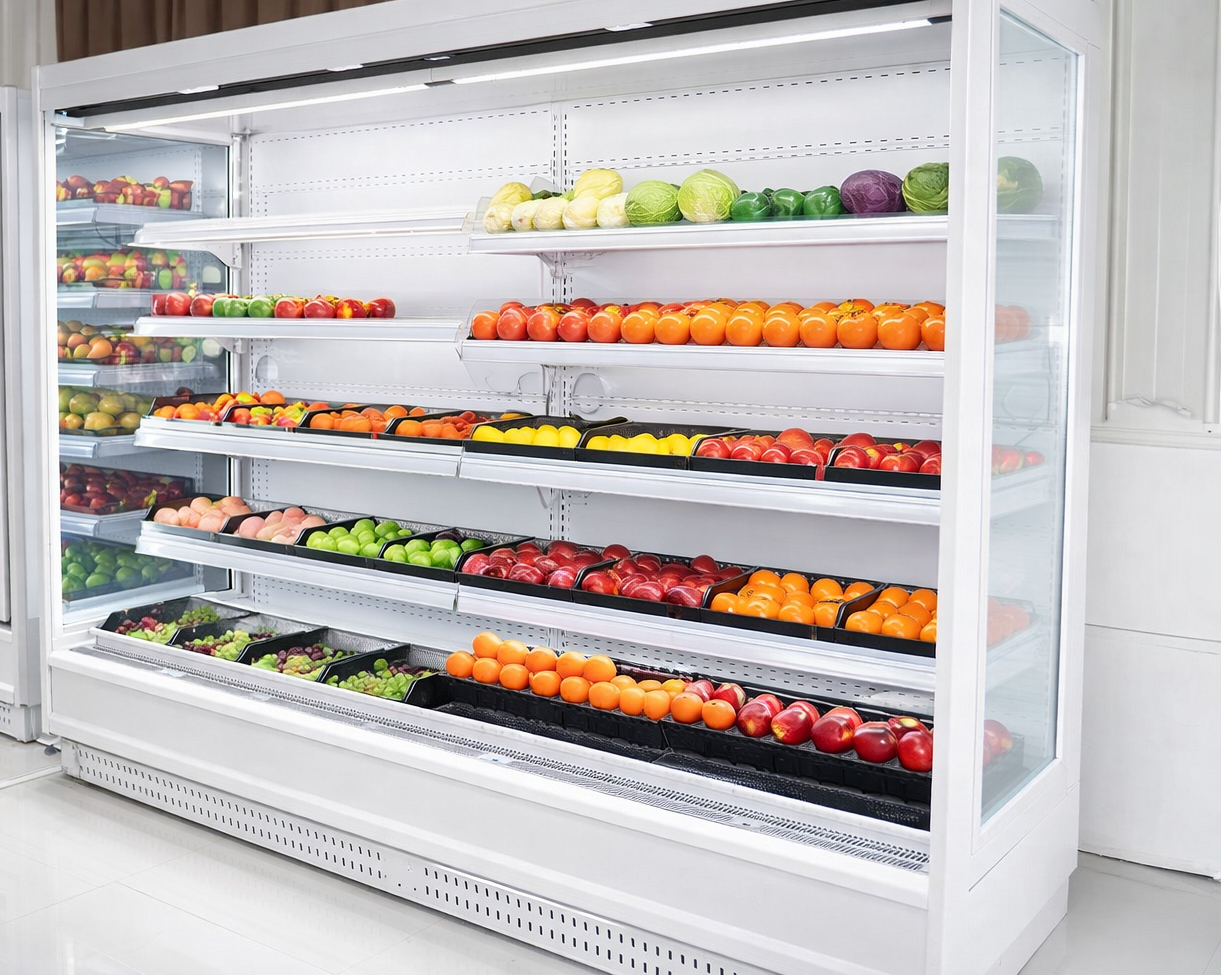
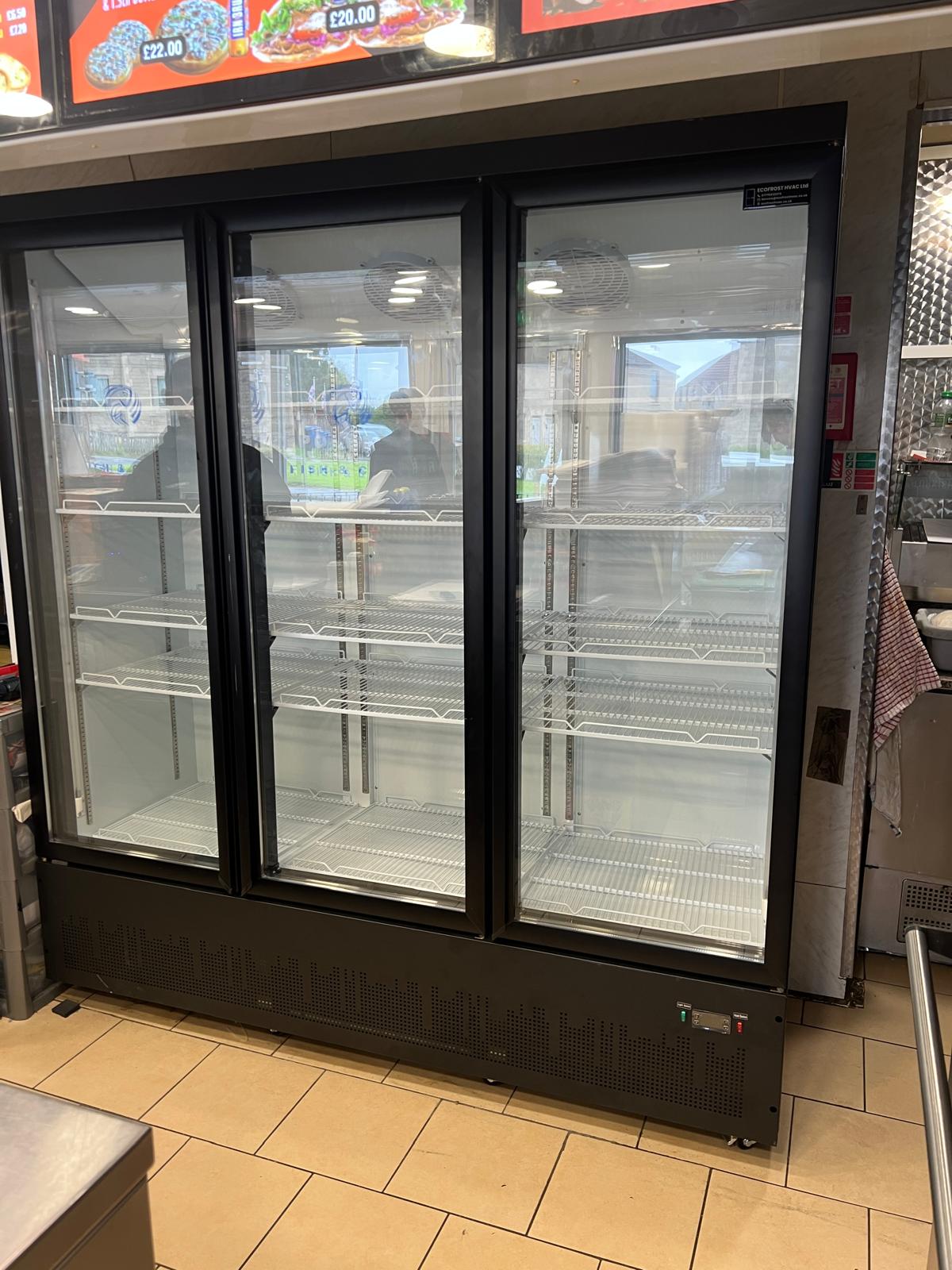
Install or upgrade door closers on refrigerated display cases. Open-fronted cabinets can account for a disproportionate share of your refrigeration load. Adding doors or night blinds to open cases typically cuts their energy use by 30 to 40%.
-
Review setpoint temperatures. Many retailers set temperatures lower than necessary for food safety. Raising a chiller from 1°C to 3°C, where product specifications allow, reduces the system’s workload noticeably.
-
Install smart controls. Smart controls for refrigeration allow you to monitor temperatures remotely, schedule defrost cycles at off-peak times, and receive alerts before a fault becomes a breakdown. These systems typically pay for themselves within 12 to 18 months.
-
Train your team. Staff who understand why closing refrigerator doors matters, and who report warm cabinets rather than ignoring them, reduce your energy use and protect your stock.
-
Plan for refrigerant upgrades. Older systems using high-GWP (global warming potential) refrigerants are less efficient and face tighter regulatory pressure. Transitioning to lower-GWP alternatives, including CO2 systems, supports both compliance and savings. Sustainable refrigeration guidance covers what these transitions involve and what to expect.
-
Coordinate refrigeration and HVAC. These two systems interact constantly. Refrigeration generates heat that your HVAC must remove. Aligning their operation reduces the total cooling load on both, often cutting combined energy use by 10 to 20%.
Simple versus advanced measures
| Measure | Typical investment | Disruption level | Typical energy saving |
|---|---|---|---|
| Maintenance and seal checks | Low | Minimal | 5–15% |
| Night blinds on open cabinets | Low to medium | Low | 15–30% |
| Smart monitoring and controls | Medium | Low | 10–20% |
| Cabinet door retrofits | Medium | Moderate | 20–40% |
| High-efficiency compressor upgrade | High | Moderate | 25–40% |
| CO2 refrigeration system and heat recovery | High | Significant | Up to 60% energy savings |
Pro Tip: Coordinate your refrigeration and HVAC upgrades rather than tackling them separately. A refrigeration engineer and an HVAC specialist who work together can identify overlap and avoid situations where one improvement inadvertently creates load on another system. This joined-up approach is how you get the best return from capital investment.
Optimise operations and prevent cooling waste
Beyond big upgrades, day-to-day actions and regular upkeep can lock in efficiency gains and avoid new sources of waste. Operational discipline is often undervalued, but the evidence consistently shows it makes a meaningful difference.
Day-to-day operational checklist
- Clean condenser coils and filters monthly. Dirty coils are one of the most common causes of inefficiency. A build-up of dust and grease forces the compressor to work harder and run longer. Read practical refrigeration cleaning advice to make this a routine task your team can manage in-house between service visits.
- Check door seals weekly. A damaged gasket on a display case or cold room door lets warm air in continuously. This is one of the easiest faults to spot and one of the cheapest to fix.
- Monitor runtime and temperature logs. If a cabinet’s compressor runtime is increasing week on week for no clear reason, something has changed. Act on it before it becomes a fault.
- Set optimal temperatures and stick to them. Do not lower temperatures further than your products require. Every unnecessary degree costs energy.
- Schedule defrost cycles during off-peak hours. Running defrosts overnight rather than during trading hours reduces the energy demand during peak tariff periods.
- Arrange planned maintenance visits every six months at minimum. Planned visits catch developing problems early, preventing expensive emergency callouts and stock losses. Regular refrigeration maintenance also supports compliance with food safety and F-Gas obligations.
Important: Adjusting your operating temperature by just 1°C in the right direction can reduce energy consumption by around 2 to 4% on a per-unit basis. Across a store with multiple cabinets and cold rooms, those gains add up quickly. And heat recovery systems can go further still, reducing total HVAC energy consumption by 40 to 60% by capturing waste heat from refrigeration and redirecting it to space heating or hot water.
Why staff engagement matters more than you might think
Every member of your team who walks past an open chiller door, notices a warm cabinet, or fails to report a faulty seal is contributing to cooling waste. Staff training does not need to be lengthy or technical. A 15-minute briefing on why doors need to stay closed, how to spot a problem, and who to tell makes a genuine difference. Cooling systems aligned to actual demand perform dramatically better than those fighting against poor operational habits. Make energy awareness part of your onboarding process and review it periodically.
Track, verify and optimise long-term savings
After implementing savings measures and optimising routines, success depends on measuring, verifying, and sustaining gains. Without tracking, it is impossible to know whether your investment has delivered the expected return.
Setting up a simple monitoring routine
-
Install sub-metering on your main cooling circuits. This separates refrigeration and HVAC energy from your total electricity use, giving you clear visibility of where consumption sits and how it changes.
-
Record baseline data before making changes. Note monthly energy consumption, average run hours, and any fault call-outs. This gives you a genuine comparison point after you implement improvements.
-
Review results quarterly. Compare current consumption to your baseline. If savings are lower than expected, investigate whether the improvement was implemented fully or whether another issue has emerged.
-
Use temperature logging devices inside cabinets. These confirm that your products are being kept within safe ranges and that efficiency improvements have not compromised food safety.
-
Set a yearly energy review as a fixed operational task. Technology improves, tariffs change, and usage patterns shift. An annual review ensures your system remains tuned to your actual needs rather than the conditions that existed when it was installed.
Statistical callout: System monitoring and optimisation can deliver large and ongoing reductions in energy use. For a mid-sized UK convenience store spending £2,000 per month on electricity, even a 20% reduction in cooling energy translates to £4,800 per year back into the business. A 40% reduction, which is achievable with a combination of the measures above, pushes that figure closer to £9,600 annually.
What to do if results disappoint
If your energy bills are not falling as expected after three to six months, do not assume the measures have failed. First, check whether all planned changes were actually implemented fully. Second, look for new sources of waste such as a recently damaged seal or a new piece of equipment added to the circuit. Third, consult your refrigeration troubleshooting guide to rule out developing faults. If you still cannot identify the issue, bring in a specialist for a fresh assessment. And keeping an eye on commercial refrigeration trends in 2026 ensures you do not miss newly available technologies that could improve your position further.
Our take: Why most UK retailers miss easy cooling wins
To close, it is worth challenging a common retail mindset that quietly limits savings potential.
In our experience working with retailers across the UK, the most common barrier to energy savings is not cost. It is the belief that if a system is keeping products cold and customers are not complaining, everything is fine. This “if it isn’t broken, don’t fix it” mentality feels rational but quietly costs money every single month.
Many retailers maintain cooling for reliability rather than efficiency, which leaves very significant energy savings unrealised. A system that has been running without incident for five years may also have been consuming 25% more electricity than necessary for four of those years. Nobody notices because the product temperature is acceptable and there are no breakdowns. The waste is invisible.
The retailers we see making the most progress are not necessarily those with the largest budgets. They are the ones who treat cooling as a managed asset rather than a fixed cost. They review it regularly, invest in monitoring, and ask the question “could this be running better?” rather than settling for “is it still running?”
The gap between a system that works and a system that is genuinely optimised can represent tens of thousands of pounds over a five-year period. Lessons from upgrading retail refrigeration consistently show that the retailers who act on this proactively come out significantly ahead of those who wait for a fault to force their hand.
Professional support for lasting cooling savings
If you want lasting improvement beyond today’s quick wins, expert help can ensure you never return to wasteful cooling habits.
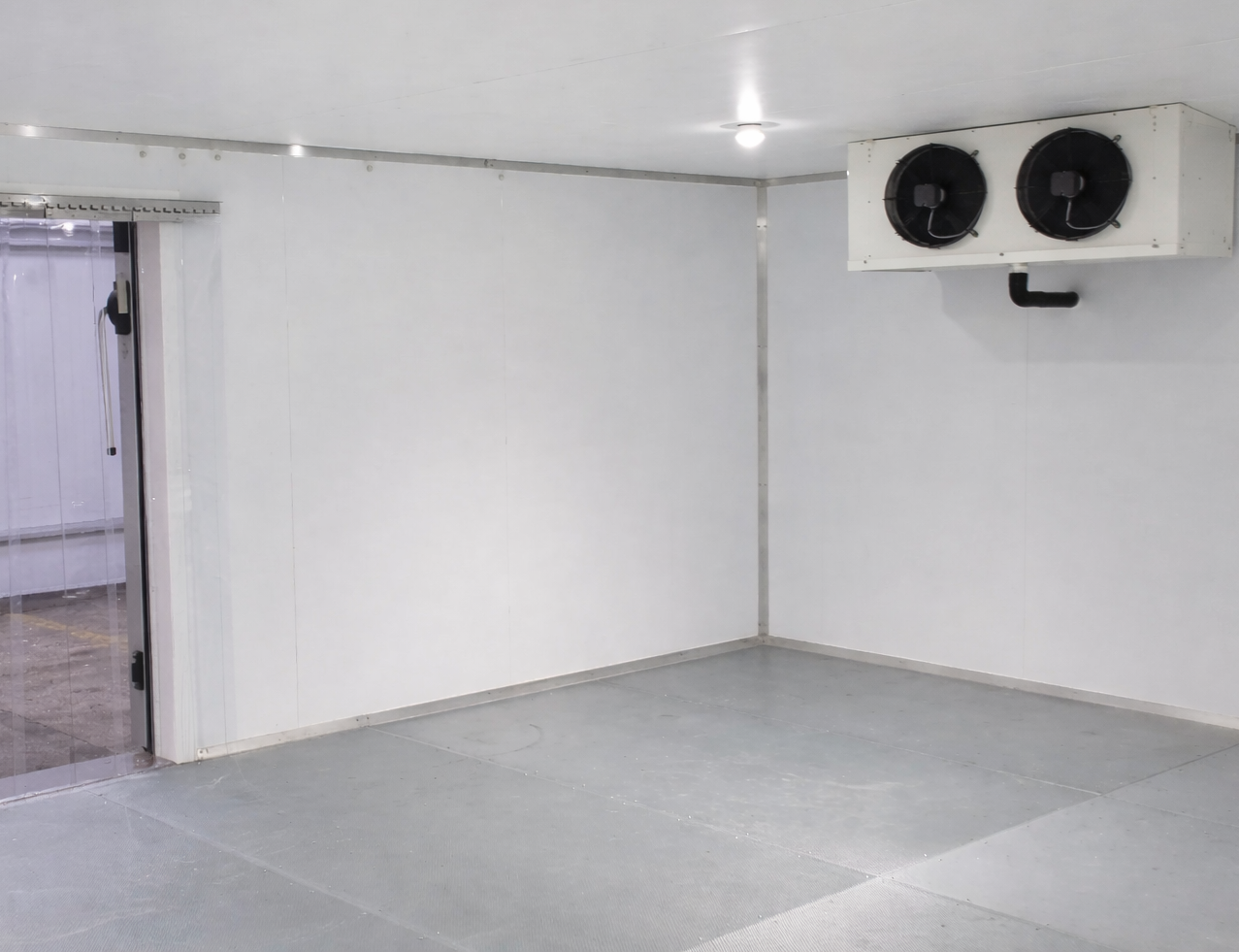
At EcoFrost HVAC, we design and install refrigeration and cooling systems built around your specific operation, not a generic specification. Whether you need professional cold room solutions designed to fit your space, fridge and freezer installations specified for energy performance, or a review of your existing setup to identify savings, our F-Gas certified engineers bring the same level of care to every project. We also back every installation with ongoing maintenance and emergency cover. If you are ready to move from reactive management to genuine efficiency, explore our cost-efficient refrigeration solutions and get in touch with the team today.
Frequently asked questions
How much can UK retailers realistically save on cooling energy?
UK retailers can cut cooling energy use by up to 67.5% with best-practice measures compared to business-as-usual setups. The exact savings depend on the current state of your system and which improvements you prioritise.
What is the best single action to reduce retail cooling bills fast?
Improving maintenance and system controls delivers quick, significant savings without major capital investment, as large cuts are possible with targeted operational fixes alone. Start with a full maintenance check and review of your setpoint temperatures.
Should I prioritise upgrading refrigeration or improving store HVAC?
Choose based on your main cooling cost: refrigeration typically yields bigger savings, but HVAC upgrades matter in larger or open-plan stores. The best measures differ depending on whether your dominant cooling load comes from refrigeration or air conditioning.
How does heat recovery help reduce cooling costs in supermarkets?
Heat recovery captures waste heat from refrigeration to cut other energy bills, with 40 to 60% reductions in HVAC energy consumption possible if you have a suitable heating demand. It is particularly effective in stores with significant hot water or space heating requirements.