
Choosing commercial refrigeration that preserves product quality whilst controlling energy costs remains one of the most critical decisions for hospitality and retail operators. With refrigeration consuming up to 70% of electrical power in food operations, selecting the wrong system impacts both profitability and sustainability goals. This guide walks you through proven selection strategies, from understanding core refrigeration technology to implementing energy-saving upgrades that deliver measurable returns. You’ll discover how to match compressor types to operational needs, prioritise natural refrigerants, and maintain systems for reliable long-term performance.
Table of Contents
- Understand The Core Role And Technology Of Commercial Refrigeration
- Evaluate Refrigeration System Types And Compressor Options
- Prioritise Energy Efficiency And Sustainability In Your Selection
- Implement Best Practices For Reliability And Cost-Effective Operation
- Discover EcoFrost’s Tailored Commercial Refrigeration Solutions
- Frequently Asked Questions
Key takeaways
| Point | Details |
|---|---|
| Commercial refrigeration safeguards product safety | Proper cooling maintains food integrity and quality from production through point of sale |
| Compressor selection impacts efficiency | Matching reciprocating, rotary, scroll, or screw compressors to your workload optimises performance |
| Energy upgrades deliver substantial savings | Implementing efficiency measures can reduce electricity consumption by 20–40% with rapid payback |
| Natural refrigerants improve sustainability | Ammonia and CO₂ systems lower emissions whilst cutting energy use by 15–30% |
| Maintenance extends equipment lifespan | Regular servicing and smart controls prevent failures and maintain peak efficiency |
Understand the core role and technology of commercial refrigeration
Retail refrigeration systems preserve perishable products throughout the supply chain, ensuring food safety and maintaining aesthetic appeal from production facilities to customer-facing displays. Without reliable cooling, bacterial growth accelerates, product quality deteriorates, and businesses face costly stock losses alongside potential health violations. Understanding how refrigeration technology works empowers you to evaluate equipment features and energy performance when making purchasing decisions.
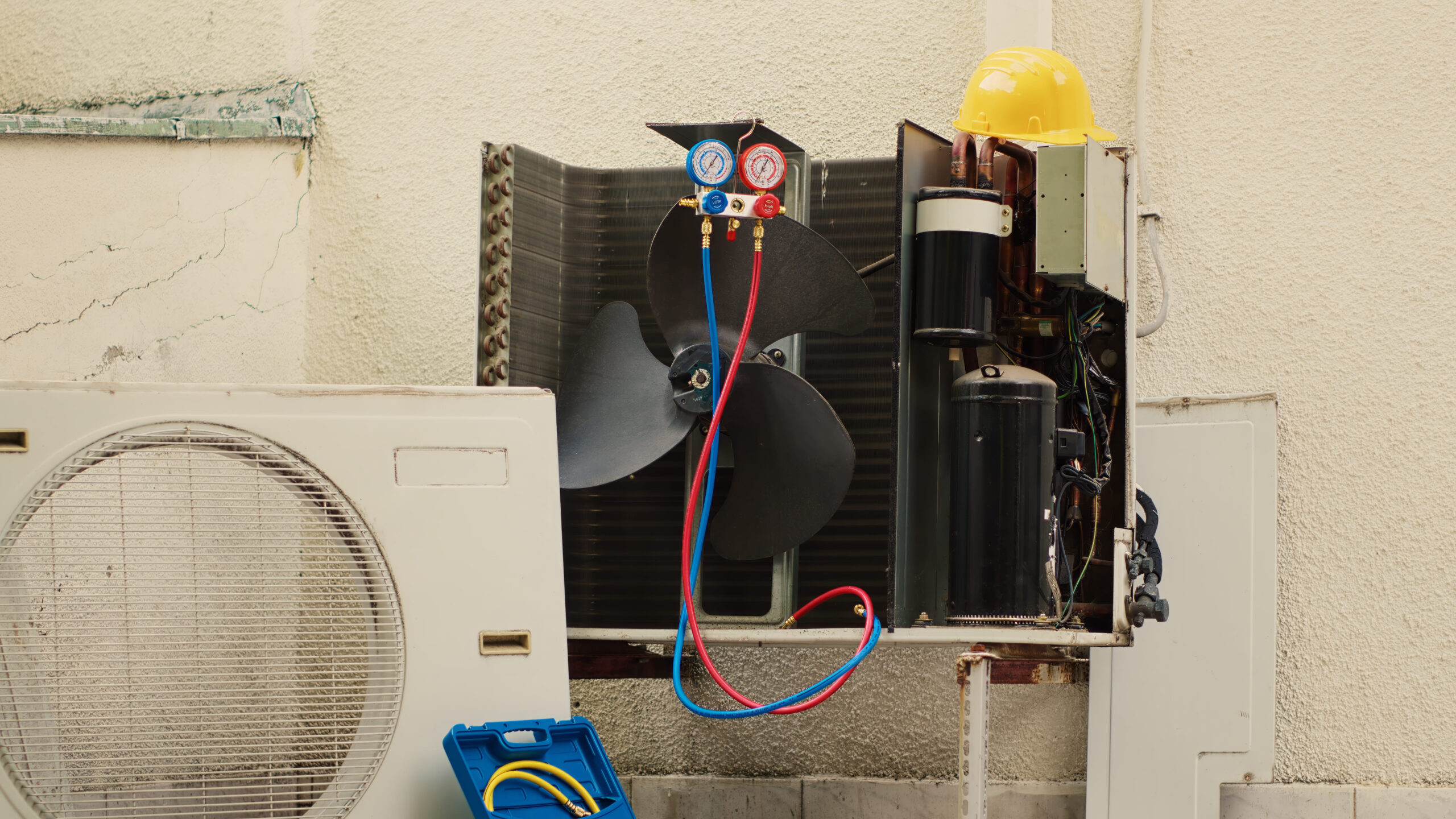
The vapor-compression refrigeration cycle forms the foundation of commercial cooling systems. This continuous process involves four essential steps that work together to extract heat from your storage space. First, liquid refrigerant absorbs heat inside the cabinet, causing it to evaporate into gas. Second, the compressor pressurises this gas, raising its temperature significantly. Third, the hot compressed gas releases heat to the surrounding environment through condenser coils, returning to liquid form. Fourth, the refrigerant expands through an expansion valve, dropping in temperature before re-entering the evaporator to absorb more heat.
Grasping these fundamentals helps you ask informed questions when evaluating systems:
- What refrigerant does the system use, and how does it impact efficiency?
- How does the compressor type affect energy consumption during your operating hours?
- What maintenance requirements keep the cycle running optimally?
- How do cabinet insulation and door seals prevent heat infiltration?
“The efficiency of the entire refrigeration system depends on how well each component performs its role in the vapor-compression cycle. A weak link anywhere reduces cooling capacity and increases energy waste.”
Business owners who understand refrigeration basics make better decisions about system sizing, placement, and ongoing operational costs. You’ll recognise when a sales pitch focuses on genuine performance advantages versus superficial features that add cost without delivering value.
Evaluate refrigeration system types and compressor options
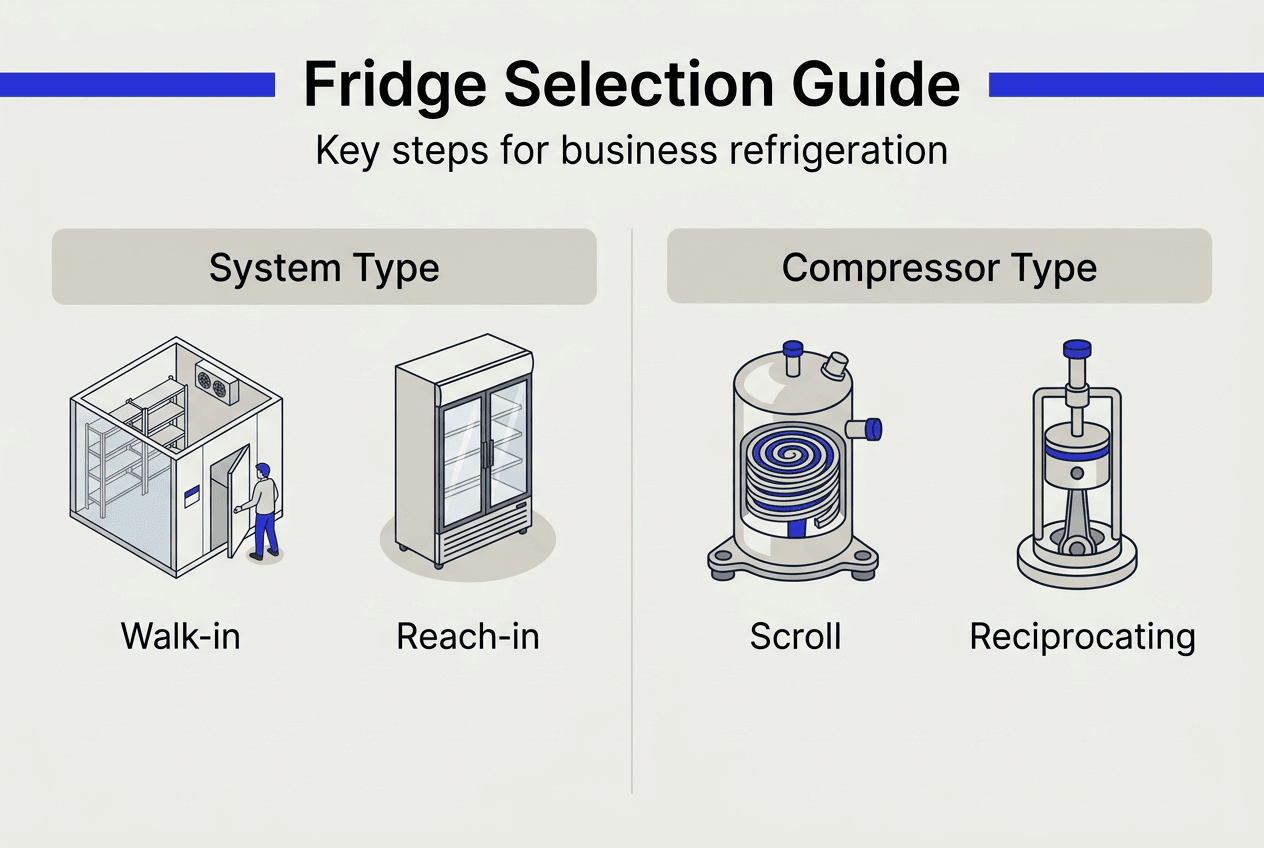
Selecting the appropriate compressor type directly influences your system’s reliability, energy efficiency, and maintenance requirements. Four main compressor types serve different commercial applications, each with distinct operational characteristics that suit specific business environments.
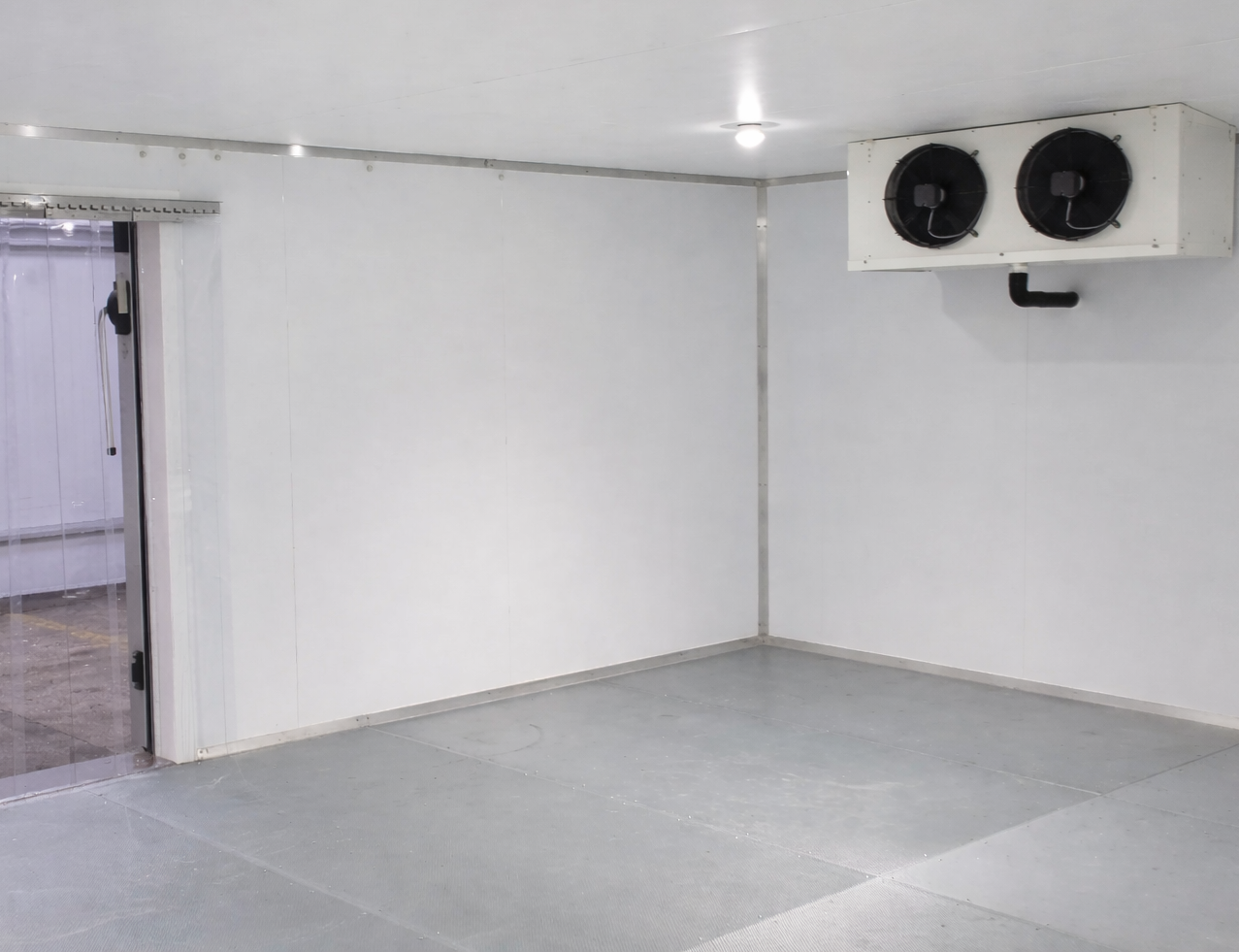
Reciprocating compressors excel in heavy-duty restaurant refrigeration and walk-in coolers where robust performance matters more than compact design. These piston-driven units handle demanding workloads reliably but generate more noise and vibration than alternatives. Rotary compressors prioritise space efficiency and quiet operation, making them ideal for front-of-house applications where customer experience matters. Their compact footprint suits tight kitchen layouts common in urban hospitality venues.
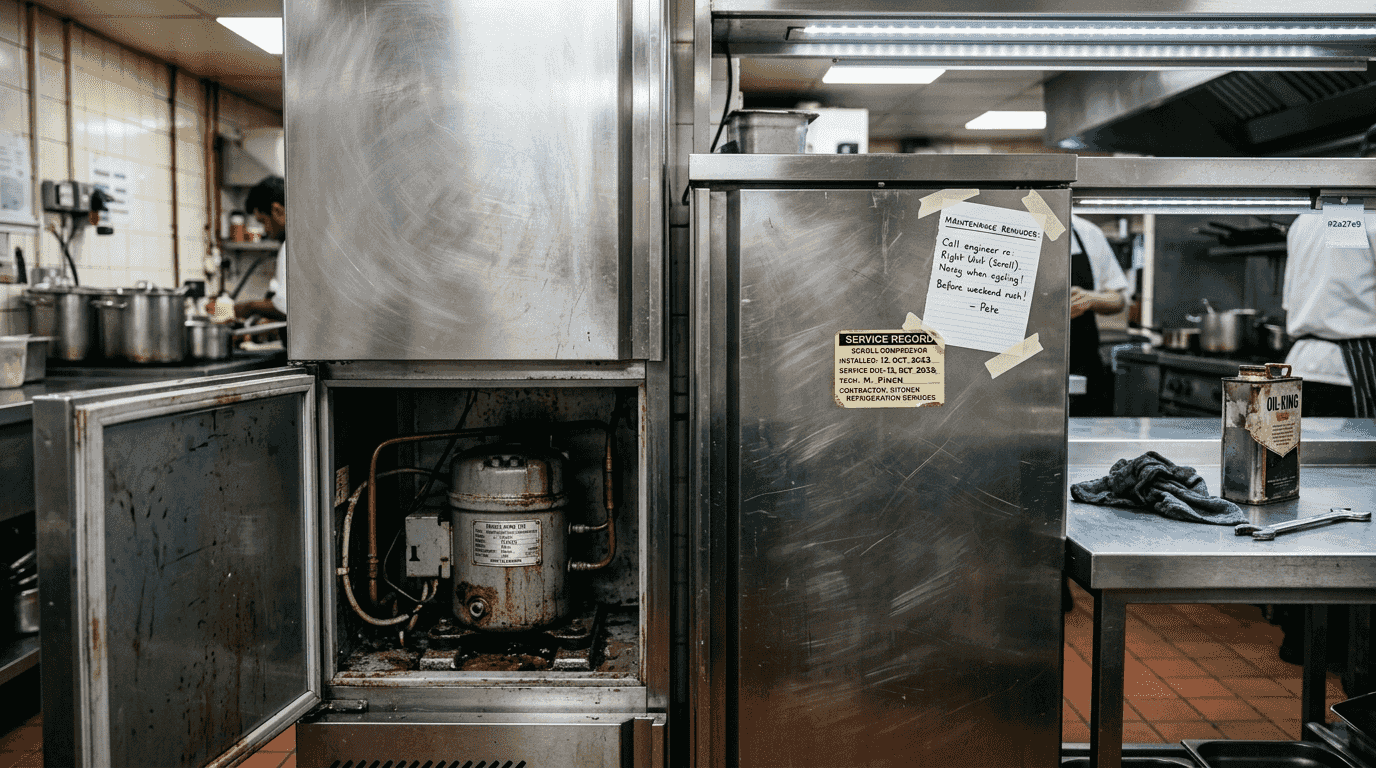
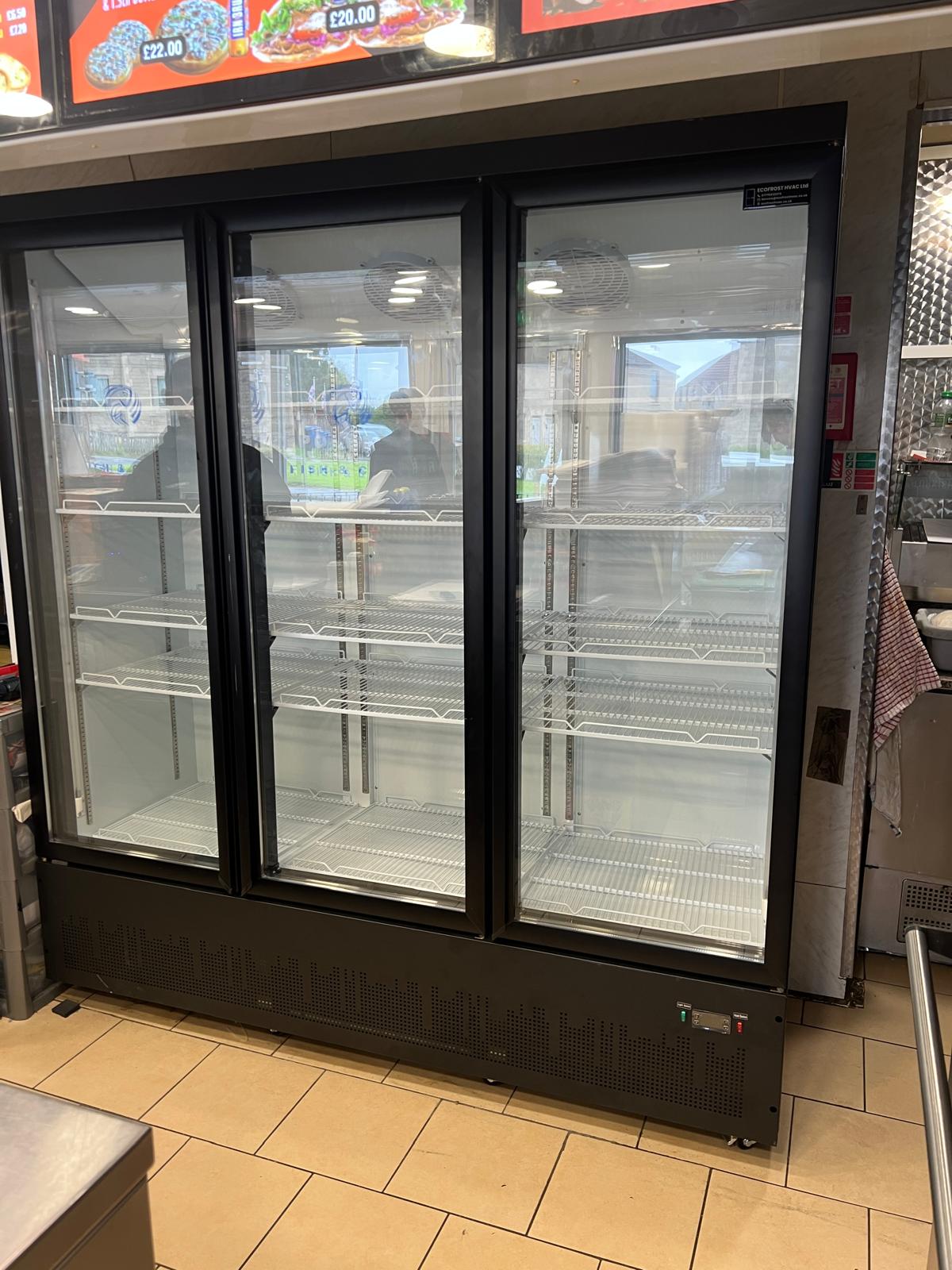
Scroll compressors deliver exceptional efficiency across versatile applications, from double door commercial catering fridges to medium-sized cold rooms. Their smooth operation reduces wear whilst maintaining consistent temperatures. Screw compressors serve large-scale refrigeration needs in distribution centres and major food processing facilities, where continuous high-capacity cooling justifies their higher initial investment.
| Compressor type | Best applications | Key advantages | Considerations |
|---|---|---|---|
| Reciprocating | Walk-in coolers, heavy-duty kitchens | Robust, proven technology | Higher noise, more vibration |
| Rotary | Compact spaces, customer-facing areas | Quiet, space-efficient | Lower capacity range |
| Scroll | General refrigeration, single door units | High efficiency, smooth operation | Moderate cost |
| Screw | Large facilities, distribution centres | Continuous high capacity | Higher initial investment |
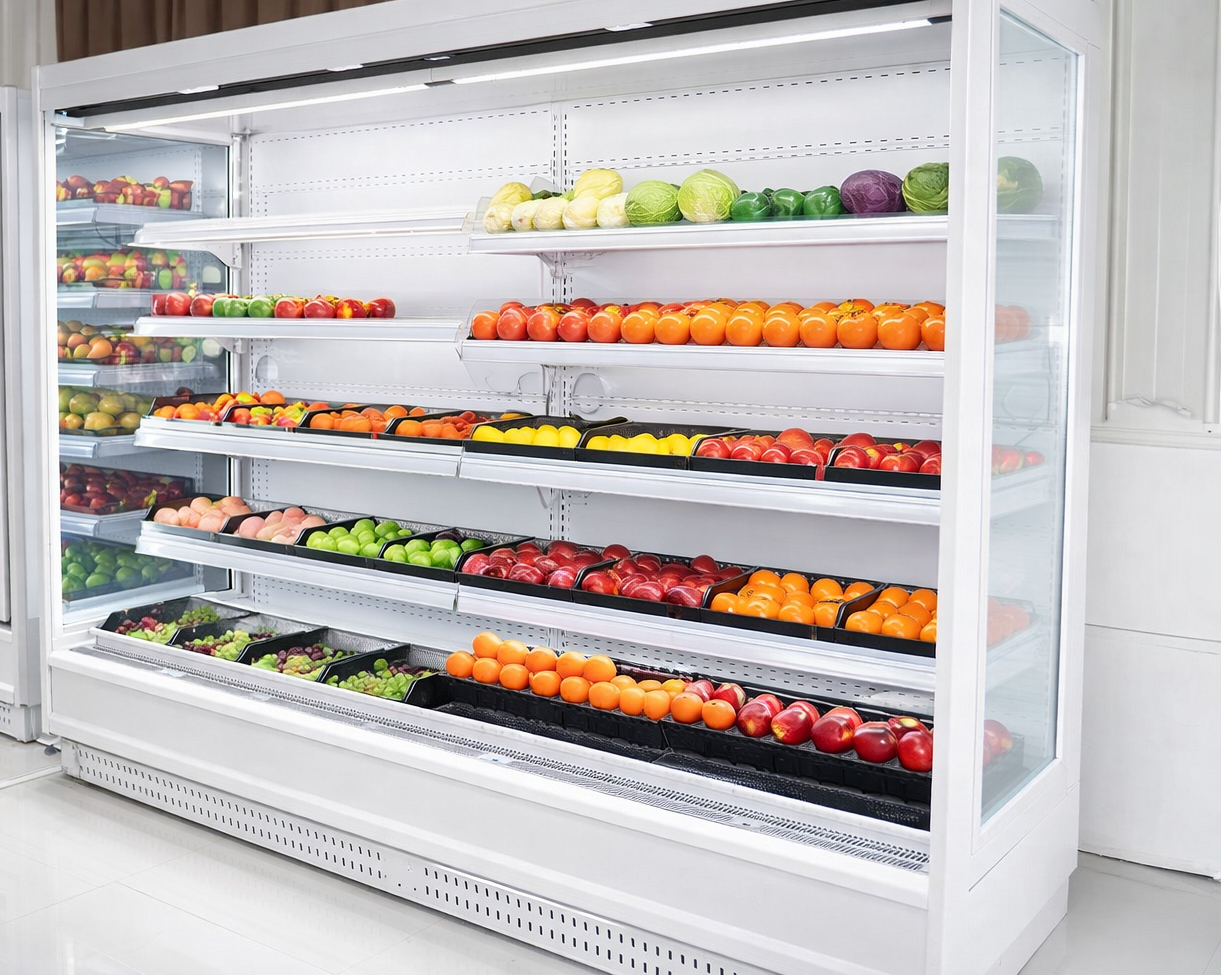
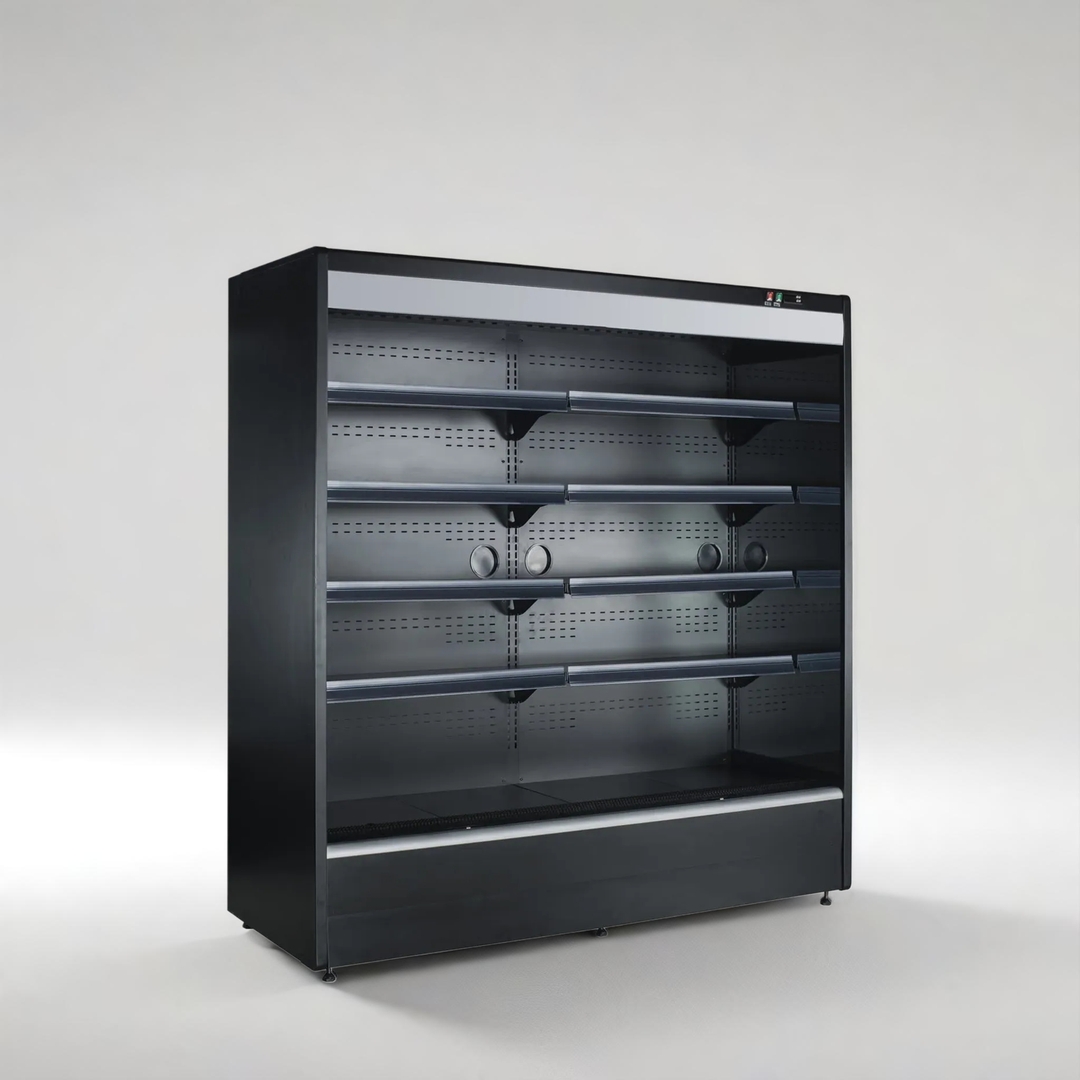
Your selection process should align compressor capabilities with operational demands. Consider peak usage periods, ambient temperature conditions, and accessibility for maintenance. A busy restaurant kitchen requires different characteristics than a retail display area with open chiller cabinet options that prioritise product visibility alongside cooling performance.
Pro Tip: Match compressor cycling patterns to your business rhythm. Variable-speed compressors adapt output to actual cooling demand, reducing energy waste during quieter periods whilst maintaining capacity during peak service times.
Evaluate total cost of ownership beyond purchase price. Energy consumption over a system’s 10–15 year lifespan typically exceeds initial equipment costs by multiples. A more efficient compressor with higher upfront cost often delivers superior financial returns through reduced electricity bills and extended service intervals.
Prioritise energy efficiency and sustainability in your selection
Refrigeration accounts for 40–70% of electricity consumed in cold stores and food processing facilities, making energy efficiency a primary cost consideration rather than an optional upgrade. Business owners who prioritise efficient technologies during equipment selection capture immediate operational savings whilst supporting sustainability commitments that increasingly influence customer purchasing decisions.
High-impact efficiency measures deliver measurable returns:
- Variable-speed compressors adjust cooling output to actual demand, eliminating the energy waste of constant on-off cycling
- Improved defrost controls minimise heating energy whilst reducing temperature fluctuations that stress products
- Floating head pressure systems optimise refrigerant pressure based on ambient conditions, cutting compressor work during cooler periods
- Door air curtains reduce cold air loss in open display cases, maintaining temperature with less compressor runtime
- Enhanced insulation and high-performance door seals prevent heat infiltration that forces systems to work harder
Natural refrigerants paired with heat recovery reduce electricity and gas consumption by 15–30% compared to traditional HFC systems. Ammonia and CO₂ refrigerants offer superior thermodynamic properties whilst eliminating the high global warming potential of synthetic alternatives. Heat recovery systems capture waste heat from condensers to provide hot water or space heating, transforming an energy liability into a productive resource.
Implementing comprehensive efficiency upgrades typically delivers 20–40% electricity savings with investment paybacks ranging from 2–5 years. These returns improve as energy prices rise, making efficiency investments increasingly attractive financial decisions. Proper temperature settings balance product preservation with energy consumption. Every degree below necessary cooling requirements adds approximately 3% to energy costs without improving product quality.
Pro Tip: Install sub-metering on refrigeration circuits to track actual energy consumption. Data visibility enables you to identify underperforming equipment, validate upgrade benefits, and optimise operational settings based on measured results rather than assumptions.
Regular monitoring through smart controls optimises performance automatically. Modern refrigeration management systems adjust defrost timing, compressor staging, and temperature setpoints based on actual conditions. These systems alert operators to performance anomalies before minor issues escalate into costly failures or product losses. Remote monitoring capabilities let service providers identify problems proactively, often resolving issues before you notice any impact on operations.
Sustainability considerations extend beyond energy consumption to refrigerant environmental impact, equipment longevity, and end-of-life disposal. Choosing systems designed for long service lives with repairable components reduces waste whilst lowering total ownership costs. Manufacturers offering comprehensive recycling programmes for retired equipment demonstrate commitment to circular economy principles that align with progressive business values.
Implement best practices for reliability and cost-effective operation
Effective refrigeration upgrades improve efficiency whilst extending equipment lifespan, delivering compounding value over time. Strategic improvements target components that offer maximum impact relative to investment, creating measurable returns that justify ongoing optimisation programmes.
Common high-value improvements include:
- Replacing worn door seals that allow cold air leakage and force compressors to run longer cycles
- Installing strip curtains on walk-in coolers to minimise temperature loss during frequent access
- Controlling anti-sweat heaters with humidity sensors rather than running continuously regardless of conditions
- Upgrading to LED cooler lighting that reduces heat load whilst cutting lighting energy by 75%
- Adding night covers to open chiller cabinets during closed hours, maintaining temperature with minimal energy input
| Upgrade measure | Typical energy savings | Implementation complexity | Payback period |
|---|---|---|---|
| Door seal replacement | 5–10% | Low | 6–12 months |
| Strip curtains | 10–15% | Low | 12–18 months |
| Anti-sweat heater controls | 15–25% | Medium | 18–24 months |
| LED lighting | 3–5% refrigeration load | Low | 12–18 months |
| Night covers | 20–30% overnight | Medium | 24–36 months |
Routine preventive maintenance avoids costly compressor failures and product losses that devastate profitability. Scheduled servicing catches refrigerant leaks, worn components, and performance degradation before they escalate into emergency breakdowns during peak trading periods. Establishing maintenance contracts with qualified service providers ensures consistent attention whilst spreading costs predictably across operating budgets.
Regular asset surveys and performance data collection help plan equipment replacements strategically. Tracking maintenance costs, energy consumption, and breakdown frequency identifies units approaching end of economic life before catastrophic failures force rushed replacement decisions. Proactive planning secures better equipment pricing and installation scheduling that minimises business disruption.
Pro Tip: Maintain detailed service records including refrigerant charge levels, compressor runtime hours, and temperature logs. This documentation proves invaluable for warranty claims, troubleshooting recurring issues, and demonstrating regulatory compliance during health inspections.
Transparent communication with service providers enhances project success. Clear specifications about your operational requirements, budget constraints, and performance expectations help contractors propose solutions that genuinely fit your business rather than generic recommendations. Request detailed proposals that explain equipment selections, installation approaches, and ongoing support provisions. Compare total ownership costs across options rather than focusing solely on initial purchase prices.
Investing in staff training ensures your team operates refrigeration systems correctly and recognises early warning signs of problems. Employees who understand proper loading practices, temperature monitoring, and basic troubleshooting protect your refrigeration investment whilst maintaining product quality standards. Simple practices like allowing hot food to cool before refrigeration, avoiding overloading that blocks airflow, and promptly reporting unusual noises prevent many common refrigeration problems.
Discover EcoFrost’s tailored commercial refrigeration solutions
Applying these selection principles becomes straightforward when you partner with refrigeration specialists who understand hospitality and retail operational demands. EcoFrost delivers comprehensive climate control solutions backed by over 10 years of experience across the UK, Qatar, and India, helping businesses optimise cooling performance whilst controlling energy costs.
Explore EcoFrost’s range of high-efficiency double door commercial catering fridges engineered for demanding professional environments. Their expert refrigeration services and maintenance programmes ensure your systems deliver reliable long-term performance with minimal downtime. Whether you need single units or complete facility solutions, EcoFrost’s consultative approach matches equipment capabilities to your specific operational requirements and sustainability goals. Visit the EcoFrost commercial refrigeration shop to discover products that combine proven technology with energy-efficient design, or request professional advice to identify the optimal refrigeration solution for your business.
Frequently asked questions
How do I determine the right refrigeration capacity for my business?
Calculate capacity based on peak inventory volumes, turnover rates, and ambient conditions in your facility. Factor in 20% additional capacity to accommodate business growth and seasonal demand fluctuations without straining equipment.
What are the main differences between reciprocating and scroll compressors?
Reciprocating compressors use pistons for heavy-duty applications with higher noise levels, whilst scroll compressors employ spiral elements for quieter, more efficient operation suited to general commercial refrigeration. Scroll units typically deliver better energy performance with lower maintenance requirements.
Why should I consider natural refrigerants for my commercial refrigeration?
Natural refrigerants like ammonia and CO₂ eliminate high global warming potential whilst reducing energy consumption by 15–30% compared to synthetic HFCs. They future-proof your investment against tightening environmental regulations and appeal to sustainability-conscious customers.
How often should commercial refrigeration receive professional maintenance?
Schedule comprehensive servicing quarterly for heavily used equipment, with minimum bi-annual maintenance for standard commercial applications. High-value or critical systems benefit from monthly inspections to catch issues before they impact operations.
What energy-saving upgrades deliver the fastest payback?
Door seal replacement and LED lighting conversions typically pay back within 12 months through reduced energy consumption. Strip curtains and anti-sweat heater controls follow closely with 12–24 month paybacks, making them excellent starting points for efficiency programmes.
How can I monitor refrigeration performance effectively?
Install sub-metering and temperature logging systems that track energy consumption and cooling performance continuously. Modern smart controls provide remote monitoring with automated alerts when parameters drift outside optimal ranges, enabling proactive intervention before problems escalate.