
TL;DR:
- Proper freezer maintenance ensures food safety, operational efficiency, and regulatory compliance.
- Regular checks identify issues like temperature fluctuations and frost buildup early.
- Structured routines and staff training are key to consistent, reliable freezer performance.
A single freezer malfunction in a hotel kitchen can trigger a chain of consequences that no management team wants to face: spoiled stock, failed inspections, and guests falling ill. Maintaining your freezers at 0°F (–18°C) or below is not just a regulatory checkbox; it is the foundation of safe food service and consistent kitchen operations. This guide walks hotel management professionals and maintenance staff through the essentials of freezer upkeep, from understanding compliance requirements to building routines that actually hold up in a busy hospitality environment. By the end, you will have a clear, practical framework to protect your guests, your team, and your reputation.
Table of Contents
- The fundamentals of hotel freezer maintenance
- Common freezer issues in hotel kitchens
- Practical maintenance routines for optimal performance
- Ensuring compliance and safety in hotel freezer operations
- A practical hotel perspective: What actually works versus theory
- Connect with expert maintenance solutions for hotels
- Frequently asked questions
Key Takeaways
| Point | Details |
|---|---|
| Maintain proper temperatures | Hotel freezers must stay at or below 0°F (-18°C) to ensure food safety and meet regulations. |
| Routine checks prevent problems | Consistent daily and monthly maintenance avoids costly breakdowns and health risks. |
| Clear compliance is crucial | Document all freezer checks and cleaning to pass safety inspections effortlessly. |
| Staff training makes a difference | Well-trained teams spot issues faster and maintain efficiency in daily hotel operations. |
The fundamentals of hotel freezer maintenance
Having established why maintenance matters, we turn to the essentials every hotel team must know. Freezer maintenance in a hotel context is not simply about keeping things cold. It is about maintaining precise conditions consistently, documenting them accurately, and ensuring every member of your kitchen team understands their role in the process.
From a compliance standpoint, frozen food storage must be kept at 0°F (–18°C) or below to meet food safety standards. In the UK, this aligns with Food Standards Agency guidance and HACCP (Hazard Analysis and Critical Control Points) principles, which require hotels to identify risks and put controls in place. Understanding hotel refrigeration terminology is a practical starting point for any maintenance team, particularly when communicating with engineers or logging faults accurately.
Key terms every hotel maintenance team should know:
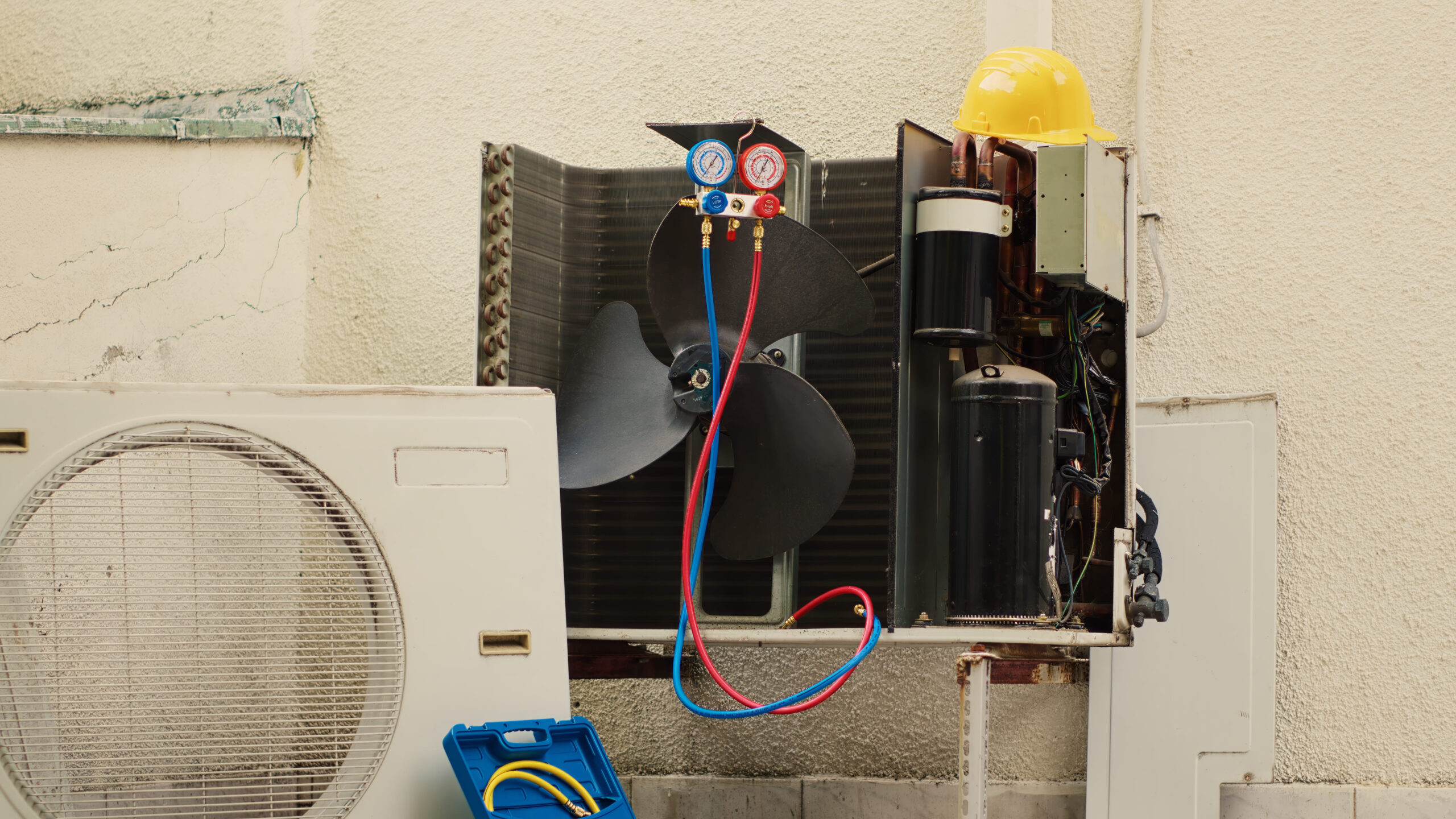
- Evaporator coil: The component that absorbs heat from inside the freezer to keep temperatures low.
- Condenser coil: Releases absorbed heat to the outside environment; must be kept clean for efficiency.
- Thermostat/temperature controller: Regulates the internal temperature; calibration checks are essential.
- Door gasket: The rubber seal around the freezer door; worn gaskets are a leading cause of temperature loss.
- Defrost cycle: The automated or manual process of removing frost build-up from the evaporator coil.
Different types of hotel refrigeration serve distinct purposes, and understanding their differences helps you allocate maintenance resources appropriately.
| Freezer type | Typical use in hotels | Key maintenance focus |
|---|---|---|
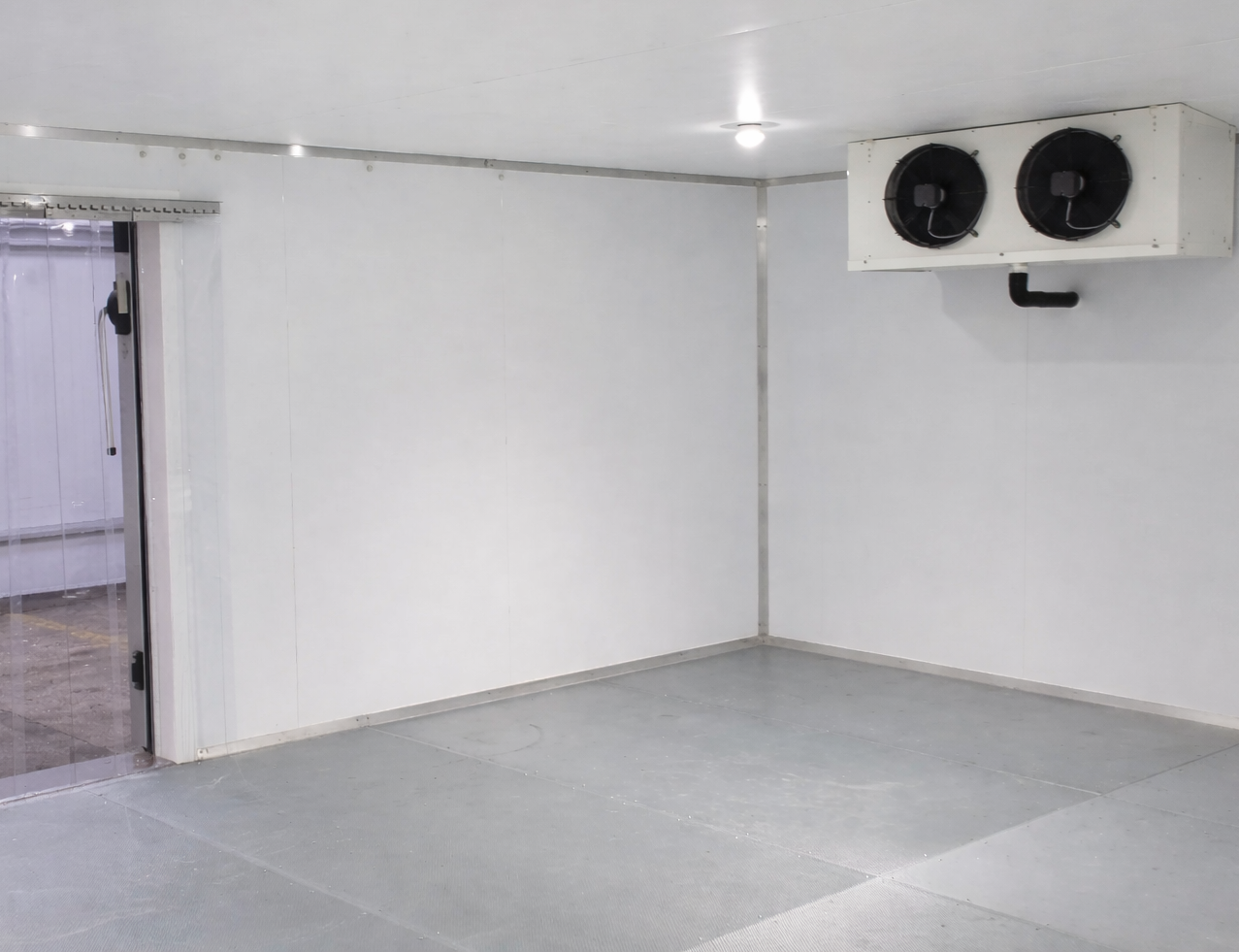
| Walk-in freezer | Bulk storage, large kitchens | Door seals, floor drains, defrost cycles |
| Undercounter freezer | Prep stations, bars | Compressor ventilation, door gaskets |
| Blast chiller/freezer | Rapid cooling of cooked food | Temperature calibration, airflow |
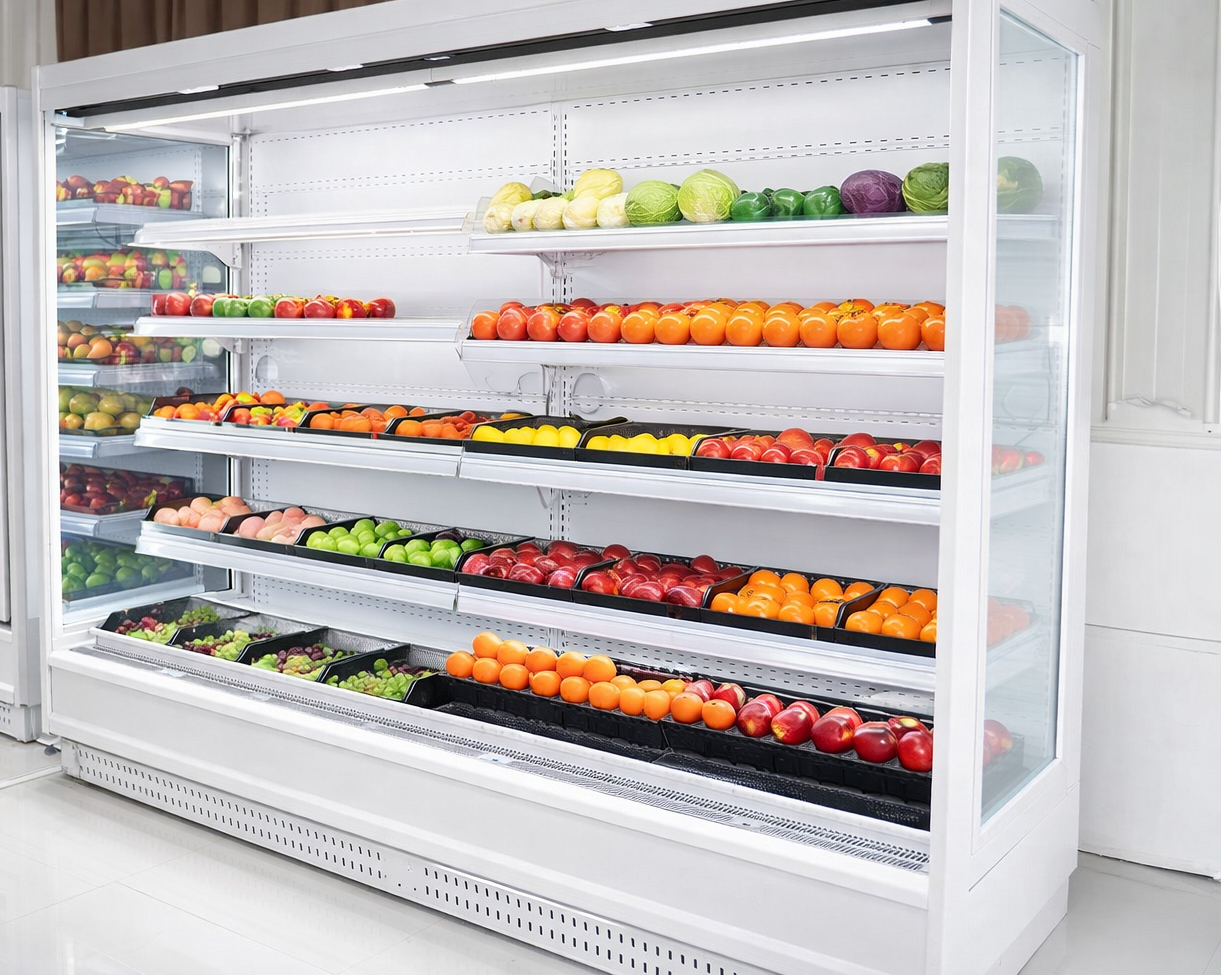
| Display freezer | Buffets, grab-and-go areas | Glass seals, lighting, fan motors |
Regular calibration of temperature monitoring equipment is non-negotiable. Digital data loggers provide continuous records, which are invaluable during inspections. If your team is not already using them, it is worth prioritising the upgrade.
Common freezer issues in hotel kitchens
With a grasp of core standards, let’s explore the actual problems you are likely to face and how to address them efficiently. Hotel kitchens are high-traffic, high-pressure environments, and freezers take considerable strain. Recognising warning signs early is what separates a minor repair from a full equipment failure.
The most frequent issues hotel maintenance teams encounter, ranked by impact:
- Temperature fluctuations: Often caused by faulty door gaskets, blocked vents, or a failing thermostat. Even brief excursions above –18°C can compromise food safety.
- Excessive frost build-up: Usually signals a defrost cycle failure or a door seal that is not closing properly. Frost restricts airflow and forces the compressor to work harder.
- Compressor failure: One of the most costly issues. Warning signs include unusual noise, the unit running continuously, or temperatures rising despite the compressor operating.
- Condensation on exterior surfaces: Can indicate poor insulation or a door gasket problem, and may create slip hazards for kitchen staff.
- Unusual odours: Often a sign of bacterial growth or a drainage blockage, both of which require immediate attention.
| Issue | Early warning sign | Recommended action |
|---|---|---|
| Temperature fluctuation | Readings above –18°C | Check gaskets, calibrate thermostat |
| Frost build-up | Ice on evaporator coil | Inspect defrost timer, check door seals |
| Compressor noise | Grinding or clicking sounds | Contact a qualified refrigeration engineer |
| Drainage blockage | Pooling water inside unit | Clear drain line, sanitise drain pan |
Correct freezer temperatures prevent bacterial growth and protect your guests. Bacteria such as Listeria can survive at refrigeration temperatures, so freezing food properly is a critical control point in your HACCP plan. Familiarising your team with refrigeration problems and solutions and maintaining restaurant refrigeration standards will sharpen their ability to act quickly when something goes wrong.
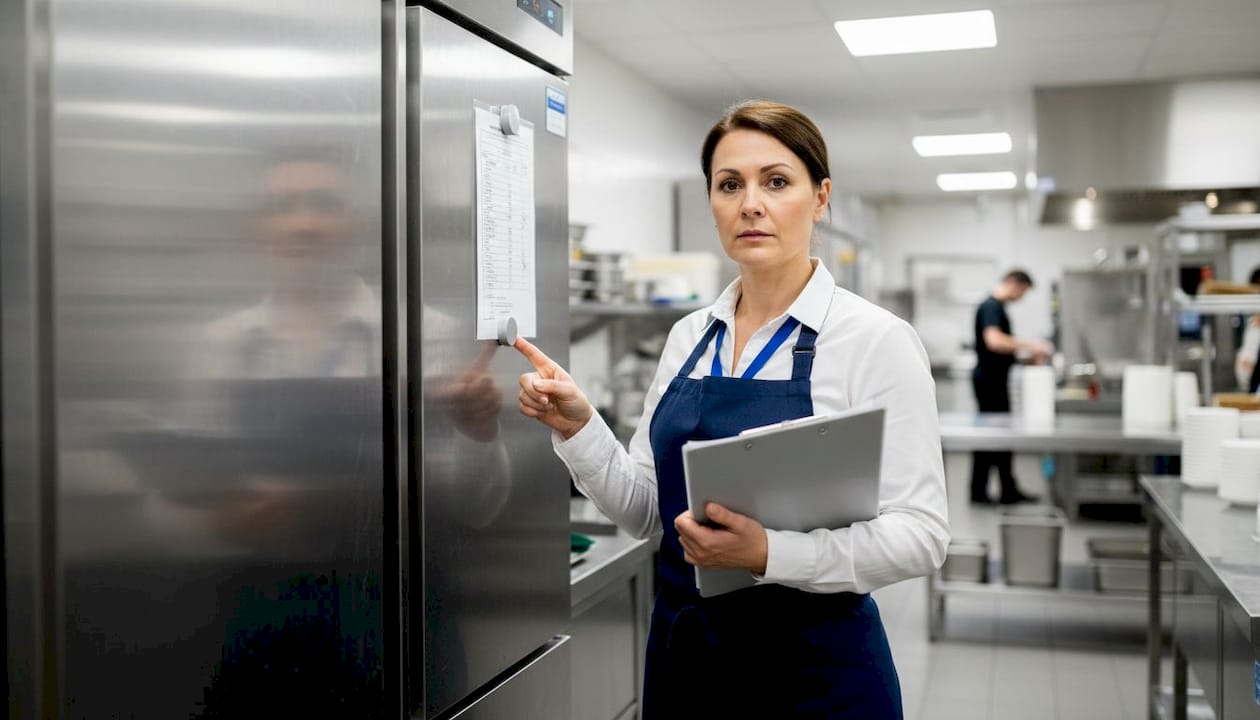
Pro Tip: Assign a named staff member to conduct a brief visual check of all freezer units at the start of each shift. A two-minute walk-around catches most early warning signs before they escalate into costly failures.
Practical maintenance routines for optimal performance
Once you know how to spot issues, a strategic maintenance routine is your best defence. Optimal freezer temperatures are vital for food safety and operational reliability, but achieving them consistently requires structured habits, not just reactive repairs.
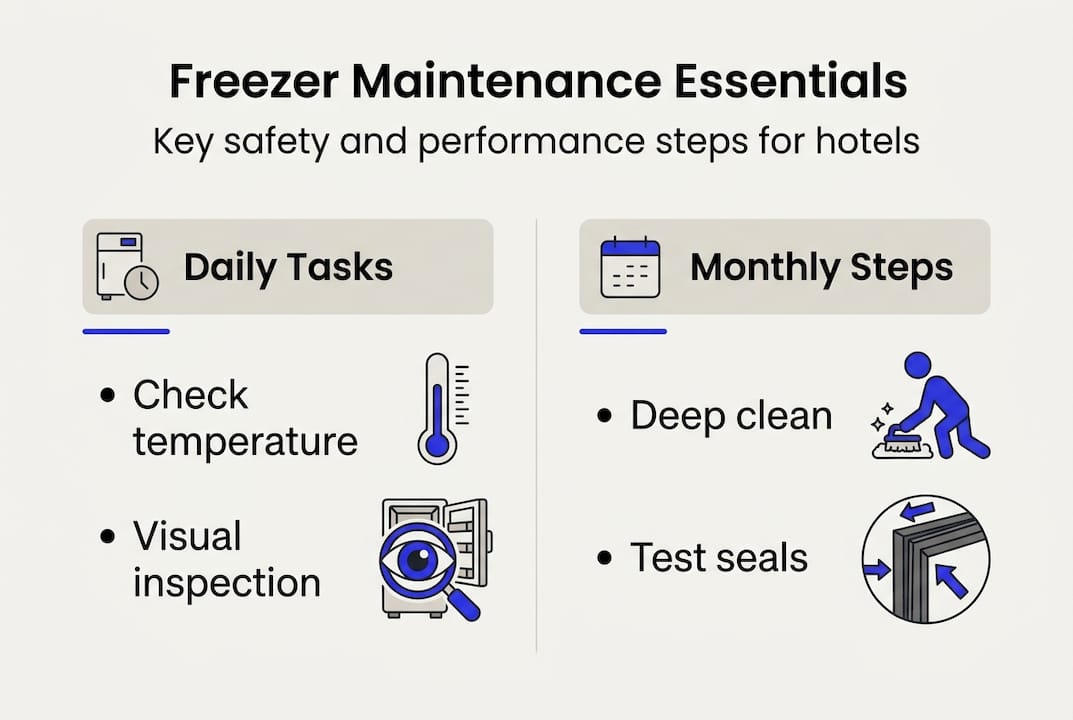
A well-structured routine covers three time horizons:
Daily tasks:
- Check and log internal temperatures at the start and end of each shift.
- Inspect door gaskets for visible wear, tears, or gaps.
- Clear any ice or debris from door thresholds.
- Confirm the defrost cycle has completed and no excessive frost is present.
- Wipe down exterior surfaces and door handles with food-safe sanitiser.
Weekly tasks:
- Clean condenser coils if accessible (dusty coils reduce efficiency significantly).
- Check that ventilation gaps around the unit are clear of stock or equipment.
- Test door alarms and temperature alert systems.
- Review temperature logs for any anomalies from the past seven days.
Monthly tasks:
- Inspect and replace door gaskets if worn.
- Arrange a professional calibration check of temperature monitoring equipment.
- Lubricate door hinges and check for alignment issues.
- Review staff training records to confirm all team members are up to date.
For guidance on cleaning refrigeration units correctly, always use food-safe, non-abrasive products and ensure the unit is empty before deep cleaning. Scheduling a professional service through freezer installation services providers who also offer maintenance contracts can reduce unplanned downtime considerably.
Pro Tip: Create a simple laminated checklist for each freezer unit and attach it directly to the door. Visual prompts dramatically improve staff compliance, especially during busy service periods when it is easy to skip steps.
Staff accountability matters as much as the checklist itself. Assign clear ownership for each task, and make sure supervisors review logs weekly. When everyone knows who is responsible, maintenance standards hold up far better under pressure.
Ensuring compliance and safety in hotel freezer operations
Having established how to keep your freezer running smoothly, it is crucial to ensure everything complies with regulations. Compliance is not just about passing inspections; it is about building a culture of food safety that protects your guests and your business every single day.
Food safety standards require hotel freezers to be maintained at or below 0°F (–18°C). In practice, this means your documentation must be as reliable as your equipment. Inspectors from the Food Standards Agency and local environmental health officers will look for consistent, accurate records as evidence of due diligence.
Key compliance requirements for hotel freezer operations:
- Temperature logs: Maintain written or digital records of freezer temperatures, recorded at least twice daily.
- Calibration certificates: Keep up-to-date certificates for all temperature monitoring equipment.
- Maintenance records: Document every repair, service visit, and part replacement with dates and engineer details.
- HACCP documentation: Freezer temperature control must be identified as a critical control point in your HACCP plan.
- Staff training records: Evidence that all relevant staff have received food hygiene and equipment training.
Key food safety fact: Foodborne illness outbreaks linked to improper cold storage can result in significant legal liability, reputational damage, and in serious cases, criminal prosecution for responsible managers. Compliance is not optional; it is the standard every hotel must meet.
For broader guidance on refrigeration safety in food service settings, it is worth reviewing your procedures against current FSA guidance annually. Regulations do evolve, and staying current protects you from unexpected compliance gaps.
Building a culture where staff feel confident reporting issues, rather than ignoring them, is arguably the most important safety measure of all. A well-maintained freezer that staff actively monitor is far more reliable than one that depends solely on automated alerts.
A practical hotel perspective: What actually works versus theory
Beyond procedures and regulations, real-world success means knowing what genuinely fits hotel operations. In our experience working with hotels across the UK, Qatar, and India, the biggest gap is not knowledge; it is consistency under pressure.
Many maintenance plans look excellent on paper but collapse during peak seasons when staff turnover is high and kitchens are running at full capacity. The hotels that maintain the best freezer performance are not necessarily those with the most detailed procedures. They are the ones that have simplified their routines to the point where every team member, regardless of experience level, can follow them without supervision.
Tailored staff training, rather than generic food hygiene courses, makes a measurable difference. When your team understands why a gasket check matters, not just that it is on the checklist, they perform it more reliably. We also find that optimising hotel chillers and freezers together, rather than treating them as separate systems, produces better overall results. Integrated monitoring and a single point of accountability for all cold storage equipment reduces the chance of issues falling through the gaps.
Connect with expert maintenance solutions for hotels
For hotels ready to step up their maintenance game, specialised support is just a click away.
At EcoFrost, we understand that hotel kitchens cannot afford downtime. With over 10 years of experience delivering refrigeration and HVAC solutions across the UK, Qatar, and India, we provide the kind of reliable, expert-led support that keeps your operations running without interruption.
Whether you need hotel freezer repair services, a full review of your hotel refrigeration efficiency, or are planning new air conditioning installation alongside your refrigeration upgrade, our team is ready to help. Get in touch with EcoFrost today to discuss a maintenance plan built around your hotel’s specific needs.
Frequently asked questions
What temperature should hotel freezers be set to for food safety regulations?
Hotel freezers must be maintained at 0°F (–18°C) or below to meet food safety standards and prevent contamination. Any temperature above this threshold creates conditions where harmful bacteria can survive.
How often should hotel freezer maintenance checks be performed?
Routine visual checks should be conducted daily, with in-depth maintenance carried out monthly for optimal performance and safety. Professional servicing at least twice a year is also strongly recommended.
What signs indicate a hotel freezer needs urgent attention?
Frost build-up on the evaporator coil, fluctuating internal temperatures, unusual grinding or clicking noises, and unexplained food spoilage are all key warning signs that require immediate investigation.
What risks do poor freezer maintenance pose for hotels?
Poor maintenance significantly increases the risk of foodborne illness, as bacterial growth accelerates when temperatures rise above safe levels. It also exposes hotels to failed health inspections and costly emergency repairs.
Which cleaning protocols are recommended for hotel freezers?
Follow a daily cleaning routine using food-safe, non-abrasive products on all interior and exterior surfaces, and keep detailed records of every clean for compliance purposes. Always ensure the unit is empty before any deep clean.