
TL;DR:
- Choosing the right climate control system depends on environmental needs, energy efficiency, reliability, and integration capabilities.
- Solutions like heat pumps, desiccant dehumidifiers, hybrid HVAC, and smart controls offer tailored benefits for cold storage, large warehouses, and multi-parameter environments, emphasizing matching technology to operational loads.
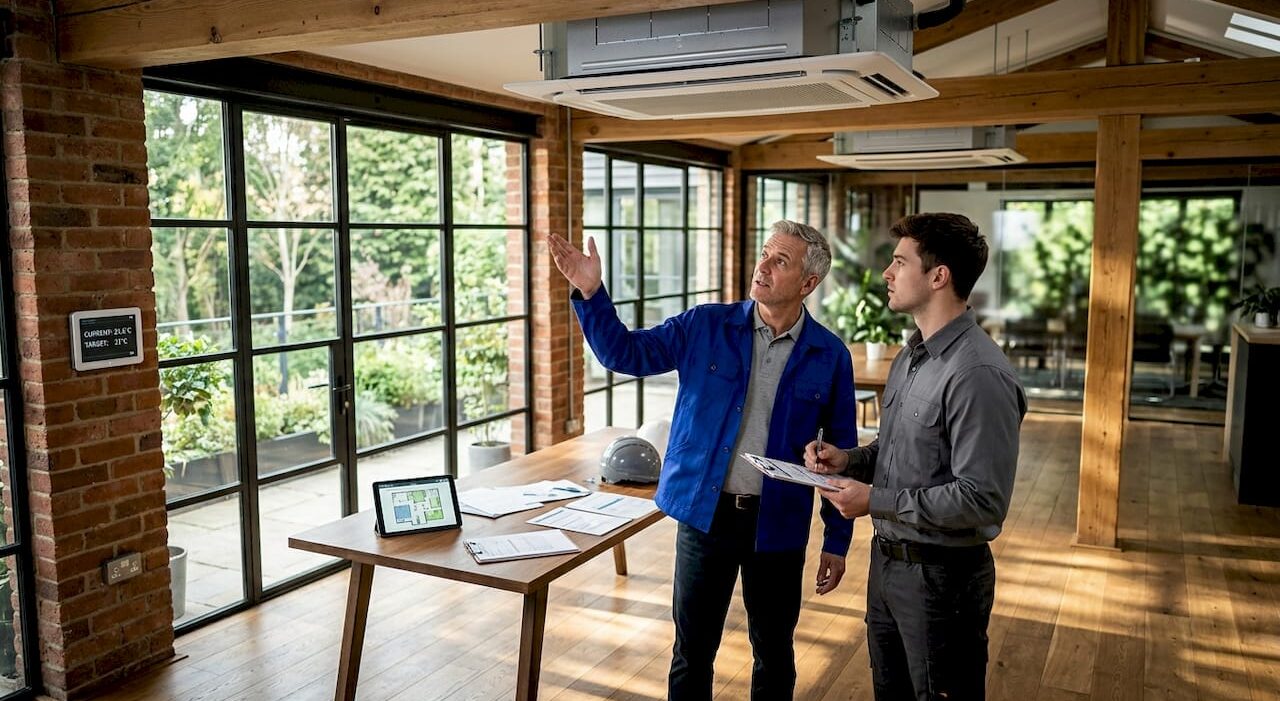
Choosing the right climate control solution for your business is rarely straightforward. UK business owners managing food storage, cold rooms, or large commercial HVAC systems face a specific set of pressures: tight temperature tolerances, moisture risks, energy costs, and tightening sustainability regulations. Getting it wrong means spoiled stock, failed audits, or spiralling utility bills. This article walks through practical examples of climate control solutions, from heat pumps and desiccant dehumidifiers to hybrid HVAC and smart controls, giving you a clear picture of what each option offers and where it performs best.
Table of Contents
- Criteria for choosing climate control solutions
- Heat pumps: efficient heating and cooling technology
- Desiccant dehumidification for cold store moisture control
- Hybrid HVAC systems for large warehouse climate control
- Integrated climate control: combining temperature, humidity and filtration
- Smart climate-control technology for efficiency and convenience
- Comparing key climate control solutions for UK businesses
- Fresh perspective: balancing innovation with practical reliability
- Discover EcoFrost HVAC climate solutions for your business
- Frequently asked questions
Key Takeaways
| Point | Details |
|---|---|
| Energy efficiency | Choose solutions like heat pumps to reduce electricity use up to 75% compared to traditional heating. |
| Moisture control | Use desiccant dehumidification with dry-air curtains to prevent ice and safety hazards in cold stores. |
| Hybrid systems | Hybrid HVAC blends heat pumps and gas to ensure reliable, stable temperatures in large commercial buildings. |
| Integrated control | All-in-one units manage temperature, humidity, and filtration simultaneously to simplify operations. |
| Smart technology | Smart climate controls enable scheduling and remote management to minimise energy waste and costs. |
Criteria for choosing climate control solutions
Before you compare systems, it helps to know what you are actually measuring them against. Not every solution suits every environment, and the wrong choice creates problems rather than solving them.
Here are the key criteria UK business owners should prioritise:
- Energy efficiency: Running costs matter. An energy-efficient system reduces your carbon footprint and keeps overheads manageable. An energy-efficient HVAC overview can help clarify what efficiency benchmarks to aim for.
- Reliability: Stable temperatures are non-negotiable in food storage. A system that drops out during a heatwave or a cold snap can cost you an entire stock load.
- Moisture and humidity control: Condensation and frost are constant threats in cold rooms with regular door traffic. Poor humidity control accelerates ice build-up and creates slip hazards for staff.
- Smart integration: Remote monitoring, scheduling, and alerts reduce the need for on-site intervention and give you visibility across multiple sites.
- Fit for purpose: Building size, insulation quality, and usage patterns all affect which system delivers value. A solution designed for a small chiller room will not scale to an industrial warehouse without significant adaptation.
Having outlined the selection criteria, we now examine key climate control solution examples aligned with these needs.
Heat pumps: efficient heating and cooling technology
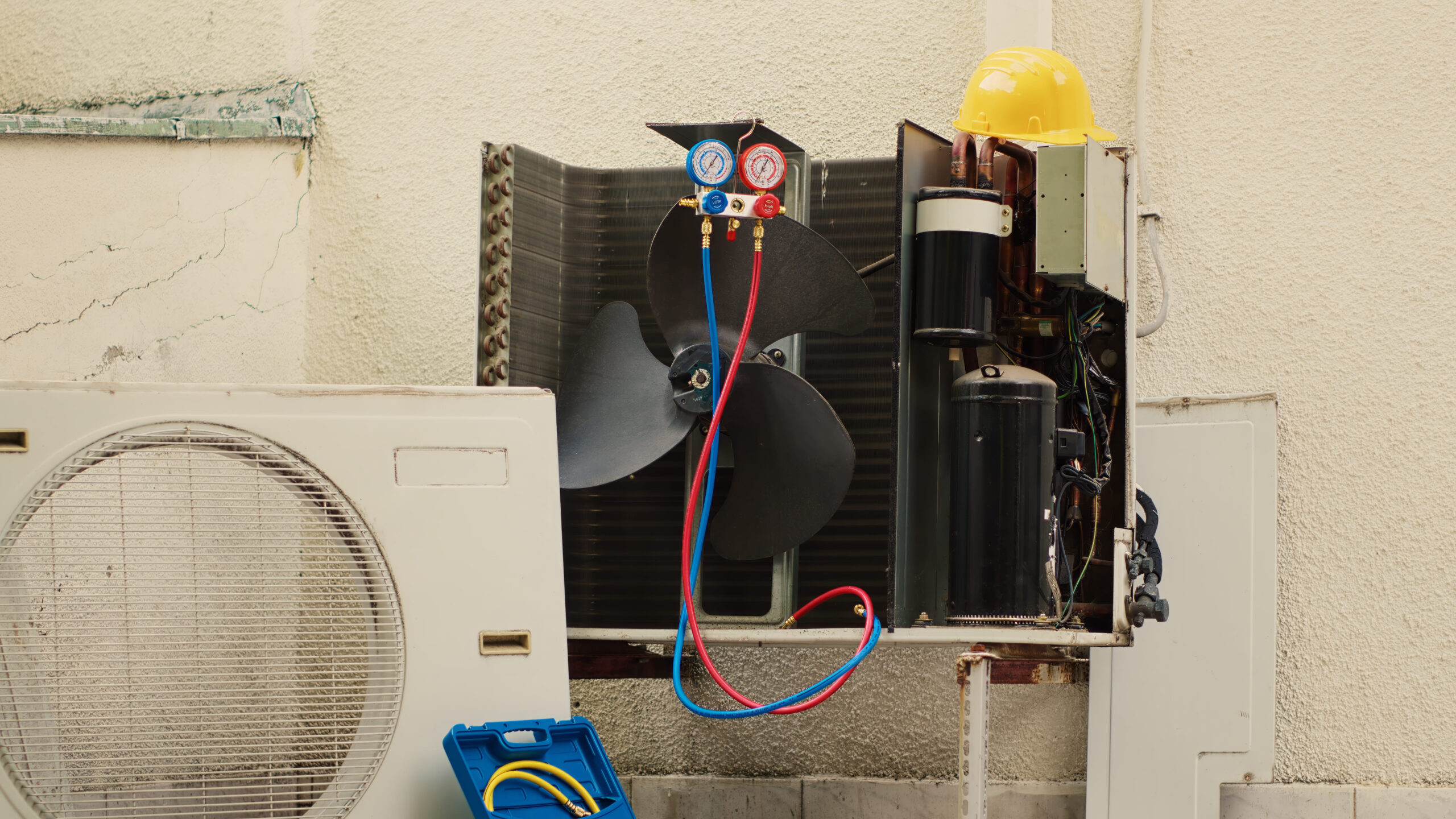
Heat pumps have become one of the most discussed climate control technologies in UK commercial settings, and for good reason. Rather than burning fuel to generate heat, they move heat from one place to another, which makes them considerably more efficient in moderate climates like the UK.
Key applications and considerations include:
- Air-source heat pumps are the most widely deployed option in the UK, with ductless variants offering flexible zone heating without major duct installation work.
- Hybrid configurations pair heat pump operation with gas-fired back-up, maintaining efficiency during mild weather while switching to gas support during peak cold spells.
- Summer dehumidification is an underappreciated benefit. Heat pumps extract moisture from the air as part of the cooling process, which improves indoor comfort and reduces condensation in warehouses and storage areas.
- Design and operating hours matter. A heat pump specified for light-use environments will underperform in a facility running 24/7. Proper system design is essential.
According to the US Department of Energy, heat pumps reduce electricity use for heating by up to 75% compared with electric resistance heating, and they outperform standard central air conditioners on dehumidification. That is a significant operational saving over a full year.
Pro Tip: If you already have a gas boiler, a hybrid heat pump system often delivers the best return. You keep gas as a reliable back-up without overhauling your entire heating infrastructure.
Proper installation by efficient HVAC systems specialists ensures the system is sized correctly for your building load, which is where many installations fall short.
Desiccant dehumidification for cold store moisture control
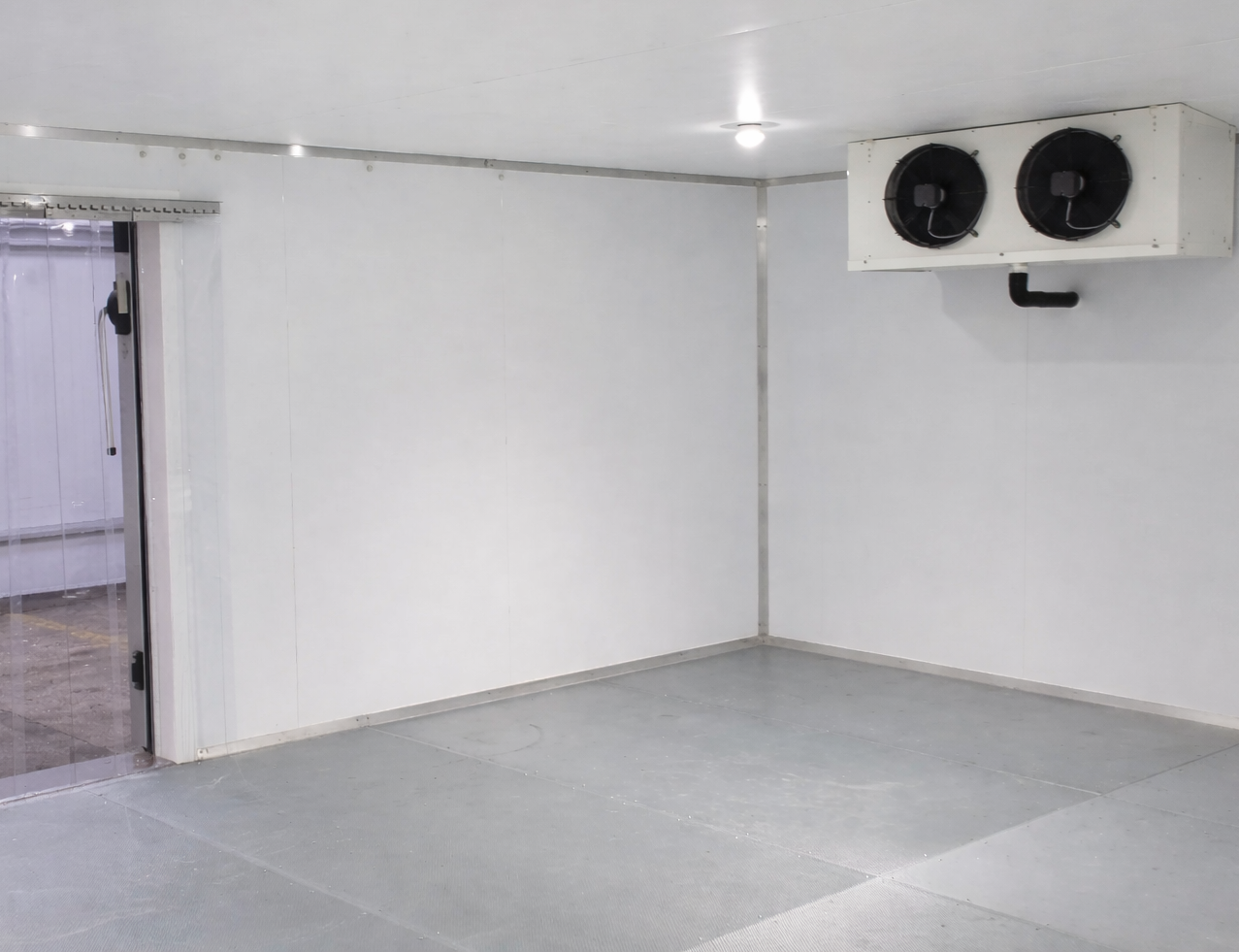
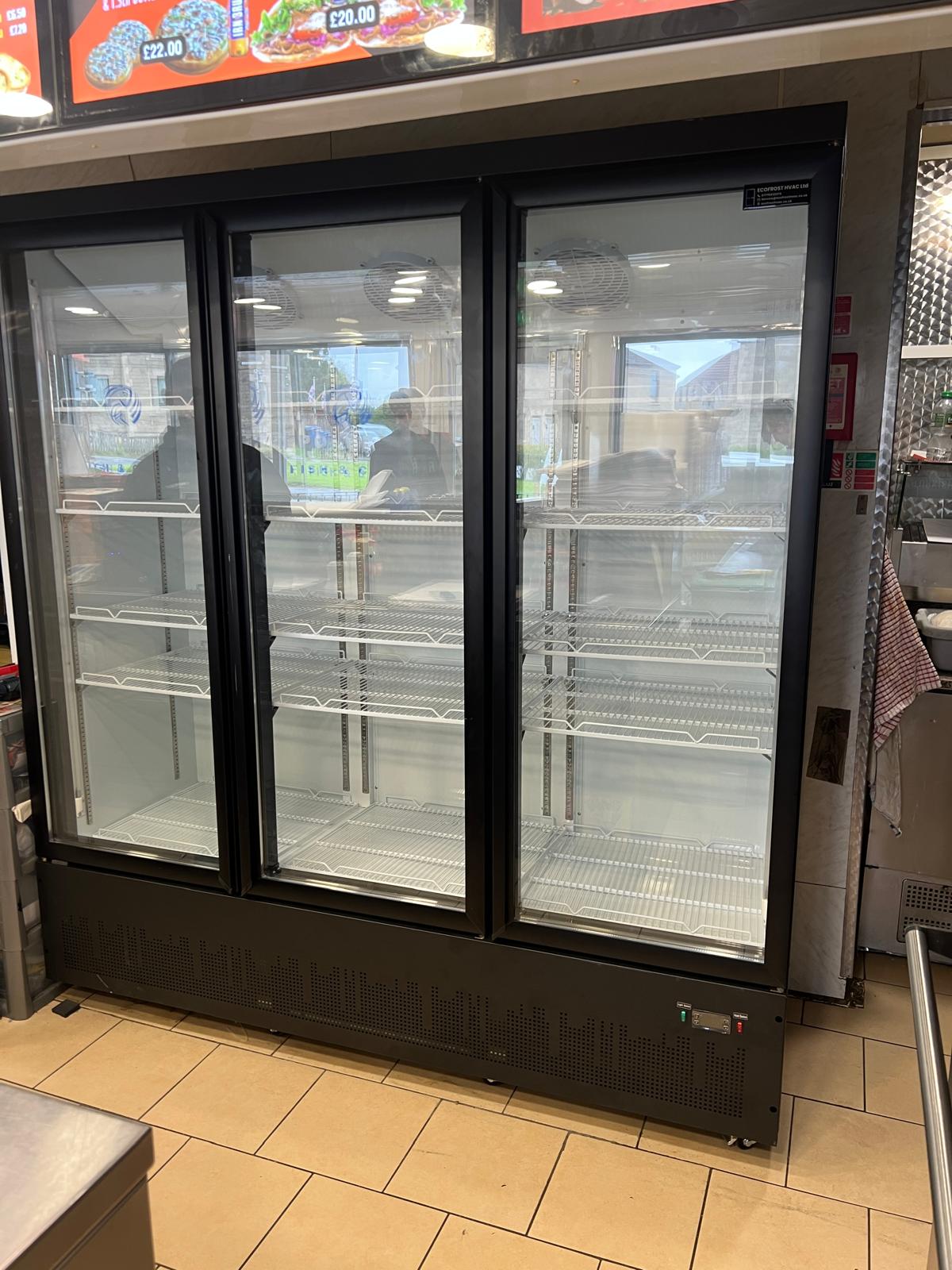
For food cold stores and refrigerated warehouses, moisture ingress is one of the most persistent and costly problems. Every time a door opens, warm, humid air enters the cold environment. Over time, this creates frost on evaporators, ice on floors, and fog that reduces visibility and creates safety risks.
A desiccant dehumidifier addresses this at the source. Unlike conventional refrigerant-based dehumidifiers, desiccant units use a moisture-absorbing material to extract water vapour from incoming air. They can supply air at dew points as low as -20°C, which standard refrigerant dehumidifiers cannot match.
Key benefits for food cold store operators:
- Dry-air curtains supplied by desiccant units act as an invisible barrier at door openings, significantly limiting moisture entry during loading and unloading activity.
- Airlock buffer zones provide a secondary barrier, particularly useful in high-traffic facilities with multiple operators moving through cold store entrances.
- Reduced ice build-up means fewer defrost cycles, which translates directly into lower energy consumption and longer equipment life.
- Improved staff safety through better floor conditions and visibility in the cold store environment.
As DST Humidity Control explains, desiccant dehumidifiers supply dry air to form a curtain over door openings or create an airlock buffer zone, significantly reducing moisture ingress during door traffic. This is one of the most effective and often overlooked elements in cold room climate control design.
Pro Tip: If your refrigeration system is consuming more energy than expected, check evaporator frosting before assuming a compressor problem. Excessive moisture ingress is frequently the root cause.
Beyond moisture control, large commercial spaces need hybrid climate solutions to manage temperature effectively.
Hybrid HVAC systems for large warehouse climate control
Single-technology systems struggle in large warehouse environments. Ceiling heights, varying internal loads, and significant heat loss through cladding or doors mean that a heat pump alone, or a gas heater alone, will either underperform or run inefficiently.
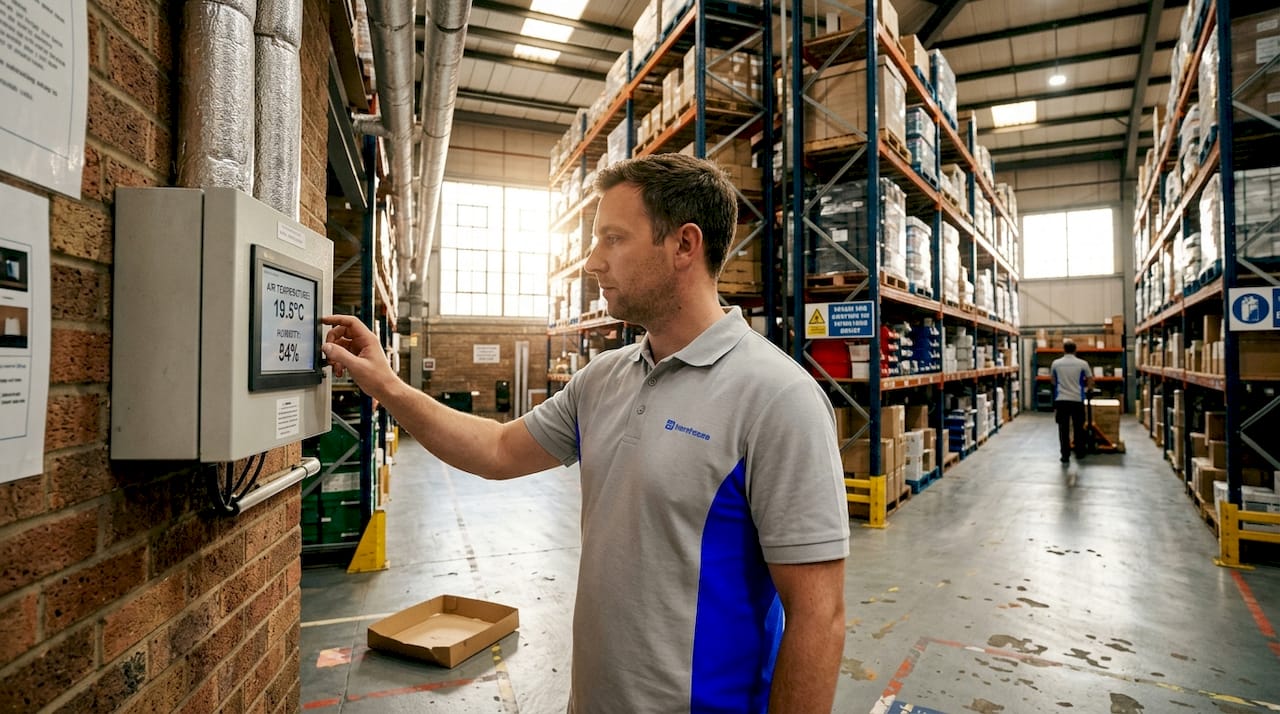
Hybrid HVAC systems address this by combining two or more energy sources with intelligent controls that allocate load between them based on ambient conditions and energy cost.
Key characteristics of effective hybrid HVAC for warehouses:
- Air rotation technology distributes conditioned air evenly throughout the building, eliminating stratification where warm air collects at ceiling height while the working area remains cold.
- Dual energy sources provide resilience. If one source becomes less cost-effective or unavailable, the other maintains temperature.
- Sustainability alignment is built in, as the system automatically prioritises the lower-carbon option when conditions allow.
- Smart demand management allows the control system to shift load between gas and electric based on real-time tariff data or pre-set schedules.
A well-documented example is Powrmatic’s AirRoteX-H system, which pairs a 150kW air-source heat pump with a 90kW gas burner to maintain stable warehouse temperatures between +18°C and -5°C while eliminating thermal stratification. The system demonstrates exactly how hybrid HVAC energy efficiency can be achieved at scale without sacrificing reliability.
| Feature | Heat pump only | Gas only | Hybrid HVAC |
|---|---|---|---|
| Energy efficiency | High | Low | High |
| Cold weather reliability | Moderate | High | High |
| Carbon footprint | Low | High | Medium to low |
| Installation complexity | Moderate | Low | High |
| Best for | Moderate climates | High demand | Large variable-load spaces |
For integrated climate management, combined systems offer simultaneous control of temperature, humidity, and air quality.
Integrated climate control: combining temperature, humidity and filtration
Some operations need more than one climate function managed in a single, coherent system. Food producers, pharmaceutical storage, and controlled-environment facilities often require heating, cooling, dehumidification, and air filtration running at the same time, not as separate units bolted together.
Integrated climate control units consolidate these functions into a single platform. The benefits are practical and financial.
- Simplified infrastructure means fewer separate units, fewer potential failure points, and less maintenance complexity.
- Precise environmental control across multiple parameters simultaneously, which is difficult to achieve with separate systems operating independently.
- Remote operation and alarming give operators visibility and response capability without requiring physical presence on-site.
- Water-cooled and air-cooled variants accommodate different building types and installation constraints.
The OptiClimate Pro 3 is a practical example, able to cool, heat, dehumidify, filter, and circulate air simultaneously in a single unit. For businesses managing sensitive storage environments, this kind of consolidation is worth examining. More detail on how this applies to cold storage can be found in a guide to cold room technology for UK businesses.
Finally, smart technology increasingly empowers business owners with better control and cost savings.
Smart climate-control technology for efficiency and convenience
Smart climate-control technology has moved well beyond simple programmable thermostats. Modern commercial systems connect via Wi-Fi, integrate with building management platforms, and give you real-time data on energy consumption, temperature deviations, and system health.
Key features to look for:
- Mobile app control allows you to adjust settings, check temperatures, or respond to alerts from anywhere.
- Scheduling ensures systems run only during operational hours, cutting energy waste during nights and weekends.
- Voice assistant compatibility with platforms such as Alexa or Google Assistant, useful for facilities managers working across multiple tasks.
- Energy usage reports provide clear data on consumption patterns, helping you identify where savings are achievable.
- Alert and alarm functions notify you immediately when temperatures drift outside acceptable ranges.
As noted by PCMag’s review of best smart air conditioners for 2026, Wi-Fi-enabled units with scheduling reduce energy costs by running only when needed. For UK businesses managing multiple zones or sites, this level of visibility and control is increasingly standard rather than optional. Pairing smart controls with smart refrigeration systems multiplies the savings across your entire cold chain.
With these diverse options in mind, it helps to compare features and benefits for your specific needs.
Comparing key climate control solutions for UK businesses
Each of the solutions discussed above serves a different primary purpose. Understanding where each one excels helps you prioritise investment and avoid over-engineering your installation.
| Solution | Best use case | Energy efficiency | Reliability | Installation complexity |
|---|---|---|---|---|
| Heat pumps | Commercial heating and cooling | Very high | Moderate in extremes | Moderate |
| Desiccant dehumidification | Cold store moisture control | High | Very high | Low to moderate |
| Hybrid HVAC | Large warehouses, variable loads | High | Very high | High |
| Integrated climate units | Multi-parameter controlled environments | High | High | Moderate |
| Smart climate controls | Any system needing remote management | Varies by hardware | High | Low |
Key decision points when comparing options:
- Food storage operations should prioritise desiccant dehumidification and integrated units with precise humidity control.
- Large warehouses benefit most from hybrid HVAC with air rotation to handle stratification and variable loads.
- Businesses focused on reducing energy bills will see the fastest returns from heat pumps combined with smart scheduling.
- Multi-site operators should make smart controls a baseline requirement, not an optional add-on.
More detail on how these technologies apply to cold storage specifically is covered in this cold room technology guide.
Having compared the options, let us consider an expert perspective on navigating these technologies in practice.
Fresh perspective: balancing innovation with practical reliability
There is a tendency in the industry to treat the newest technology as the best answer. That is not always true in practice. What we see consistently, across food storage, warehousing, and commercial HVAC projects, is that the most effective outcomes come from matching the solution to the specific operational reality rather than defaulting to whatever has the highest efficiency rating on a specification sheet.
Moisture ingress is a good example. It is one of the most overlooked design details in cold store installations, yet it accounts for a disproportionate share of refrigeration failures and energy waste. Many businesses invest in better compressors or larger evaporators when the real problem is uncontrolled humidity at door openings. A well-placed desiccant system often delivers more value than upgrading refrigeration plant.
The Powrmatic case study reinforces this point at warehouse scale. The best outcome was not achieved by choosing either heat pumps or gas. It was achieved by combining both intelligently, with controls that balance the two based on real conditions. That principle applies at every scale.
Smart controls amplify the benefit of any well-chosen system. But they are only as useful as the hardware they are managing. Investing in energy efficient HVAC systems before layering on smart controls gives you a strong foundation rather than an intelligent system compensating for a poorly designed one.
The businesses that achieve the best long-term results treat climate control as an integrated design decision, not a procurement exercise.
Discover EcoFrost HVAC climate solutions for your business
If you are reviewing your climate control options and want guidance from engineers who work exclusively in commercial refrigeration and HVAC, EcoFrost HVAC is worth a conversation. Every installation is designed around your specific operation, not a standard package applied regardless of your building or business type.
EcoFrost offers cold room design and installation tailored to your exact storage requirements, alongside commercial air conditioning installation carried out by F-Gas certified engineers. If you are looking at the broader picture of refrigeration running costs, the team’s work on cost-efficient refrigeration solutions is a practical starting point. With ongoing maintenance support and emergency cover included, you have reliable backing year-round.
Frequently asked questions
What are the main benefits of using heat pumps for commercial climate control?
Heat pumps transfer existing heat rather than generating it, which means they reduce electricity use for heating by up to 75% compared with electric resistance systems, making them a cost-effective option for commercial heating and cooling.
How does desiccant dehumidification improve food cold storage?
Desiccant dehumidifiers extract moisture vapour and supply very dry air, which forms a barrier at door openings to prevent ice and fog build-up that would otherwise compromise staff safety and refrigeration performance.
Why are hybrid HVAC systems recommended for large warehouses?
Hybrid systems balance heat pump operation with gas-fired support, allowing the AirRoteX-H system approach of maintaining stable temperatures across large spaces without sacrificing reliability during extreme weather.
Can smart climate control lower energy bills for UK businesses?
Yes. Smart air conditioners with Wi-Fi and scheduling capabilities reduce energy consumption by operating only during required hours, which delivers measurable savings on commercial energy bills over time.