
TL;DR:
- Regular, structured maintenance prevents freezer failures, spoilage, and compliance breaches.
- Daily checks include door seals, temperatures, drains, and stock placement to ensure optimal performance.
- Proper documentation and professional inspections maintain safety, efficiency, and industry compliance.
A walk-in freezer failure mid-service is one of the most disruptive events a restaurant or hotel kitchen can face. Stock worth thousands of pounds can spoil overnight, health inspectors can flag compliance breaches, and the cost of emergency repairs far exceeds what routine upkeep would have required. The good news is that most failures are entirely preventable. With a structured maintenance approach, you can protect your food stock, keep your team safe, and stay well ahead of regulatory requirements. This guide walks you through everything you need, from preparation to verification, so you can maintain your walk-in freezer with confidence.
Table of Contents
- What you need before starting walk-in freezer maintenance
- Step-by-step walk-in freezer maintenance routine
- How to avoid common walk-in freezer mistakes
- Verifying results and maintaining compliance
- Why proactive freezer maintenance saves more than costs
- Expert support for your commercial freezer maintenance
- Frequently asked questions
Key Takeaways
| Point | Details |
|---|---|
| Start with safety | Wear gloves and switch off power before cleaning or inspection. |
| Follow a routine | Daily, weekly, and monthly tasks cover all key maintenance needs. |
| Look for warning signs | Temperature changes, damp patches, or new noises signal urgent problems. |
| Record everything | Maintain a clear log for audits and smoother handovers to service professionals. |
| Expert help matters | Annual checks by a professional ensure optimal freezer compliance and safety. |
What you need before starting walk-in freezer maintenance
Now that you’re aware of the high stakes, let’s ensure you have the proper foundation before beginning any walk-in freezer maintenance. Rushing into cleaning or inspections without the right tools and knowledge is a common mistake that leads to missed hazards and incomplete results.
First, review your freezer’s technical manual. Every unit has specific guidance on approved cleaning agents, safe operating temperatures, and component locations. Ignoring this step risks voiding warranties or damaging sensitive parts. Proper preparation includes safety gear and cleaning supplies before you begin any work on cleaning commercial units.
Before touching any component, switch off the power supply and allow the unit to reach a safe working temperature. Ventilate the area well, particularly if you are using any cleaning products. Avoid bleach-based or strongly fragranced chemicals, as residue can contaminate food surfaces and damage seals.
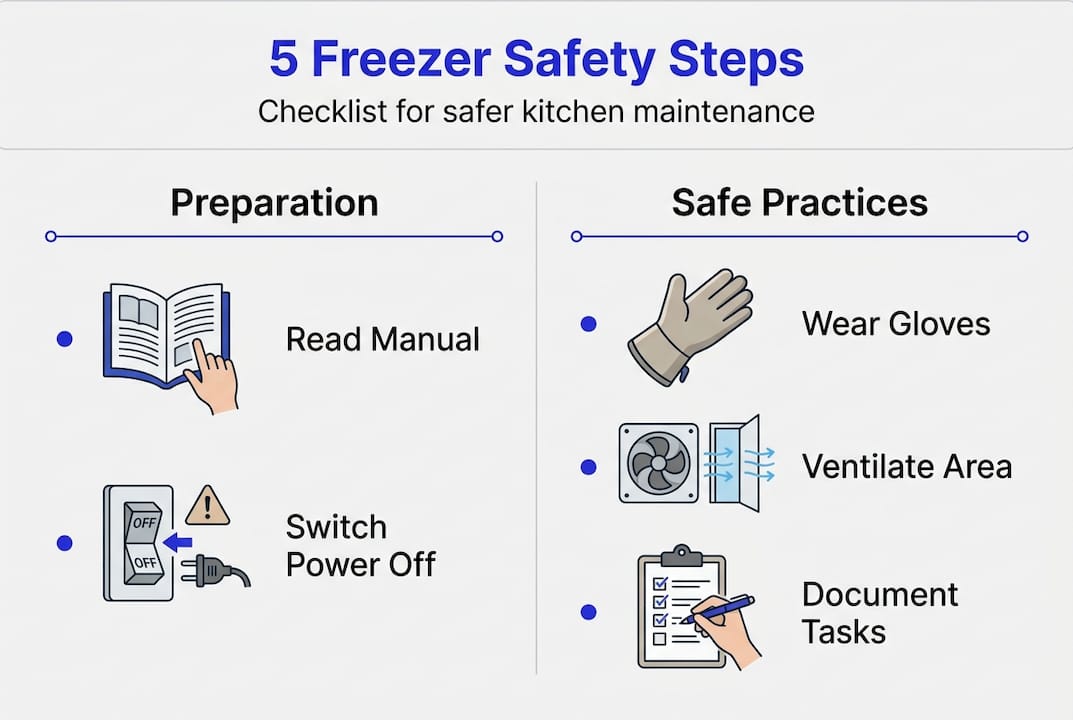
Here is a quick comparison of what you need versus what to avoid:
| Item | Recommended | Avoid |
|---|---|---|
| Cleaning agent | Food-safe, pH-neutral solution | Bleach or ammonia-based products |
| Protective gear | Gloves, goggles, non-slip boots | Bare hands, open-toed shoes |
| Tools | Soft brushes, microfibre cloths | Abrasive scourers, metal scrapers |
| Documentation | Maintenance log, digital records | Verbal-only records |
Essential items to have ready before you start:
- Food-safe cleaning solution approved for refrigeration surfaces
- Nitrile gloves and protective eyewear
- Non-slip footwear suitable for cold environments
- Soft-bristle brush and microfibre cloths
- A thermometer for post-clean temperature verification
- Your maintenance log or digital record sheet
Always cross-reference your approach with food safety guidance from the Food Standards Agency to ensure your methods meet current standards.
Pro Tip: Always document every maintenance session with date, actions taken, and the name of the person responsible. These records are invaluable during environmental health inspections and serve as evidence of due diligence.
Step-by-step walk-in freezer maintenance routine
With preparations in place, you’re ready to follow a proven routine that keeps your walk-in freezer in peak condition. A structured schedule prevents the kind of gradual deterioration that leads to unexpected breakdowns.
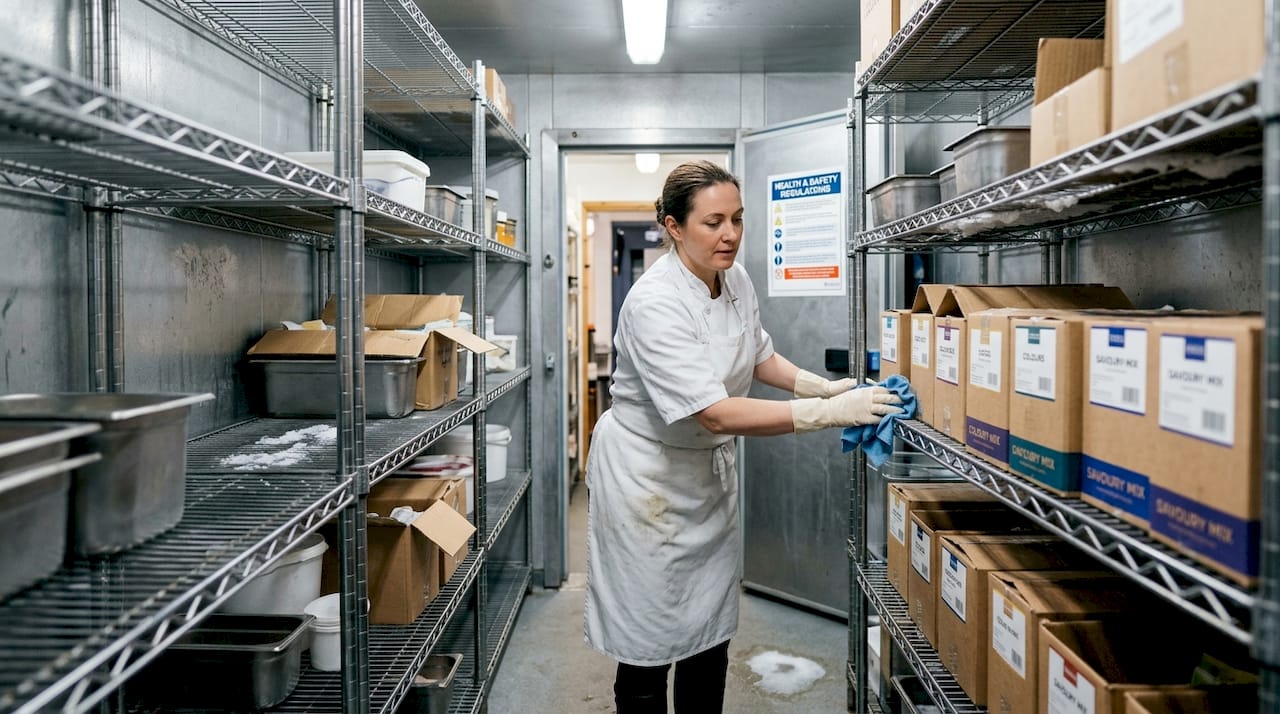
Routine maintenance reduces operational risks and extends your freezer’s working life significantly. Pair this with a solid freezer food safety guide to cover all bases.
Follow this ordered routine:
- Check door seals daily. Run your fingers along the gasket to feel for cracks, gaps, or areas that no longer grip firmly. A failing seal forces the compressor to work harder, raising energy bills and risking temperature drift.
- Monitor and log temperatures daily. Your walk-in freezer should maintain a consistent temperature at or below -18°C. Any reading above this threshold requires immediate investigation.
- Clear drain lines weekly. Blocked drains cause water pooling and ice build-up, both of which create slip hazards and damage flooring. Flush with warm water and check for debris.
- Inspect shelving and stock placement weekly. Overloaded or improperly spaced shelving restricts airflow, which reduces cooling efficiency and creates warm spots.
- Clean condenser coils monthly. Dust and grease accumulation on condenser coils is one of the leading causes of compressor failure. Use a soft brush to remove debris carefully.
- Check defrost cycles monthly. Confirm the automatic defrost cycle is functioning correctly. Excessive ice build-up on evaporator coils is a clear sign something is wrong.
- Inspect refrigerant lines and connections monthly. Look for frost patches or oily residue around joints, which can indicate a refrigerant leak requiring professional attention.
Refer to cold storage safety guidelines from the Health and Safety Executive when assessing workplace risks during maintenance.
| Task | Frequency | Key indicator |
|---|---|---|
| Door seal check | Daily | No gaps or cracks visible |
| Temperature log | Daily | Consistent at or below -18°C |
| Drain line flush | Weekly | Clear flow, no pooling |
| Shelving inspection | Weekly | Adequate airflow around stock |
| Condenser coil clean | Monthly | No dust or grease build-up |
| Defrost cycle check | Monthly | No excess ice on coils |
Pro Tip: Door gaskets and drain lines are the two most frequently neglected areas in walk-in freezer maintenance. Prioritise these during every session, as they account for a disproportionate number of compliance failures and equipment faults.
How to avoid common walk-in freezer mistakes
Even with thorough routines, mistakes happen. Here’s how to stay ahead of the most damaging errors.
Frequent user mistakes can lead to compliance breaches and costly equipment damage. Understanding these errors helps you build better habits across your entire team. You can also explore walk-in cooler benefits to understand how correct use maximises performance.
The most common mistakes managers see in commercial kitchens include:
- Leaving doors ajar. Even a few minutes of an open door causes significant temperature rise and ice build-up around the frame. Install a door alarm if staff frequently leave doors open.
- Blocking air vents with stock. Placing boxes directly against vents restricts circulation and creates uneven cooling. Maintain at least 15 centimetres of clearance around all vents.
- Ignoring temperature fluctuations. A reading that drifts even two or three degrees above the target is an early warning sign, not a minor inconvenience. Act on it immediately.
- Using incorrect cleaning products. Harsh chemicals damage gaskets and internal surfaces over time, shortening equipment lifespan and risking food contamination.
- Overloading shelves. Exceeding weight limits distorts shelving and blocks airflow, both of which accelerate wear on the refrigeration system.
- Skipping food safety training for new staff. Untrained team members are the most common source of avoidable errors.
Important: Failure to maintain correct freezer temperatures and hygiene standards can result in serious food safety breaches under UK food hygiene regulations. Environmental health officers can issue improvement notices, close your premises, and pursue prosecution in severe cases. Compliance is not optional.
Quick fixes are straightforward once you know what to look for. Install self-closing mechanisms on doors, label shelving with maximum weight limits, and brief all staff on correct loading procedures during onboarding.
Verifying results and maintaining compliance
After maintenance, it’s critical to ensure everything is working correctly to pass audits and maintain safety.
Proper records and periodic checks help meet legal standards and prevent spoilage. Use this verification process after every maintenance session:
- Restore power and monitor the temperature recovery. After cleaning, switch the unit back on and observe how quickly it returns to the target temperature. A unit that struggles to recover within a reasonable timeframe may have an underlying issue.
- Conduct a visual inspection. Walk through the unit and check for condensation on walls, frost on coils, or pooling water on the floor. These are signs that something requires further attention.
- Test the door seals under load. Close the door on a piece of paper. If you can pull the paper out easily, the gasket is no longer sealing correctly and needs replacing.
- Review your temperature logs. Compare today’s readings against the previous week. Consistent patterns are reassuring; sudden changes warrant investigation.
- Update your maintenance log immediately. Record the date, tasks completed, temperature readings, and any concerns noted. This forms your refrigeration audit checklist for inspections.
- Seek professional support when needed. If you notice refrigerant issues, compressor noise, or persistent temperature problems, contact a qualified engineer. Attempting to fix refrigerant-related faults without certification is illegal under UK regulations.
For broader compliance requirements, the Food Standards Agency’s business food hygiene guidance outlines the legal obligations every food business must meet.
Why proactive freezer maintenance saves more than costs
Most managers approach walk-in freezer maintenance as a cost-control measure. That framing is understandable, but it undersells what a well-maintained unit actually delivers.
At EcoFrost, we have seen how the maintenance impact on performance extends well beyond energy savings and avoided repair bills. When maintenance is consistent and well-documented, it changes the culture of a kitchen. Staff who are trained to check door seals and log temperatures daily develop a sharper awareness of food safety across every part of their role. That awareness reduces errors, builds confidence, and makes compliance feel natural rather than burdensome.
The businesses that struggle most with freezer reliability are rarely those with old equipment. They are the ones where maintenance is reactive rather than planned. A compressor that fails during a busy Friday service does not just cost money. It costs trust, staff morale, and sometimes the health of customers.
Routine maintenance also gives you leverage. When an environmental health officer visits, a thorough, up-to-date maintenance log signals professionalism and control. That impression matters.
Pro Tip: Make maintenance logs part of your staff induction and ongoing training. When your team understands why each check matters, compliance becomes a shared responsibility rather than a manager’s burden alone.
Expert support for your commercial freezer maintenance
If you need extra support beyond this guide or prefer expert hands on your equipment, EcoFrost is here to help.
Our team has over 10 years of experience supporting restaurants and hotels across the UK, Qatar, and India with everything from commercial freezer installation to tailored professional freezer maintenance plans. Whether you need a one-off inspection, a scheduled maintenance contract, or rapid response to common refrigeration issues, we provide reliable, compliant solutions built around your operation. Get in touch with our team today to discuss a maintenance plan that fits your business and keeps your walk-in freezer performing at its best year-round.
Frequently asked questions
How often should walk-in freezer maintenance be performed?
General checks should be done weekly, with deep cleans monthly and a comprehensive professional inspection at least once a year. Consistent scheduling prevents the gradual deterioration that leads to costly failures.
What are the signs my walk-in freezer needs urgent maintenance?
Warning signs include fluctuating temperatures, ice build-up, odd noises, and visible leaks. Temperature spikes and water leaks indicate urgent attention is needed and should never be ignored.
Is professional maintenance necessary if I follow these steps?
Annual professional inspections are recommended to identify hidden issues and ensure full compliance with UK food safety and refrigerant handling regulations. In-house routines are essential but cannot replace specialist expertise.
Can I use regular household cleaners inside a commercial walk-in freezer?
Only use cleaners specified for food areas. Products suitable for commercial cleaning protect surfaces and prevent contamination, whereas household or fragranced sprays can damage gaskets and leave harmful residues on food contact surfaces.