








Professional Remote Multideck Installation
March 16, 2026
Selecting the right refrigeration system for your restaurant involves more than picking the largest unit available. You must balance storage capacity, energy consumption, food safety requirements, and operational costs whilst meeting increasingly stringent environmental regulations. With refrigeration accounting for nearly half of a restaurant’s electricity costs, choosing equipment that matches your specific needs directly impacts your bottom line and sustainability goals. This guide explores the key types of commercial refrigeration, their applications, and how to select systems that optimise both performance and efficiency.
Table of Contents
- Criteria For Choosing Restaurant Refrigeration
- Common Types Of Restaurant Refrigeration And Their Uses
- Energy Efficiency And Environmental Impact Of Refrigeration Types
- Comparing Restaurant Refrigeration Types For Your Business Needs
- Get Expert Help Choosing Restaurant Refrigeration
Key takeaways
| Point | Details |
|---|---|
| Refrigeration types | Walk-in coolers, reach-in units, display cabinets, and rack systems each serve distinct storage and access needs |
| Energy impact | Restaurants consume more energy per square metre than any other commercial building type, with refrigeration driving costs |
| Natural refrigerants | R290 and CO2 systems offer dramatically lower global warming potential than traditional HFCs whilst improving efficiency |
| Selection criteria | Match equipment to space availability, storage requirements, budget constraints, and 2026 compliance standards |
| Cost considerations | Initial purchase price matters less than total lifecycle costs including energy consumption and maintenance |
Criteria for choosing restaurant refrigeration
When evaluating refrigeration options, you need to consider multiple factors that affect both immediate operations and long-term costs. Choosing a commercial refrigeration system involves considering space needs, storage type, and cost (initial and operating). Your kitchen layout determines whether you can accommodate walk-in units or need compact reach-in models that fit tight spaces. Understanding how to select commercial refrigeration for your business requires matching equipment capacity to your actual storage volumes rather than overbuying.
Storage requirements vary dramatically between establishments. A seafood restaurant needs different temperature zones and humidity controls than a bakery or steakhouse. Fresh produce demands specific conditions, frozen goods require consistent sub-zero temperatures, and displayed items need visibility alongside preservation. You must assess whether you need bulk storage for prep work, quick-access units for service lines, or display refrigeration for customer-facing areas.
Energy efficiency ratings directly translate to operational savings. Equipment bearing higher efficiency certifications costs more upfront but recovers that investment through reduced electricity bills. Calculate total cost of ownership over the equipment’s expected lifespan, typically 10 to 15 years, rather than focusing solely on purchase price. Factor in maintenance requirements, as complex systems with specialised components may require more frequent servicing.
Compliance considerations have grown increasingly important. Local health and safety regulations dictate minimum standards for food storage temperatures and equipment maintenance. Environmental legislation now restricts certain refrigerants and mandates leak detection systems. Your choice must align with current 2026 standards whilst anticipating future regulatory changes that could affect equipment viability.
Pro Tip: Create a detailed map of your kitchen workflow before selecting refrigeration. Identify where staff access ingredients most frequently, then position units to minimise walking distances and improve service speed whilst maintaining proper food safety zones.
Common types of restaurant refrigeration and their uses
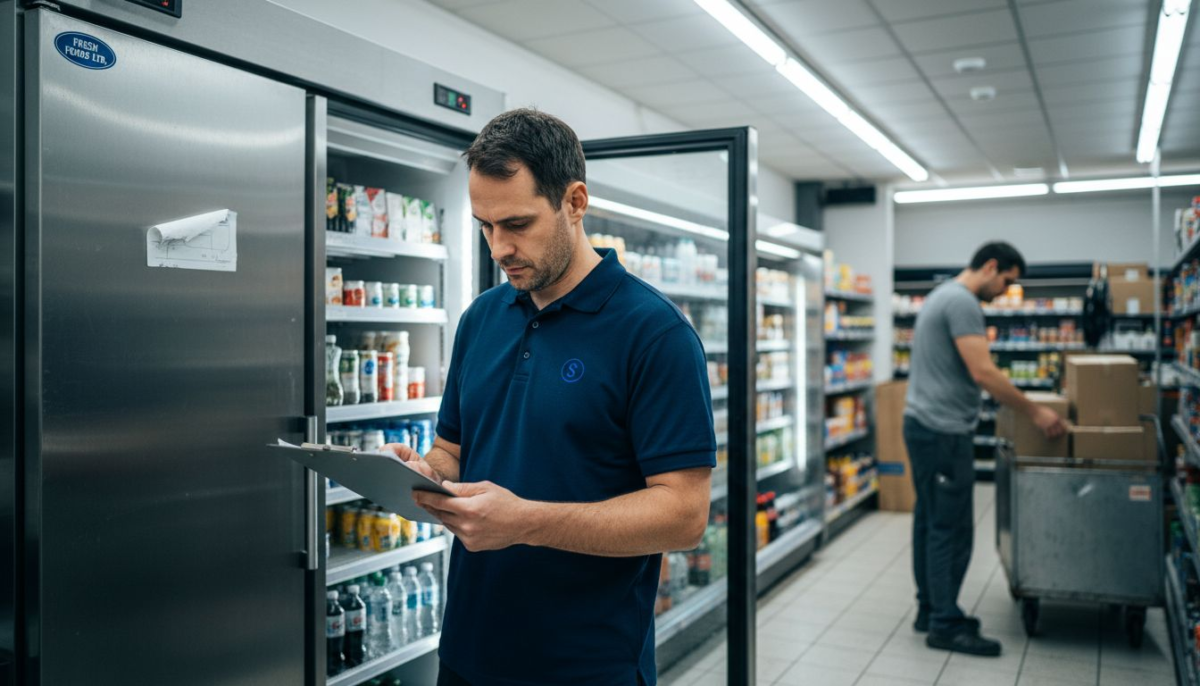
Restaurant refrigeration equipment falls into several distinct categories, each designed for specific operational needs. Walk-in coolers and freezers provide the highest storage capacity, ideal for bulk ingredient storage and long-term preservation. These units allow staff to enter the refrigerated space, making inventory management and stock rotation straightforward. Walk-ins suit high-volume operations, catering businesses, and establishments with extensive menus requiring diverse ingredient storage.
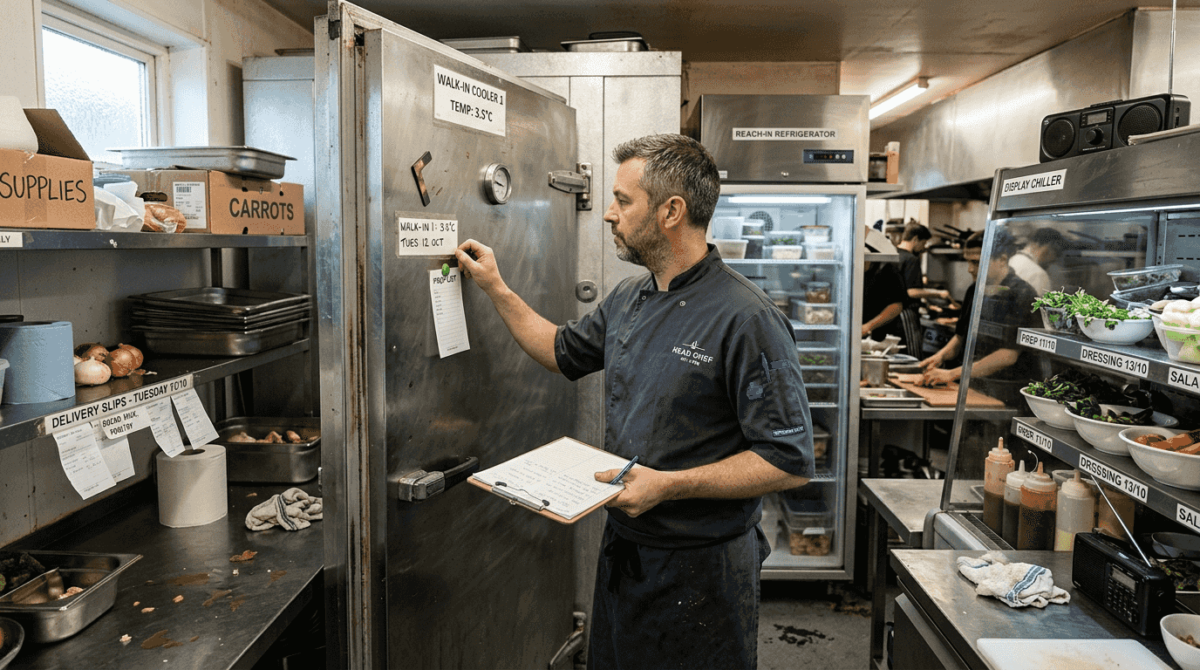
Reach-in refrigerators serve as workhorses in prep areas and service lines. These upright units with external doors provide quick access to frequently used ingredients without entering a larger cold space. Available in single, double, or triple door configurations, reach-in models fit various kitchen layouts whilst maintaining organised storage. Single door commercial catering fridges work well for smaller operations or specialised stations, whilst double door commercial catering fridges accommodate higher-volume needs.
Display refrigeration combines preservation with presentation. Open chiller cabinets allow customers to view and select items in buffet settings, salad bars, or grab-and-go merchandising. The open chiller cabinet 1980 exemplifies equipment designed for accessibility whilst maintaining proper food temperatures. Glass-door display freezers and refrigerators work well for beverages, desserts, and packaged items where visibility drives sales.

Rack refrigeration systems represent sophisticated solutions for operations requiring multiple temperature zones. These centralised systems support numerous display cases, walk-ins, and prep units from a single compressor rack. Rack systems offer flexibility, allowing you to add or reconfigure refrigerated spaces without installing entirely new equipment. They excel in large restaurants, food halls, or multi-concept venues.
Commercial refrigeration systems work on the basic refrigeration cycle, which includes a compressor, condenser, metering device, and evaporator. The compressor circulates refrigerant, the condenser releases heat, the metering device controls refrigerant flow, and the evaporator absorbs heat from the storage space. Understanding these components helps you recognise quality equipment and maintain systems properly.
Energy efficiency and environmental impact of refrigeration types
Restaurants are the most energy-intensive commercial buildings, consuming significantly more electricity per square metre than offices, retail spaces, or hotels. Refrigeration accounts for almost half of all electricity costs in restaurants and commercial kitchens, making equipment efficiency a critical financial consideration. Older refrigeration units can consume 30% more electricity than modern equivalents, translating to substantial unnecessary expenses over their operational life.
Refrigerant selection has become equally important as energy consumption. Traditional hydrofluorocarbon refrigerants like R134a carry high global warming potential, contributing to climate change when leaked into the atmosphere. Self-contained refrigeration equipment using low-charge R290 (propane) refrigerant is highly efficient and boasts a very low global warming potential (GWP = 3). Carbon dioxide systems offer similar environmental benefits whilst handling higher capacities in centralised applications.
The primary driver behind the shift from HFCs is legislation aimed at phasing down high-GWP refrigerants. European regulations and UK standards have accelerated this transition, making compliance essential for new equipment purchases in 2026. Understanding refrigeration compliance in 2026 helps you avoid investing in equipment that may face restrictions or require costly retrofits.
Energy savings extend beyond environmental responsibility to direct cost reduction. A typical restaurant spending £50,000 annually on electricity could save £15,000 by upgrading to high-efficiency refrigeration. These savings compound over equipment lifespan, often recovering upgrade costs within three to five years. Modern units also maintain more consistent temperatures, reducing food spoilage and improving product quality.
“Investing in energy-efficient refrigeration isn’t just environmentally responsible, it’s financially prudent. The operational savings from reduced electricity consumption and fewer service calls typically outweigh the higher initial equipment cost within the first few years.”
Comparing refrigerant options reveals stark differences:
| Refrigerant | Global warming potential | Efficiency | Safety considerations |
| — | — | — |
| R134a (HFC) | 1,430 | Moderate | Non-flammable, being phased out |
| R290 (Propane) | 3 | High | Mildly flammable, requires trained handling |
| R744 (CO2) | 1 | High | Non-flammable, operates at high pressure |
| R448A (HFO blend) | 1,387 | Moderate to high | Mildly flammable, transition refrigerant |
Pro Tip: When comparing equipment specifications, look beyond the energy rating sticker. Request actual consumption data in kilowatt-hours per day under typical operating conditions, as laboratory ratings don’t always reflect real-world performance in busy commercial kitchens.
Comparing restaurant refrigeration types for your business needs
Matching refrigeration equipment to your specific operation requires systematic evaluation of competing priorities. Food retailers and contractors must evaluate factors such as regulatory compliance, upfront and operational costs, climate-dependent energy efficiency, safety protocols, and availability of skilled labour. The right choice balances these considerations against your business model, service volume, and growth plans.
Rack refrigeration systems excel in large operations requiring multiple temperature zones and centralised control. These systems cost more initially but offer superior flexibility and efficiency when supporting numerous refrigerated spaces. Walk-in units provide maximum storage capacity and suit high-volume operations, though they consume significant energy and require dedicated floor space. Reach-in refrigerators balance accessibility with space efficiency, fitting compact kitchens whilst providing organised storage for frequently accessed ingredients.
Display cabinets and open chillers prioritise product visibility and customer access, essential for self-service concepts and merchandising strategies. These units typically consume more energy than closed systems due to constant air exchange, but drive sales through improved product presentation. Consider your service model when weighing this trade-off between energy costs and revenue potential.
Maintenance requirements vary significantly between equipment types. Self-contained units with integrated compressors simplify servicing but may require complete replacement when major components fail. Rack systems allow component-level repairs and upgrades, potentially extending overall system life. Factor in local availability of qualified technicians familiar with your chosen refrigerant and equipment type, as specialised systems may face longer repair times.
| Equipment type | Best for | Capacity | Energy efficiency | Initial cost | Maintenance |
|---|---|---|---|---|---|
| Walk-in cooler | Bulk storage, prep | Very high | Moderate | High | Moderate |
| Reach-in fridge | Quick access, organisation | Moderate | High | Moderate | Low |
| Display cabinet | Merchandising, visibility | Low to moderate | Low to moderate | Moderate | Moderate |
| Rack system | Multi-zone, large operations | Very high | High | Very high | High |
| Undercounter unit | Space-constrained areas | Low | Moderate to high | Low to moderate | Low |
Follow this decision framework to identify optimal equipment:
- Calculate actual storage volume requirements based on menu complexity, service volume, and delivery frequency rather than estimating generously
- Map kitchen workflow to determine where refrigeration access points improve efficiency without creating safety hazards or service bottlenecks
- Assess available floor space, ceiling height, and utility connections to identify physical constraints on equipment size and type
- Establish total budget including installation, electrical work, and first-year operating costs rather than equipment purchase price alone
- Research local regulations and upcoming compliance requirements to ensure equipment remains viable throughout its expected lifespan
- Request energy consumption data and calculate projected electricity costs over 10 years to compare total cost of ownership accurately
- Evaluate maintenance requirements and confirm local availability of qualified service technicians for your chosen equipment and refrigerant type
Consulting the commercial refrigeration selection guide provides additional frameworks for matching equipment capabilities to operational requirements. Consider lease options for expensive equipment, as this approach preserves capital whilst ensuring access to current technology and may include maintenance coverage.
Get expert help choosing restaurant refrigeration
Navigating refrigeration options becomes significantly easier with professional guidance tailored to your specific operation. EcoFrost specialises in helping restaurant managers identify equipment that balances performance, efficiency, and budget constraints. Our team evaluates your kitchen layout, storage requirements, and service model to recommend solutions that optimise both food safety and operational costs.
We provide comprehensive support from initial commercial refrigeration selection through installation and ongoing maintenance. Our technicians stay current with 2026 compliance requirements and emerging refrigerant technologies, ensuring your investment meets both present needs and future regulations. With over 10 years of experience across diverse hospitality environments, we understand the unique challenges restaurants face and deliver practical solutions that work in real-world conditions.
Our services and maintenance programmes keep your equipment operating at peak efficiency, preventing costly failures and extending system lifespan. Regular servicing catches minor issues before they escalate, maintaining food safety whilst controlling repair costs. Contact EcoFrost to discuss your refrigeration needs and discover how the right equipment choices reduce costs whilst improving operational performance.
FAQ
What is the most energy-efficient type of refrigeration for restaurants?
Self-contained units using natural refrigerants like R290 tend to be more efficient and eco-friendly compared to older HFC systems. These modern units consume less electricity whilst maintaining consistent temperatures, often reducing energy costs by 25% to 30%. Look for equipment with high energy ratings and low-charge refrigerant systems that minimise environmental impact without sacrificing performance.
How often should commercial refrigeration equipment be serviced?
Regular servicing at least twice a year helps maintain efficiency and prevent costly failures. Professional maintenance includes checking refrigerant levels, cleaning condenser coils, inspecting door seals, and verifying temperature accuracy. Commercial refrigeration maintenance services catch developing problems early, extending equipment life and ensuring consistent food safety compliance.
What factors influence the choice of refrigerant in restaurant refrigeration?
Regulatory compliance, environmental impact, energy efficiency, safety, and availability of trained technicians all influence refrigerant choice. The primary driver behind the shift from HFCs is legislation aimed at phasing down high-GWP refrigerants. Natural refrigerants like R290 and CO2 offer superior environmental profiles but require specific handling protocols and equipment designs.
Can I retrofit existing refrigeration equipment with new refrigerants?
Retrofitting depends on equipment age, design, and the specific refrigerants involved. Some systems accommodate drop-in replacement refrigerants with minimal modifications, whilst others require extensive component changes that may not prove cost-effective. Consult qualified technicians to assess retrofit viability, as improper conversions compromise efficiency and safety whilst potentially violating warranty terms.
How do I calculate the right refrigeration capacity for my restaurant?
Calculate capacity based on menu complexity, daily service volume, delivery frequency, and peak storage needs during busy periods. Multiply your daily ingredient usage by storage days between deliveries, then add 20% buffer for flexibility. Consider separate calculations for fresh, frozen, and display storage, as each requires different temperature ranges and access patterns that affect equipment selection.
Recommended
- What is refrigeration compliance and why it matters in 2026
- How to select commercial refrigeration for your business
- Double door commercial catering fridge – EcoFrost Hvac
- Open chiller cabinet – 1980 series – EcoFrost Hvac
- Guía Esencial De Tecnico Para Refrigeradores 2026
- Restaurant technology checklist for UK venues 2026