
TL;DR:
- Regular professional maintenance reduces energy costs, extends equipment lifespan, and ensures food safety compliance.
- Neglecting refrigeration maintenance increases risks of breakdowns, regulatory fines, and food safety breaches.
- Using qualified, certified technicians for scheduled servicing is essential for legal and operational security.
Refrigeration is the backbone of daily operations in any hospitality business, yet most owners treat it as a fit-and-forget investment. That mindset is costly. Case studies demonstrate that structured maintenance programmes can deliver over 22% in energy cost reductions, with hotel HVAC operations achieving 19% energy savings and 34% reductions in maintenance spend through predictive servicing. If your refrigeration units are running without a scheduled care plan, you are almost certainly overspending, risking food safety breaches, and leaving your business exposed to regulatory penalties. This guide gives you the evidence, the risks, and the practical steps to change that.
Table of Contents
- Why regular maintenance matters for hospitality refrigeration
- Hidden risks: What happens when maintenance is neglected
- How regular maintenance reduces costs and environmental impact
- Choosing the right maintenance provider: Professional vs DIY
- Our view: The overlooked value of professional maintenance
- Ready for safer, cost-efficient refrigeration?
- Frequently asked questions
Key Takeaways
| Point | Details |
|---|---|
| Huge cost savings | Regular refrigeration maintenance can reduce energy bills by over 20 percent. |
| Avoid breakdowns | Scheduled care helps prevent sudden failures and expensive emergency repairs. |
| Compliance matters | Professional maintenance supports legal compliance and prevents regulatory fines. |
| DIY is risky | Attempting maintenance yourself can cause damage or legal issues; always use qualified engineers. |
Why regular maintenance matters for hospitality refrigeration
Understanding what commercial refrigeration involves is the first step to appreciating why it demands consistent professional attention. These are not domestic appliances. Commercial refrigeration systems run continuously, carry significant stock value, and operate under strict food safety legislation. When they underperform, the consequences reach far beyond a warm drink.
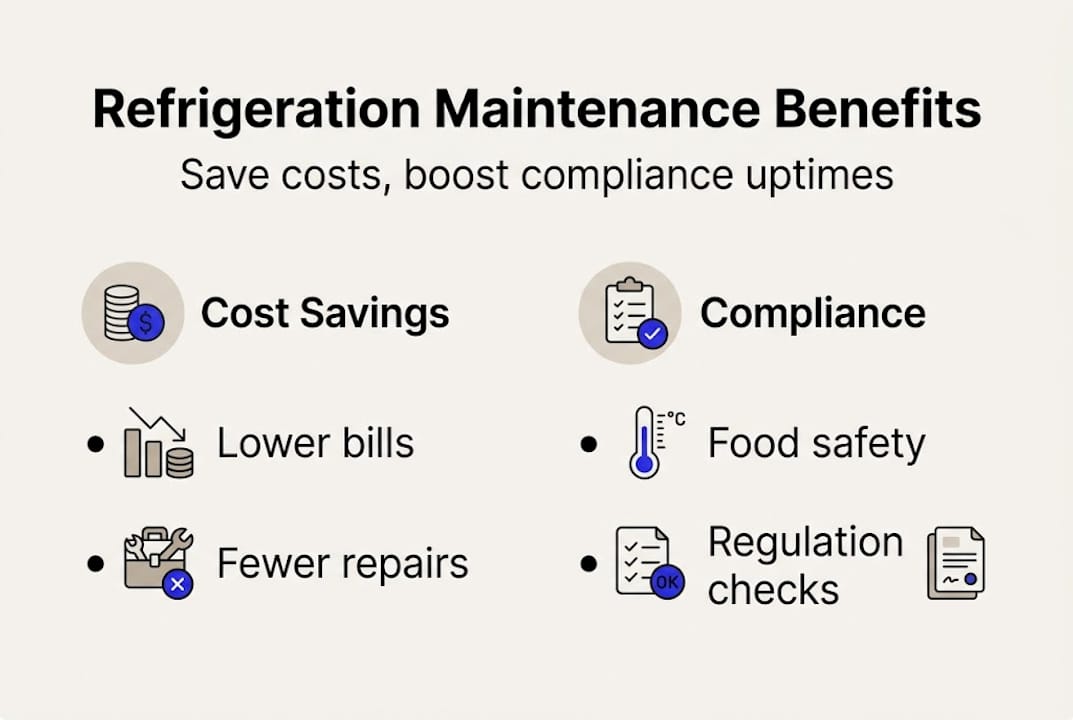
Energy consumption is one of the largest ongoing costs in any commercial kitchen or food retail environment. Refrigeration units that have not been serviced regularly work harder to maintain target temperatures, drawing more electricity and inflating your energy bills month after month. Dirty condenser coils, worn door seals, and low refrigerant levels are all silent contributors to wasted energy.
| Maintenance activity | Estimated energy saving |
|---|---|
| Condenser coil cleaning | Up to 15% reduction |
| Door seal replacement | Up to 10% reduction |
| Refrigerant level check | Up to 8% reduction |
| Full scheduled service | Up to 22% overall saving |
The financial case is clear. Energy cost reductions of 22% have been documented in structured maintenance programmes across food manufacturing and hospitality environments. For a mid-sized hotel or restaurant group, that figure translates into thousands of pounds each year.
Beyond energy, regular servicing prevents the kind of sudden breakdowns that cause stock loss, kitchen shutdowns, and emergency callout fees. A professional engineer visiting your site twice a year will identify worn components, refrigerant leaks, and compressor stress before they become failures. That proactive approach also extends equipment lifespan considerably, delaying the capital expenditure of full unit replacement.
- Prevents unplanned breakdowns and costly emergency repairs
- Protects perishable stock from temperature excursions
- Keeps refrigerant levels within legal and operational limits
- Maintains kitchen safety by reducing electrical and gas risks
- Supports HACCP food safety standards through documented service records
Pro Tip: Keep a maintenance log for every refrigeration unit on site. Inspectors and insurers will ask for it, and it demonstrates due diligence if a food safety incident ever occurs.
Proper maintenance for food safety is not optional in the hospitality sector. It is a legal and operational necessity that pays for itself many times over.
Hidden risks: What happens when maintenance is neglected
The true cost of skipping maintenance rarely shows up on a single invoice. It accumulates quietly until a breakdown forces your hand, and by that point the financial and reputational damage is already done.
Common causes of equipment failure almost always trace back to neglected servicing. Compressor failures, blocked evaporator coils, and refrigerant leaks are predictable outcomes of irregular care. Each one carries a repair cost far exceeding what a scheduled service would have cost.
Consider what a single breakdown during a busy service period means for your business. Lost stock, a kitchen that cannot operate, and customers who do not return. The impact on food safety alone can trigger enforcement action from environmental health officers, resulting in formal warnings or temporary closure.
| Approach | Average annual cost | Risk level |
|---|---|---|
| Planned preventive maintenance | £400 to £800 per unit | Low |
| Reactive repair only | £1,200 to £3,500+ per incident | High |
| No maintenance, full replacement | £3,000 to £15,000 per unit | Critical |
The numbers speak clearly. Reactive maintenance is consistently more expensive than prevention, and professional service for compliance is not simply a recommendation. It is a legal requirement in many situations.
Here are the key risks that build when maintenance is neglected:
- Sudden equipment failure during peak trading hours
- Food safety breaches leading to stock disposal and potential prosecution
- Refrigerant leaks triggering F-Gas regulation penalties
- Voided manufacturer warranties due to lack of documented servicing
- Insurance claims rejected because maintenance obligations were not met
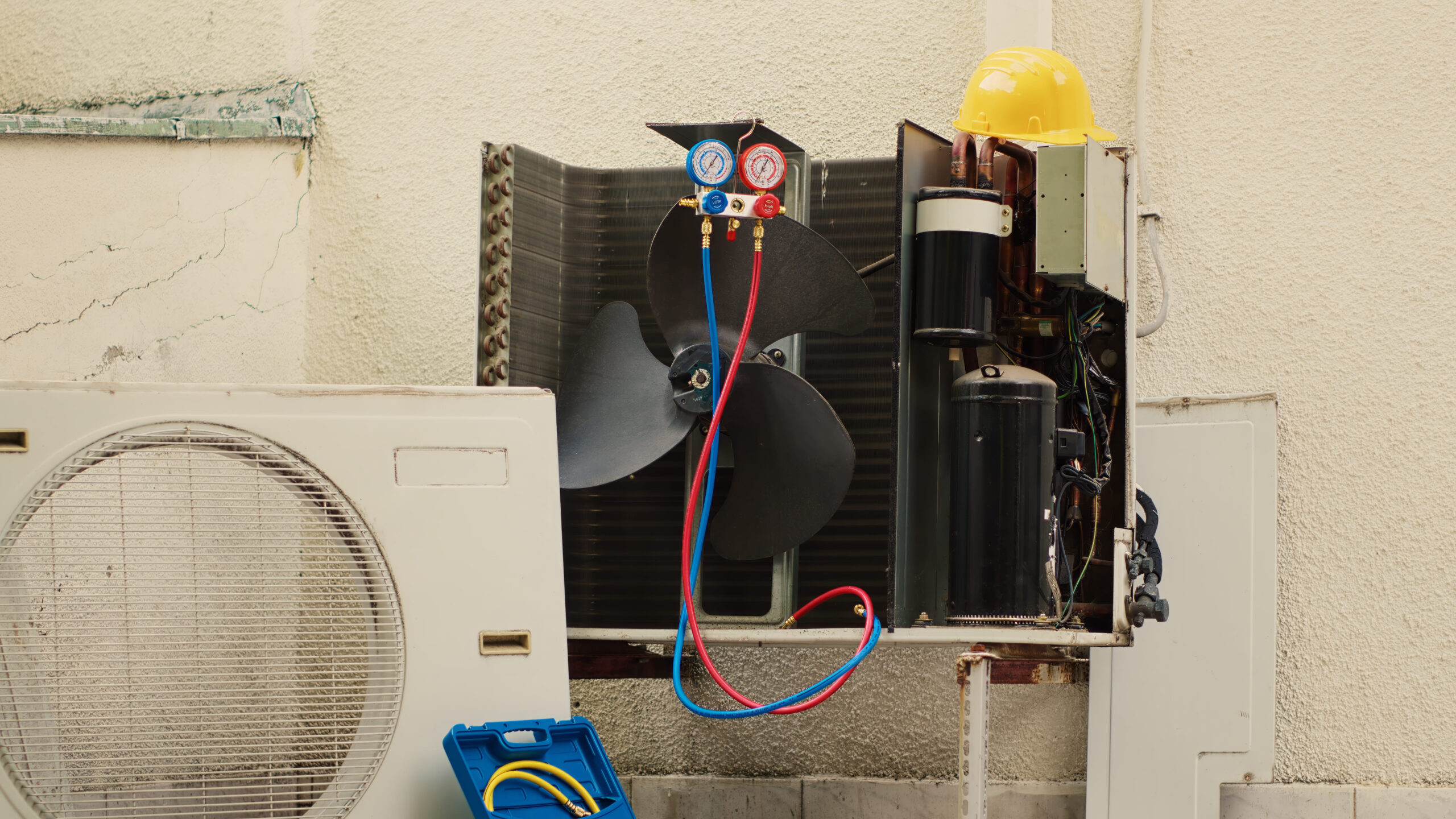
DIY repairs present a particular danger. Handling refrigerants without the correct F-Gas certification is illegal in the UK. Fines can be substantial, and regulatory compliance obligations extend to record-keeping, leak testing schedules, and engineer qualifications. A well-intentioned but unqualified fix can expose your business to far greater liability than the original fault.
“The difference between a planned service visit and an emergency callout is not just cost. It is the difference between a business that operates smoothly and one that is constantly firefighting.”
How regular maintenance reduces costs and environmental impact
Once you understand the risks of neglect, the financial and environmental case for scheduled maintenance becomes straightforward. Well-maintained refrigeration units consume less energy, require fewer repairs, and last significantly longer than units that receive only reactive attention.
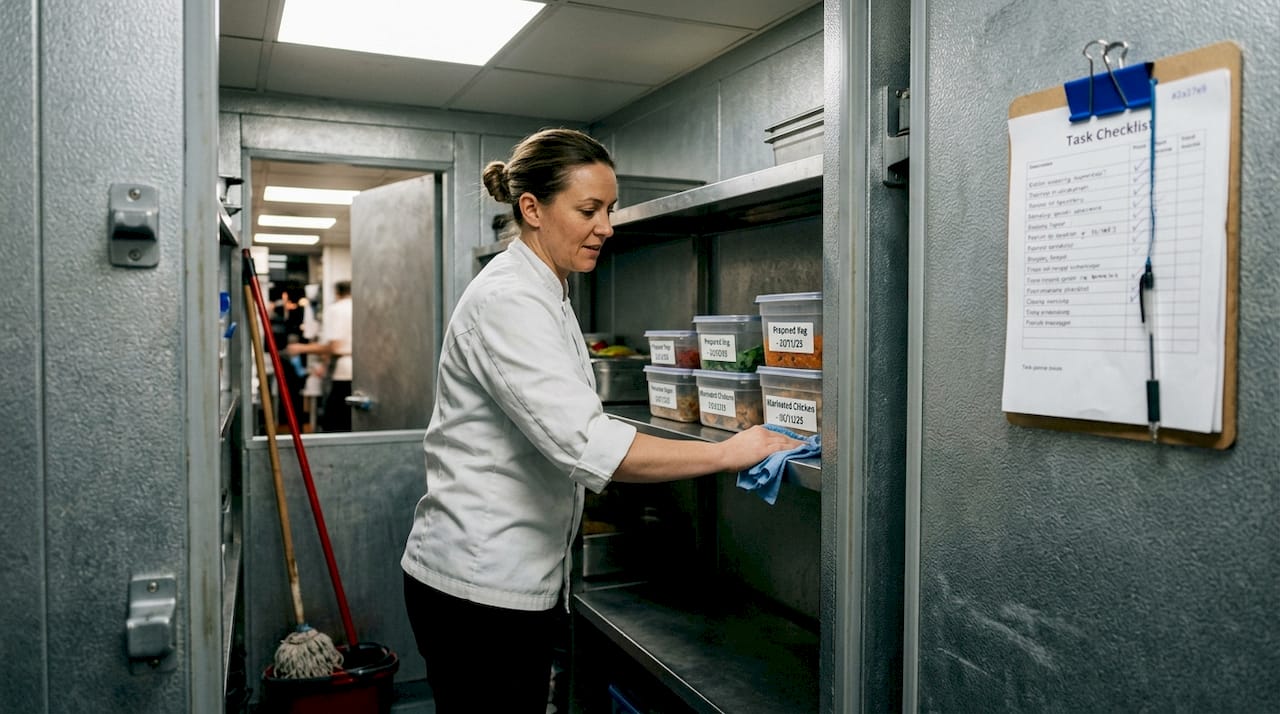
The savings are not theoretical. Predictive maintenance delivers up to 19% in energy savings and 34% reductions in maintenance spend, based on documented case studies in hospitality and food retail environments. For a business operating multiple refrigeration units, those percentages represent a meaningful reduction in your monthly operating costs.
Addressing common refrigeration problems before they escalate is central to this approach. A blocked condenser fan identified during a routine visit costs very little to resolve. Left unattended, it can cause compressor failure within weeks, resulting in a repair bill ten times higher.
Key financial and environmental benefits of scheduled maintenance:
- Lower energy bills through improved unit efficiency
- Reduced refrigerant consumption, cutting both cost and environmental impact
- Extended equipment lifespan, deferring capital replacement costs
- Fewer emergency callouts and unplanned repair expenses
- Reduced carbon emissions, supporting your sustainability commitments
The environmental dimension matters increasingly to hospitality businesses. Refrigerants are potent greenhouse gases. A leaking system not only wastes energy but releases substances with global warming potential hundreds of times greater than carbon dioxide. Regular leak checks and prompt repairs keep your environmental footprint in check and ensure compliance with F-Gas regulations.
Pro Tip: Ask your maintenance provider to include an energy efficiency report with each service visit. Comparing readings over time gives you hard data to present to stakeholders and can support applications for green business grants.
Establishing solid cleaning routines for efficiency between professional visits also makes a measurable difference. Clean condenser coils and unobstructed airflow reduce the workload on your compressor and keep running costs down.
Choosing the right maintenance provider: Professional vs DIY
Not all maintenance is equal. The difference between a qualified refrigeration engineer and an unqualified technician is not just technical competence. It is legal accountability, insurance validity, and the ability to handle refrigerants lawfully.
Professional setup and servicing requires engineers who hold current F-Gas certification, understand manufacturer specifications, and can produce service documentation that satisfies both insurers and environmental health inspectors. Without that, you are not just taking a technical risk. You are taking a legal one.
Professional maintenance expertise is consistently identified as the critical factor in achieving compliance and maximising the return on your maintenance investment. Here is what a quality provider contract should include:
- Scheduled visits at agreed intervals, typically twice yearly as a minimum
- Written service reports after every visit, including temperature readings and component condition
- Refrigerant leak testing in line with F-Gas regulation requirements
- 24/7 emergency callout support for critical failures
- Clear escalation procedures for faults identified during routine visits
- Evidence of engineer F-Gas certification and public liability insurance
DIY approaches, even well-intentioned ones, carry risks that most business owners underestimate. Replacing a door seal or cleaning a condenser is within reach of a competent facilities manager. But diagnosing refrigerant pressure issues, testing electrical components, or adjusting expansion valves requires specialist knowledge and legal certification. Getting it wrong voids your warranty and, in the case of refrigerant handling, exposes you to regulatory enforcement.
“A maintenance contract is not an overhead. It is a risk management tool that protects your stock, your licence to trade, and your bottom line.”
Pro Tip: When evaluating providers, ask for references from hospitality clients specifically. The demands of a hotel kitchen or restaurant are different from a retail unit, and experience in your sector matters.
Our view: The overlooked value of professional maintenance
After more than a decade working with hospitality businesses across the UK, Qatar, and India, we have seen the same pattern repeat itself. A business runs its refrigeration units hard, skips the scheduled service to save money, and then faces a breakdown at the worst possible moment. The emergency repair costs more than three years of planned maintenance would have.
What surprises us most is not the cost. It is the mindset. Many operators genuinely believe that if a unit is running, it is fine. They wait for a visible fault before acting. But refrigeration deterioration is gradual. By the time a problem is obvious, significant damage has already occurred.
The businesses that manage refrigeration well treat it like any other critical asset. They schedule servicing, review refrigeration troubleshooting strategies proactively, and build maintenance costs into their operating budget rather than treating them as an unwelcome surprise. That shift in approach, from reactive to predictive, is what separates businesses that control their costs from those that are controlled by them.
Ready for safer, cost-efficient refrigeration?
The evidence throughout this guide points in one direction. Scheduled, professional maintenance is the most reliable way to reduce energy costs, protect food safety compliance, and extend the working life of your refrigeration equipment.
EcoFrost’s maintenance services are designed specifically for hospitality businesses that need reliable, compliant refrigeration without the operational headaches. Whether you are managing a single restaurant or a multi-site hotel group, we build service plans around your trading patterns and compliance requirements. If you want to understand more about the risks of poor maintenance or explore solutions for common issues, our resource library is a strong starting point. Contact EcoFrost today to discuss a maintenance plan that works for your business.
Frequently asked questions
How often should commercial refrigeration units be serviced?
Hospitality fridges and freezers should be professionally serviced at least twice a year, though high-usage sites such as hotel kitchens or busy restaurants may benefit from quarterly checks to maintain peak efficiency and compliance.
What are the signs my refrigeration needs maintenance now?
Rising energy bills, inconsistent temperatures, ice build-up on internal surfaces, and unusual noises are reliable early warning signs. Early intervention consistently prevents the more serious faults that follow when these signals are ignored.
Is professional maintenance worth the cost for small businesses?
Yes. Even for smaller outlets, documented energy savings and the avoidance of emergency repair costs mean scheduled maintenance typically pays for itself within the first year of a service agreement.
Does regular maintenance help avoid regulatory fines?
Regular, professional servicing is essential to meet F-Gas refrigerant handling regulations in the UK and to avoid enforcement action. Documented service records are your primary evidence of compliance during any inspection.