
TL;DR:
- Many UK businesses are losing significant energy through ducted air conditioning systems due to duct leaks and inefficiencies. Ductless cooling offers a direct, flexible, and energy-efficient alternative by cooling each zone independently without ductwork. Its advantages include lower installation disruption, better zone control, and reduced long-term maintenance costs.
Many UK businesses are quietly haemorrhaging money through their air conditioning systems without realising it. Traditional ducted systems push cooled air through networks of pipework that can lose a significant portion of that energy before it even reaches the room. Ductless cooling offers a direct, room-by-room alternative that is both more efficient and far more flexible. This guide covers what ductless cooling is, how it differs from conventional ducted systems, and why growing numbers of UK facility managers and business owners are choosing it as their preferred cooling solution.
Table of Contents
- What is ductless cooling?
- Traditional ducted versus ductless cooling systems
- How ductless cooling delivers efficiency and control
- Practical considerations for UK businesses
- The real-world cost and control breakthroughs most business guides miss
- Upgrade your business cooling with expert guidance
- Frequently asked questions
Key Takeaways
| Point | Details |
|---|---|
| Ductless means direct cooling | Cool air delivered right to each room without energy-wasting ducts. |
| Superior zoning capabilities | Businesses can fine-tune temperatures for each area and reduce waste. |
| Easier retrofit and installation | Ductless systems are ideal for upgrades in older or complex buildings. |
| Significant energy savings | Ductless avoids up to 30% energy loss found in ducted AC systems. |
What is ductless cooling?
The concept is straightforward. Rather than cooling air centrally and pushing it through ducts to various rooms, a ductless system cools each space directly. As the US Department of Energy defines it, ductless cooling refers to air conditioning that cools spaces directly without using air ducts, typically using a mini-split configuration with one outdoor unit and one or more indoor air-handling units.
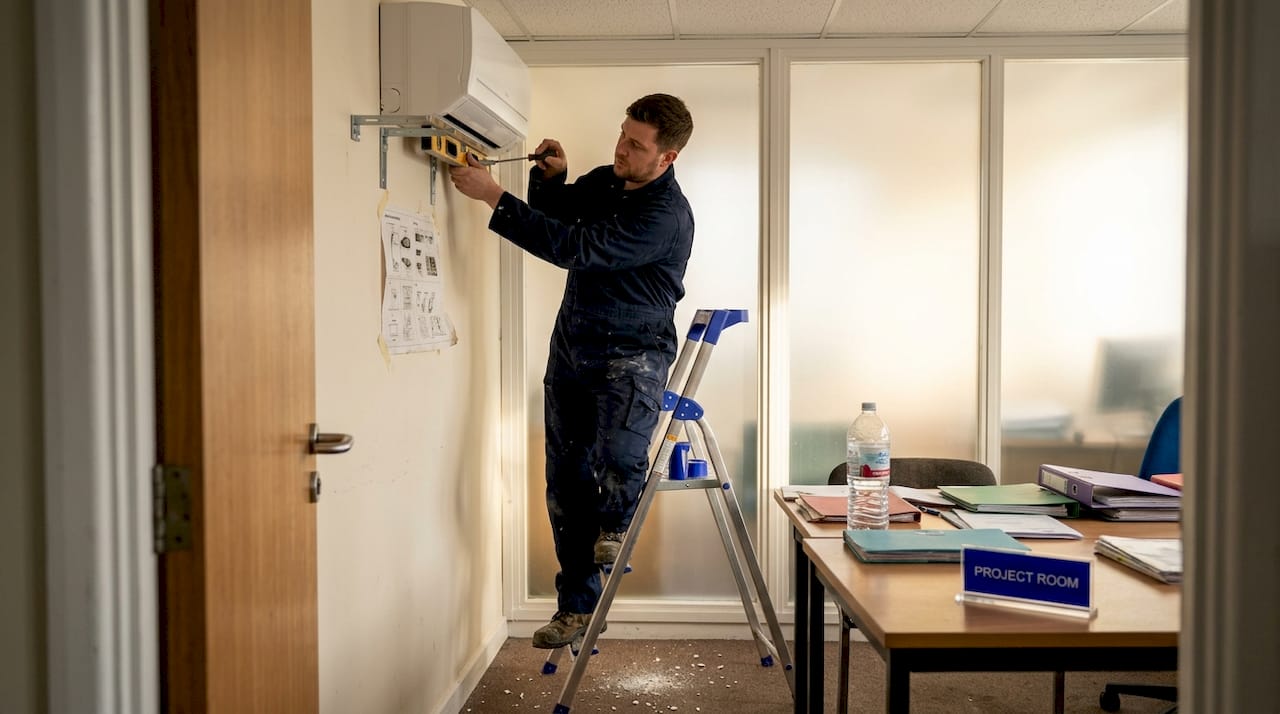
In commercial settings, that means you get precise control without the infrastructure headaches that come with traditional ducted installations. Each indoor unit handles one zone or room, drawing refrigerant from the shared outdoor compressor through a relatively small conduit drilled through the wall.
The core components of a ductless system are:
- Outdoor compressor/condenser unit: This sits outside the building and drives the refrigerant cycle
- Indoor air-handling units: Mounted on walls or ceilings inside each zone, these deliver cooled air directly into the space
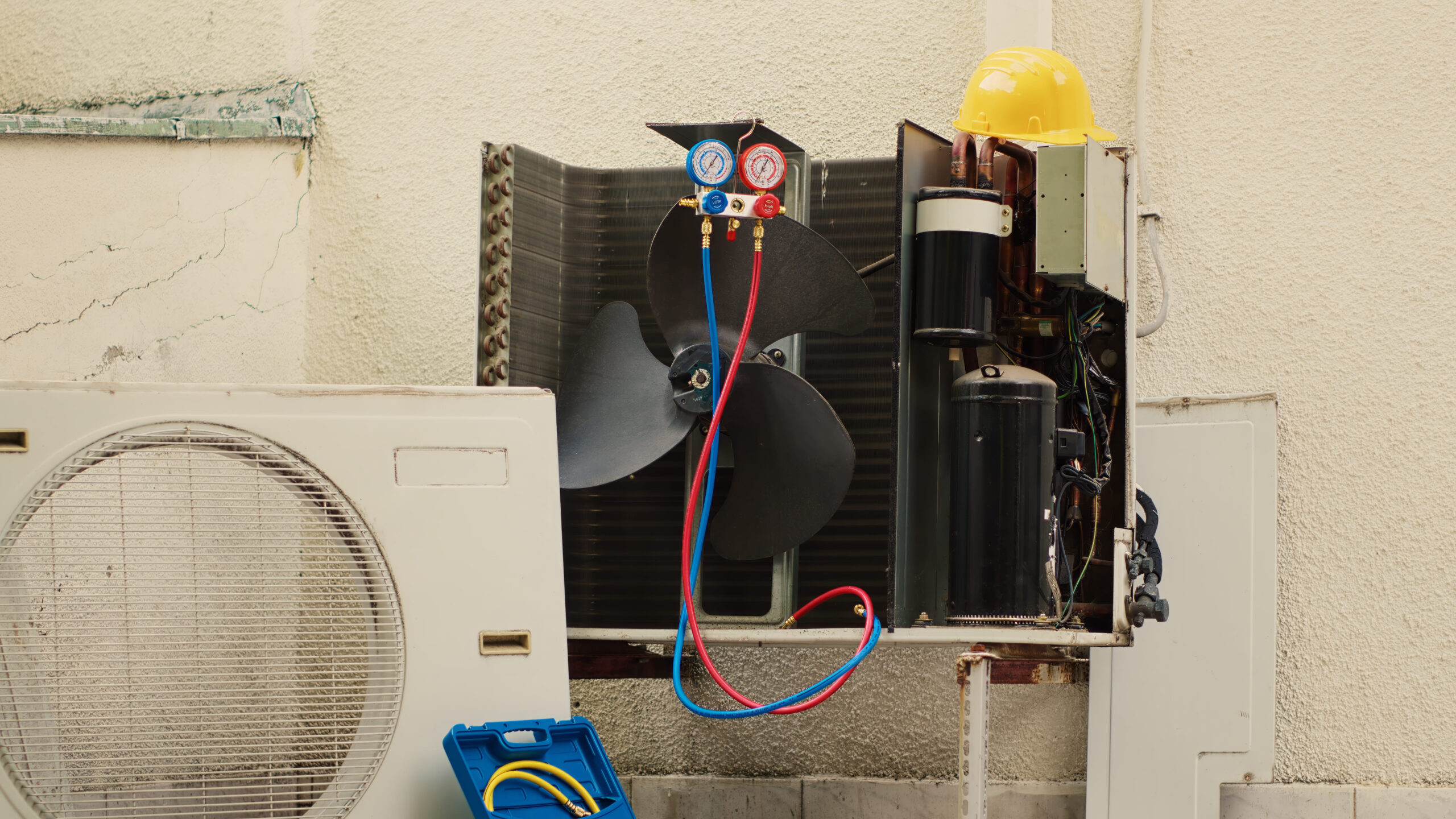
- Conduit connection: A slim bundle carrying power cables, refrigerant tubing, and a condensate drain runs between the outdoor and indoor units
- Remote or building management control: Each indoor unit is controlled independently, often via remote, wall panel, or integration with a wider building management system
In UK commercial environments, you will find ductless systems in a wide range of settings. Server rooms and IT suites, where consistent cooling is critical, are common applications. Office suites in older buildings where ductwork is impractical, restaurant dining areas requiring zoned comfort, and retail units that need cost-effective retrofitting all benefit greatly.
When comparing AC unit types for your premises, ductless mini-splits consistently stand out for their installation flexibility and efficiency ratings.
Pro Tip: Before specifying a ductless system, confirm the available external wall or roof space for the outdoor unit. In town centre locations or listed buildings, placement options can be limited, and planning guidance from your local authority may apply.
Traditional ducted versus ductless cooling systems
Most commercial buildings in the UK that have air conditioning installed use some form of ducted system. These systems condition air centrally, using a large fan coil or air handling unit, and distribute it through a network of ducts to ceiling diffusers throughout the building. It is a proven approach, and for buildings designed around it, it works reasonably well.
The problem is energy loss. According to the Department of Energy, duct losses in central forced-air systems can account for more than 30% of air conditioning energy consumption. In a UK business running cooling for eight or more hours per day, that is a substantial cost going nowhere useful.
Key fact: Ductwork energy losses in traditional systems can exceed 30% of total A/C consumption. Ductless systems avoid this entirely because they deliver cooled air directly to each zone.
Ductless systems avoid this loss completely because the refrigerant travels directly to the indoor unit in each zone. There are no ducts, no leaky joints, and no long runs of insulated pipework losing energy through unconditioned ceiling voids.
Here is a direct comparison of both system types across the factors that matter most to UK business owners:
| Factor | Ducted system | Ductless system |
|---|---|---|
| Installation complexity | High; requires ductwork throughout building | Low to moderate; conduit through wall only |
| Energy efficiency | Moderate; 20 to 30%+ duct losses common | High; direct delivery to each zone |
| Zone control | Limited without additional controls | Full independent control per zone |
| Retrofit suitability | Difficult in older or listed buildings | Well suited to retrofits and conversions |
| Maintenance access | Ducts require periodic cleaning and inspection | Filter cleaning only at indoor unit |
| Initial cost | Higher due to ductwork installation | Lower overall for smaller installations |
| Disruption during install | Significant, particularly in occupied buildings | Minimal; most installs completed in one to two days |
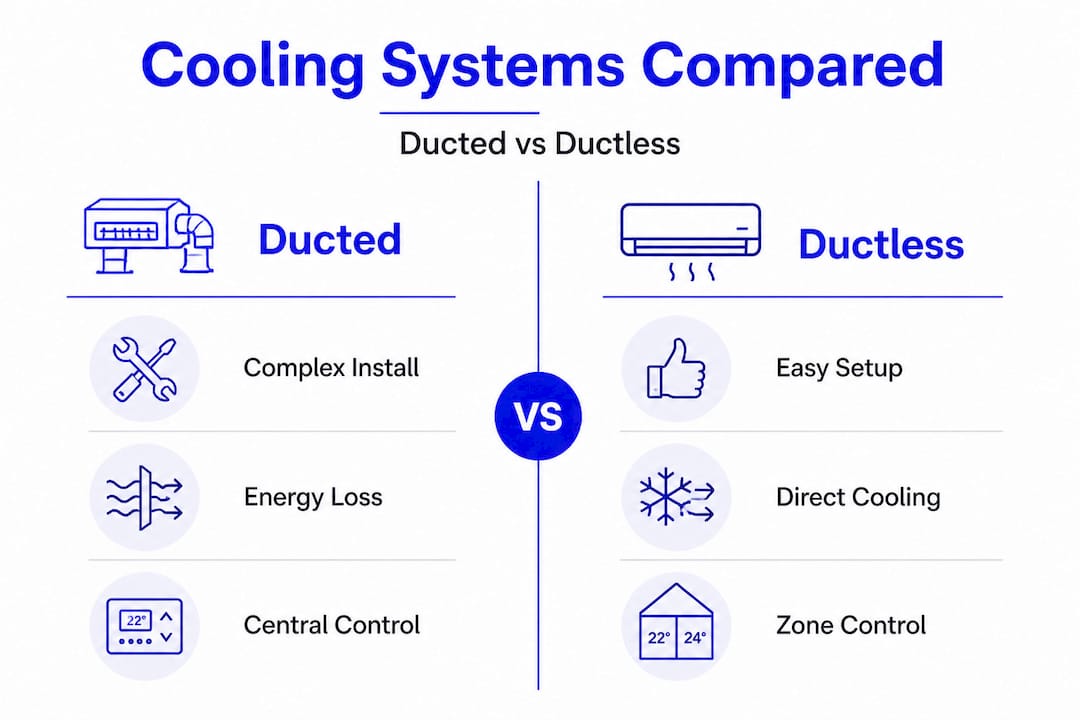
For businesses operating in older UK premises or those going through phased refurbishments, the comparison is particularly compelling. There are strong energy efficient HVAC benefits in choosing ductless from the outset, and the advantages of energy efficient cooling extend beyond energy bills to staff productivity and reduced reactive maintenance.
Which system suits which scenario? Here is a practical breakdown:
- New commercial builds with centralised services: Ducted may still be appropriate if designed correctly from the start
- Retrofit of an existing office or retail unit: Ductless is almost always the more practical and cost-effective route
- Multi-use facilities with varied occupancy: Ductless zoning is far superior for managing different usage patterns
- Listed or heritage buildings: Ductless causes minimal structural disruption, making it the preferred choice
- Food production or hospitality premises: Ductless excels where temperature requirements vary significantly between zones
How ductless cooling delivers efficiency and control
The biggest operational advantage of ductless cooling for businesses is zoning. Zoning means that each indoor unit operates independently. A busy kitchen running at full capacity can be cooled heavily while an empty conference room stays off entirely. That level of control is simply not achievable with most conventional ducted systems without significant additional investment in variable air volume controls.
The Department of Energy confirms that the primary business benefit of ductless mini-splits is exactly this: avoiding duct-related energy losses and enabling room-by-room control through multiple independent indoor units delivering conditioned air directly to each zone.
The energy savings from proper zoning can be substantial. Consider the following indicative comparison for a mid-sized commercial facility running cooling across multiple areas:
| Zone type | Ducted system daily running cost (estimated) | Ductless system daily running cost (estimated) | Indicative saving |
|---|---|---|---|
| Open-plan office (20 people) | £18 to £22 | £13 to £16 | 25 to 30% |
| Server room (24/7 operation) | £12 to £15 | £9 to £11 | 20 to 25% |
| Kitchen and food prep area | £10 to £14 | £7 to £10 | 25 to 30% |
| Storage or warehouse section | £8 to £11 | £3 to £5 | 50 to 60% |
These figures are illustrative, but they reflect the real-world patterns EcoFrost HVAC engineers see across installations. The storage zone saving is particularly striking because a ductless system means that zone simply switches off when unoccupied, whereas a centralised ducted system often continues conditioning that space as part of a larger circuit.
Here is how a typical UK business would configure ductless zones for maximum efficiency:
- Assess occupancy patterns for each area of the building across the working week
- Map zones based on usage, heat load, and function (offices, kitchens, server rooms, storage)
- Specify indoor units sized to match each zone’s cooling load, not a blanket building calculation
- Programme operating schedules to match actual business hours in each zone
- Integrate with building management if the site uses one, or use standalone timers and thermostats per zone
- Review and adjust after the first full summer season to fine-tune settings
Exploring cost-efficient refrigeration solutions alongside your ductless cooling plan makes sense for hospitality and food businesses. If your operation includes cold rooms or chillers, understanding how both systems interact can unlock further savings. The benefits of commercial chiller systems are well documented in food and hospitality environments, and pairing them with a properly zoned ductless system creates a coherent, efficient refrigeration and cooling strategy.
Pro Tip: Use your ductless system’s programmable scheduling to run pre-cooling during off-peak electricity tariff hours. Many UK businesses on time-of-use tariffs can significantly reduce running costs simply by cooling the space slightly before peak electricity pricing kicks in during the morning.
Practical considerations for UK businesses
Understanding the benefits is one thing. Implementing ductless cooling effectively in a UK commercial setting requires careful planning. Here is a checklist of factors to assess before committing to a ductless installation:
- Floor area and ceiling height of each zone to calculate the cooling load accurately
- Existing infrastructure, including whether any ductwork is worth retaining or removing
- Occupancy levels and patterns, including seasonal variations in busy periods
- Wall and ceiling construction to confirm conduit routing options and outdoor unit placement
- Building regulations and permitted development rights, particularly for external unit placement
- F-Gas compliance requirements for the refrigerant type being used in the system
The Department of Energy’s guidance is clear on system layout: each installation consists of an outdoor compressor and condenser, one or more indoor units, and a conduit carrying power, refrigerant tubing, and a condensate drain. That simplicity is genuinely one of the format’s greatest strengths for retrofit projects.
“The simplicity of a ductless system layout is a genuine advantage for facility managers. There are no hidden ducts to trace, no complex balancing acts across floors, and no single point of failure that takes out cooling across an entire building.”
For retrofit projects in particular, ductless systems are almost always less disruptive than ducted alternatives. A single indoor unit can be installed and commissioned in a matter of hours. A full multi-zone installation across a medium-sized commercial building is typically completed within one to two days, with minimal disruption to ongoing operations.
Ongoing maintenance for ductless systems is also straightforward. Key tasks include:
- Monthly filter cleaning on each indoor unit (usually a simple slide-out filter)
- Annual refrigerant pressure checks by an F-Gas certified engineer
- Annual inspection of outdoor unit for debris, coil condition, and fan operation
- Condensate drain checks to prevent blockages, particularly in summer
- Controls and sensor calibration to ensure zone temperatures are accurate
When selecting commercial refrigeration or cooling equipment, always factor in the total cost of ownership, not just the capital outlay. Ductless systems typically have lower maintenance costs over their operational life because there is no ductwork to clean or re-seal, and faults are isolated to individual zones rather than taking down an entire building.
Return on investment for ductless cooling in UK commercial settings varies by building type and usage, but it is not uncommon for businesses to recover installation costs within three to five years purely through energy savings, particularly where they are replacing old inefficient ducted systems.
The real-world cost and control breakthroughs most business guides miss
Most articles about ductless cooling focus on the headline energy saving figure and leave it there. In practice, the control benefits are often worth more than the raw efficiency numbers, particularly in multi-use commercial environments.
Here is what conventional guides consistently underestimate: the value of genuine independence between zones. When a ducted system cools a building, you are managing air distribution across a shared network. Adjusting one zone often affects another. Balancing dampers, plenum pressures, and airflow rates requires ongoing professional attention. Most businesses simply never bother, which means they are cooling the whole building to the lowest common denominator setting all day.
With ductless systems, that problem simply does not exist. Each zone is truly independent. A hospitality client of ours runs a busy kitchen and a dining area in the same building, and the temperature requirements between those two spaces differ by as much as six to eight degrees during a lunch service. With a ducted system, that was a constant compromise. With ductless zoning, both spaces are comfortable simultaneously, and neither is being over-cooled or under-cooled.
The unexpected saving that rarely gets mentioned is reduced reactive maintenance cost. Because faults in a ductless system are isolated to individual units, a compressor fault or fan failure affects one zone, not the whole building. That means less urgency, less emergency callout cost, and less disruption to operations. Contrast that with a ducted system where a central air handling unit failure can take down cooling across every floor simultaneously.
The pitfall worth noting honestly is this: over-sizing units is still a common mistake, even with ductless systems. Some engineers specify larger units than necessary because it feels safer. In reality, an over-sized indoor unit short-cycles (switches on and off rapidly), which reduces efficiency and increases wear on components. A proper load assessment, based on actual room dimensions, insulation values, occupancy, and solar gain, is essential. Cutting corners on the survey stage undermines all the energy efficient cooling advantages that ductless systems are capable of delivering.
Ductless cooling is not a magic solution, but when it is specified correctly and installed by engineers who understand the load requirements of commercial spaces, it consistently outperforms ducted alternatives on efficiency, control, and long-term cost.
Upgrade your business cooling with expert guidance
Choosing the right cooling system for your premises is a decision that affects your energy bills, your staff comfort, and your operational resilience for years to come. Getting it right from the start requires a proper site survey, an honest assessment of your building’s needs, and an installation partner with the experience to back it up.
EcoFrost HVAC provides commercial air conditioning installation services across the UK, working with businesses to design and install ductless and mixed cooling systems that are built around your specific space, occupancy, and budget. Our F-Gas certified engineers carry out thorough load assessments before any system is specified, so you get a solution that performs as intended from day one. We back every installation with ongoing maintenance support and emergency cover, because a cooling system is only as reliable as the team supporting it.
Frequently asked questions
How does a ductless cooling system work?
A ductless system transfers refrigerant between an outdoor compressor and indoor air-handling units, cooling each zone directly without any ductwork. The indoor unit delivers cooled air straight into the room, eliminating the energy losses associated with duct distribution.
What are the main advantages of ductless cooling for businesses?
Ductless systems avoid duct-related losses and provide independent zone control, meaning each area of your building can be cooled only when needed. This typically reduces energy consumption significantly and makes maintenance simpler and less costly over time.
Can ductless cooling replace central air for large buildings?
Yes, because ductless systems scale by adding indoor units linked to one or more outdoor compressors, covering as many zones as the building requires. Larger commercial sites may use multiple outdoor units to cover different wings or floors independently.
Is ductless cooling suitable for kitchens or hospitality areas?
Ductless systems are particularly well suited to hospitality environments because they provide targeted zone cooling where temperature demands and occupancy levels change throughout the day. A kitchen and a dining area can each be maintained at their ideal temperatures without compromise.