
TL;DR:
- Neglecting HVAC and refrigeration maintenance leads to increased energy costs, system failures, and regulatory penalties.
- A well-structured checklist with clear responsibilities, frequencies, and escalation protocols enhances efficiency, compliance, and fault detection.
Neglecting HVAC and refrigeration maintenance is one of the most costly mistakes a facilities manager can make. Energy bills climb, compliance records fall short, and systems fail at the worst possible moment. Poorly maintained systems can lose significant efficiency below their nominal performance ratings, and the financial impact compounds over time. A structured, well-documented maintenance checklist is not just good practice — it is your first line of defence against regulatory penalties, unexpected breakdowns, and the operational disruption that follows.
Table of Contents
- How to structure an effective HVAC maintenance checklist
- Operator and technician responsibilities: who does what?
- Sector-specific intervals and compliance essentials
- Key checklist items for maximum efficiency and reliability
- Measurement, monitoring, and going beyond the basics
- Why most HVAC checklists fail — and how yours can deliver results
- Optimise maintenance with the right refrigeration partner
- Frequently asked questions
Key Takeaways
| Point | Details |
|---|---|
| Structured checklists boost compliance | A well-organised maintenance checklist helps facilities stay compliant and avoid fines. |
| Assign tasks to the right team | Distinguishing operator and technician roles improves safety and warranty coverage. |
| Document everything | Keeping accurate service logs and compliance records prevents regulatory issues and proves diligence. |
| Efficiency gains need regular checks | Neglecting key maintenance tasks can result in energy waste and costly breakdowns. |
| Go beyond tick-boxes | Empirical measurement and fault monitoring add real value, not just paperwork. |
How to structure an effective HVAC maintenance checklist
With the importance of maintenance established, it is crucial to understand how to organise your checklist for maximum impact and compliance.
A well-structured checklist does far more than remind staff to wipe down a unit. It creates a paper trail, supports auditing, and gives your engineering teams a clear framework for escalation. HVAC maintenance checklists are typically structured by frequency, covering seasonal internal checks, bi-annual technical audits, and annual optimisation reviews.
Core frequency categories to build around:
- Daily and weekly checks: Visual inspections, temperature logging, door seal condition, and airflow observations
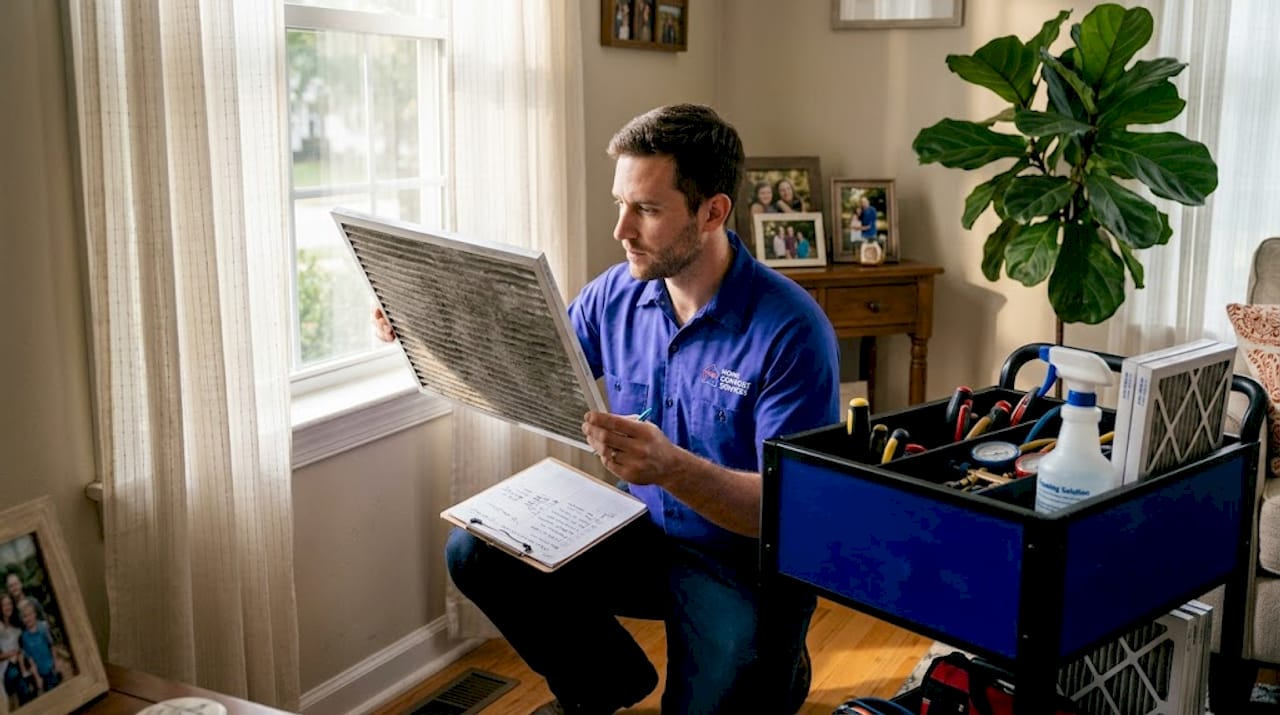
- Quarterly checks: Filter cleaning or replacement, drain clearing, performance monitoring, and thermostat calibration
- Bi-annual technical audits: Full system inspection by a qualified refrigeration engineer, refrigerant level and leak checks, and electrical safety verification
- Annual optimisation: Full system performance review, compressor efficiency testing, control system updates, and strategic planning for the year ahead
Beyond frequency, maintenance checklists should always incorporate indoor air quality and safety or compliance inspection points. These are not optional extras. In UK commercial facilities, they form part of your duty of care to staff and customers.
Every checklist entry should capture five key data points: who completed the task, what was checked, when the inspection took place, the result or finding, and any follow-up actions required. Without these, your checklist becomes a tick-box form rather than a genuine maintenance record.
Understanding refrigeration compliance essentials will also help you build a checklist that holds up during regulatory inspections.
| Frequency | Check type | Examples |
|---|---|---|
| Daily/weekly | Operator checks | Temperature logs, door seals, visual inspections |
| Quarterly | Performance reviews | Filter condition, drain lines, thermostat accuracy |
| Bi-annual | Technical audits | Refrigerant checks, electrical safety, coil condition |
| Annual | Full optimisation | Compressor efficiency, system-wide diagnostics |
Pro Tip: Build escalation steps directly into each checklist row. If a temperature log shows a reading outside acceptable range for two consecutive checks, the form should prompt immediate contact with a qualified engineer rather than leaving that decision to the individual completing the task.
Operator and technician responsibilities: who does what?
Once your checklist is structured, it is essential to clarify who in your team handles each type of maintenance task, and when professional expertise is needed.
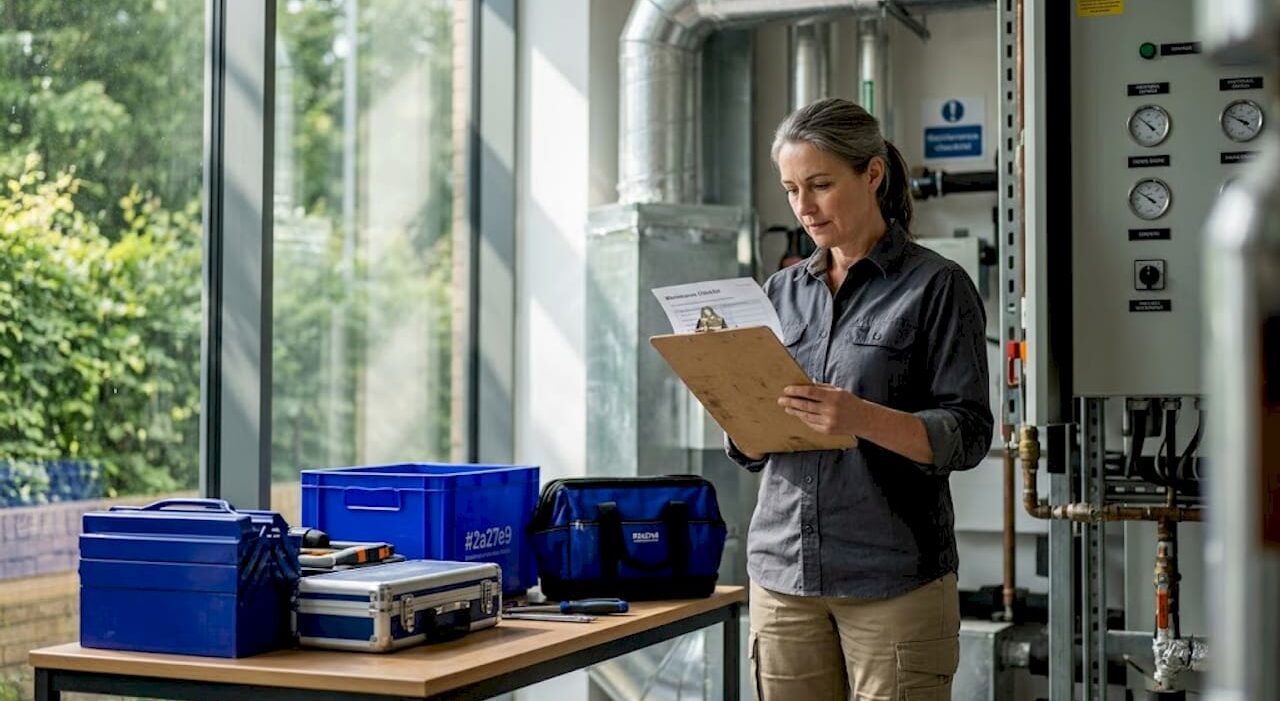
One of the most common failures in commercial HVAC maintenance is blurred responsibility. When everyone assumes someone else will handle a problem, small issues escalate into costly repairs. Clearly defining operator and technician tasks removes this ambiguity. Operators cover temperature verification, door and gasket checks, and routine cleaning, while technicians handle deeper mechanical diagnosis and all refrigerant-related work.
Operator responsibilities (daily and weekly):
- Check and log temperature readings across all refrigeration units
- Inspect door seals and gaskets for wear, gaps, or damage
- Clean exterior surfaces and surrounding areas to prevent debris build-up
- Report any unusual noises, frost accumulation, or condensation inside units
- Verify that alarm systems and temperature warning lights are functioning
Technician responsibilities (quarterly, bi-annual, and annual):
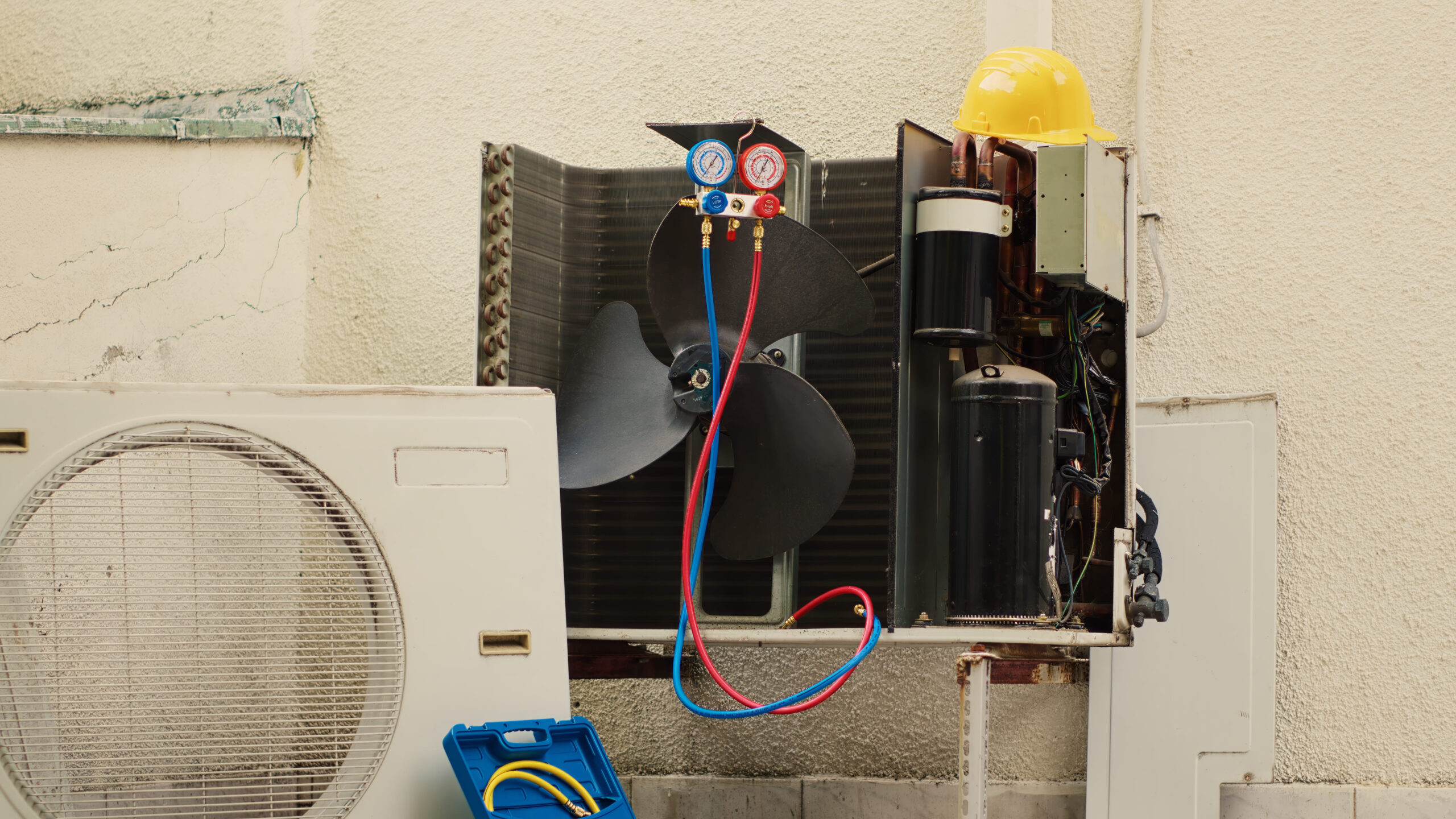
- Full refrigerant system inspection including leak testing and level verification
- Electrical safety checks on all connections, controls, and safety devices
- Coil inspection, cleaning, and efficiency assessment
- Compressor performance testing and lubrication of moving parts
- Condensate drain clearing and verification
- Calibration of thermostats and safety controls
- F-gas compliance documentation and reporting
Reviewing freezer maintenance steps for walk-in units will give your operators a clearer picture of what to look for during routine checks. For detailed guidance on cleaning protocols, the how to clean refrigeration guide is a practical reference.
| Responsibility | Operator | Technician |
|---|---|---|
| Temperature logging | Daily | Verifies quarterly |
| Door seal inspection | Weekly | Replaces if needed |
| Coil cleaning | Reports issues | Performs bi-annually |
| Refrigerant management | Never | F-Gas certified only |
| Electrical safety checks | Never | Bi-annually |
| Escalation trigger | Unusual readings or visible damage | Regulatory deadlines or fault alerts |
Pro Tip: Create a simple escalation log at each unit or plant room. Staff should be able to record an issue and know exactly who to contact and within what timeframe. This removes hesitation and ensures nothing slips through the gaps between shifts.
Sector-specific intervals and compliance essentials
Clarifying daily and technical duties, the next step is to customise your checklist for your facility type and meet legal requirements specific to your sector.
Not every commercial facility operates the same way. A busy hotel kitchen runs its refrigeration systems under very different conditions than an office building’s HVAC. Sector-specific inspection intervals and deep-clean frequencies must reflect the actual environment, usage patterns, and regulatory requirements of your operation.
| Sector | Inspection interval | Deep-clean interval | Key compliance focus |
|---|---|---|---|
| Hospitality and food service | Monthly operator checks, quarterly audits | Every 3 to 6 months | Food hygiene, F-gas, temperature records |
| Food production and manufacturing | Weekly operator checks, bi-monthly audits | Every 3 months | HACCP, LEV reports, F-gas logs |
| Healthcare | Weekly checks, quarterly audits | Every 3 months | Indoor air quality, CIBSE TM44, HTM compliance |
| Offices and commercial premises | Monthly checks, bi-annual audits | Annually | TM44 inspection, energy efficiency records |
HVAC and refrigeration operators must keep leak-check logs and maintenance reports, especially where F-gases apply. Failing on documentation is one of the most frequent sources of regulatory problems during Environment Agency inspections and local authority audits.
Records every facilities manager should maintain:
- Service and maintenance reports for each visit
- F-gas leak-check logs, including dates, findings, and engineer sign-off
- TM44 air conditioning inspection reports (required for systems over 12kW cooling output)
- LEV (local exhaust ventilation) examination and test reports where applicable
- Contractor certification records, confirming engineers hold valid F-gas qualifications
- Temperature monitoring logs, retained for a minimum of two years
“Robust records are not just about satisfying inspectors. They are the fastest way to identify patterns, spot recurring faults early, and demonstrate that your facility operates responsibly. The businesses that manage compliance well are the ones that make documentation part of their daily routine rather than something they scramble for before an audit.”
Understanding hotel refrigeration safety and compliance obligations is a strong starting point for hospitality operators building their own frameworks.
Key checklist items for maximum efficiency and reliability
With sector requirements in mind, ensure your checklist contains these critical tasks to maximise performance and do not overlook the role of technology in boosting results.
A preventive maintenance schedule for commercial HVAC must include refrigerant checks, filter and coil cleaning, condensate drain clearing, thermostat and safety control testing, lubrication, and electrical safety checks. These are the non-negotiables that directly affect energy consumption, system longevity, and regulatory compliance.
Spring and summer tasks:
- Clean condenser coils and check for blockages caused by debris or plant growth
- Test refrigerant levels and conduct mandatory leak checks ahead of peak demand
- Inspect and clean evaporator coils to prevent frost build-up during warmer months
- Verify thermostat calibration to ensure accurate temperature management
- Check and clear condensate drain lines before high-humidity periods
- Inspect fan blades and motor bearings, lubricating where necessary
- Test all safety controls, alarms, and cut-out switches
Autumn and winter tasks:
- Inspect weatherproofing and insulation on external pipework and refrigerant lines
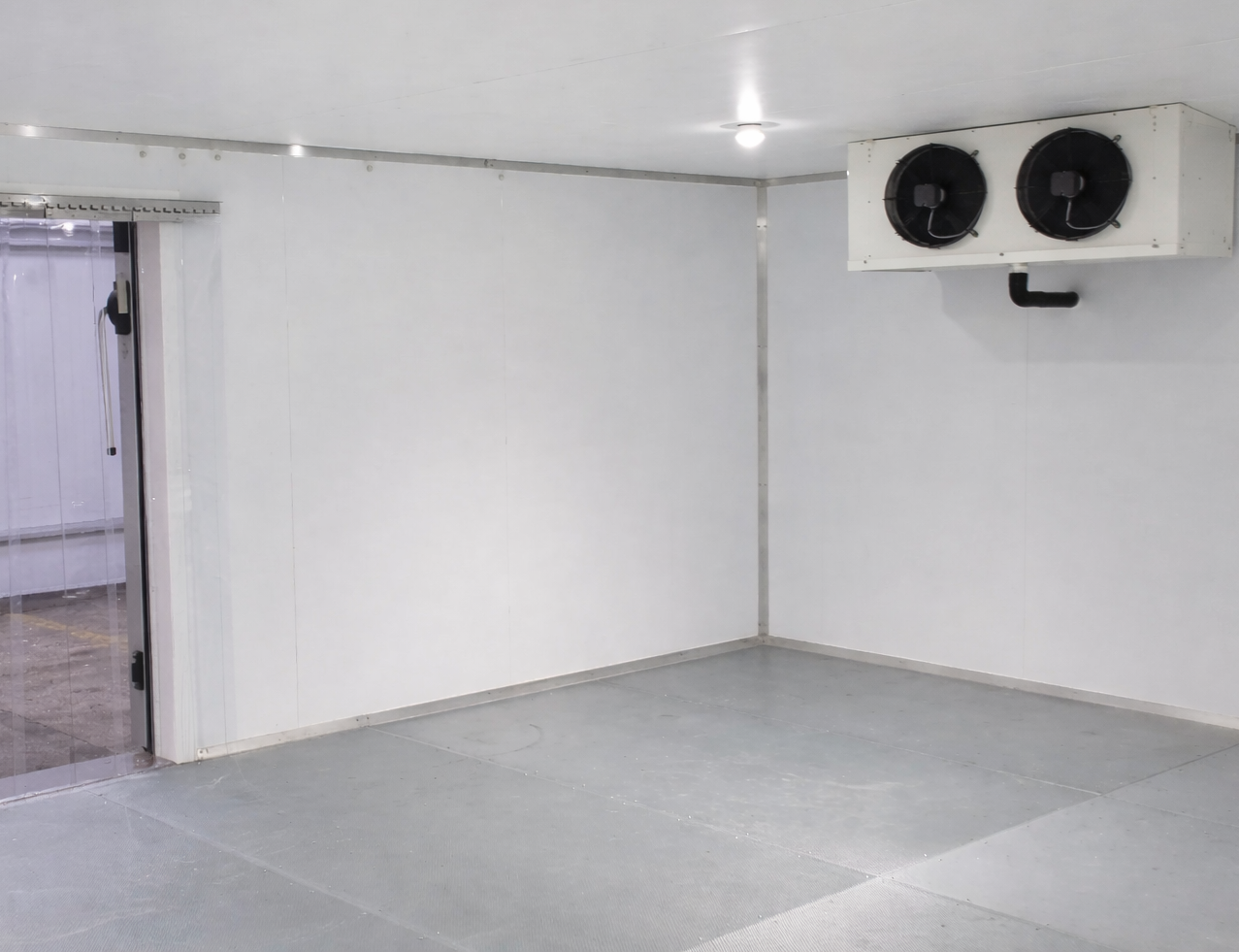
- Verify defrost cycle operation and timer settings on walk-in units
- Check door heater strips on cold room entrances to prevent ice build-up
- Test low-ambient controls to ensure systems operate reliably in cold outdoor conditions
- Review energy consumption data from summer months and adjust settings accordingly
- Carry out full electrical safety checks on all control panels and wiring
Maintenance gaps can undermine energy-efficiency improvements. Industry data consistently shows that poorly maintained commercial refrigeration and HVAC systems can suffer efficiency losses of between 15 and 20 percent compared to well-maintained equivalents. Over a year, that adds up to a substantial and entirely avoidable cost.
For sector-specific guidance on protecting food safety standards, reviewing fridge maintenance for food safety is strongly recommended. For a broader look at how planned maintenance reduces costs, refrigeration cost savings explains the financial case clearly. The wider picture of HVAC energy efficiency in commercial buildings further reinforces why these checks matter.
Pro Tip: If your facility manages multiple refrigeration units or HVAC zones, consider investing in remote monitoring technology. IoT sensors can track temperature, pressure, and airflow in real time, alerting your team to deviations before they become failures. The upfront cost is typically recovered within twelve months through reduced emergency callouts and improved energy performance.
Measurement, monitoring, and going beyond the basics
While standard maintenance tasks create a solid foundation, top-performing facilities add data-driven monitoring for extra reassurance and savings.
A checklist tells you what to inspect. Monitoring tells you what is actually happening between inspections. This distinction matters enormously in high-throughput environments where a system failure at the wrong moment can mean product loss, regulatory breach, or both.
Maintenance methodology for efficiency should include empirical measurement, monitoring, and fault or condition-based triggers rather than relying solely on calendar-based planned maintenance. Put simply, your checklist should adapt to what your systems are telling you, not just to what month it is.
Results from a monitoring-led maintenance programme:
- Reduced emergency callouts by detecting abnormal pressure readings 48 hours before failure
- Identified two refrigerant leaks that manual quarterly checks had not flagged
- Cut overall energy consumption by optimising defrost cycle timing based on real usage data
- Reduced engineer visit frequency by resolving minor issues remotely through system adjustments
- Achieved consistent temperature compliance across all storage zones without manual intervention
“A portfolio of commercial buildings achieved 25 percent energy savings and zero emergency callouts over six months by combining IoT fault detection with condition-based maintenance scheduling. The key change was moving from fixed calendar checks to trigger-based actions — responding to what the data said, not just what the calendar showed.”
Trigger-based maintenance means your engineering team responds when sensors indicate a problem, not just when a scheduled date arrives. This approach significantly reduces both reactive callouts and unnecessary engineer visits. For facilities managing complex systems, refrigeration troubleshooting tips provide practical guidance on identifying and addressing common faults early.
Why most HVAC checklists fail — and how yours can deliver results
Having explored advanced techniques, it is time for a reality check on why most checklists do not achieve their aims, and what you can do differently for genuine impact.
In our experience working across UK facilities, the most common cause of checklist failure is not the format or the frequency. It is the absence of genuine follow-through. A form gets completed, an anomaly gets noted, and then nothing happens. The issue sits in a log book until it becomes a compressor failure or a failed inspection.
The problem is cultural as much as procedural. Many businesses treat their HVAC checklist as a document to satisfy an auditor, not as a live operational tool. The moment that shift happens, the checklist stops protecting you.
Real reliability comes from making your maintenance records visible and actionable. Post summary results in staff areas. Review old logs at the start of each new maintenance cycle to spot patterns. If the same evaporator coil is showing frost build-up in three consecutive quarterly checks, that is not a maintenance issue — that is a design or usage problem that needs an engineer’s assessment.
Maintenance and compliance tips reinforce this point consistently: facilities that stay compliant and cost-efficient are the ones where maintenance records feed directly into management decisions.
“If you can’t show the result, it didn’t happen. A completed checklist without outcome data is just paperwork. The value is in tracking what changed, what was fixed, and what still needs attention.”
This is also where escalation paths make the biggest difference. Staff must know exactly what to do when a reading falls outside tolerance. Not eventually. Immediately. Build those paths into your checklist, review them in team meetings, and make sure every member of staff who touches your refrigeration units understands the process.
Pro Tip: Set aside time at your monthly or quarterly staff briefing to review the last period’s maintenance findings. Ask whether any item has appeared more than once. Repeat faults are almost always early indicators of a deeper issue that planned maintenance has not yet addressed.
Optimise maintenance with the right refrigeration partner
Putting these practices into action requires more than a well-designed checklist. It requires engineers who understand your systems, your sector, and your compliance obligations.
EcoFrost HVAC works with facilities managers and business owners across the UK to deliver planned maintenance programmes, compliance audits, and specialist installations that match your operation precisely. Whether you need cold room solutions designed around your storage requirements, fridge and freezer installation from fully F-Gas certified engineers, or reliable maintenance services to keep your systems running efficiently year-round, EcoFrost brings the same standard of expertise to every project. Contact the team today to discuss a maintenance programme built around your facility.
Frequently asked questions
How often should commercial HVAC systems be checked in UK facilities?
Internal checks should be performed quarterly, with technical audits carried out twice a year and a full optimisation review conducted annually to keep systems efficient and compliant.
What legal records must be kept for commercial HVAC and refrigeration?
Facilities must retain service and maintenance reports, F-gas leak-check logs, TM44 inspection reports, LEV examination records, and contractor certification documents in the event of a compliance audit.
What is the most important item to include on an HVAC checklist for energy efficiency?
Regular refrigerant leak testing, combined with filter and coil cleaning and performance monitoring, has the greatest direct impact on energy consumption and system reliability in commercial facilities.
Can investing in advanced monitoring really reduce costs?
Yes. IoT monitoring and fault detection have been shown to cut HVAC energy costs by up to 25 percent within twelve months, primarily by enabling condition-based responses rather than fixed-schedule maintenance alone.