
TL;DR:
- Refrigeration failures cause significant stock loss, regulatory issues, and revenue decline.
- Regular checks and professional maintenance extend equipment lifespan and prevent costly breakdowns.
- Early signs like unusual noises or temperature fluctuations indicate potential failures needing immediate attention.
A single refrigeration failure during a busy Friday evening service can wipe out hundreds of pounds in perishable stock, force a menu shutdown, and leave customers walking out the door. For hospitality and retail businesses, refrigeration is the backbone of daily operations, and the consequences of an unexpected breakdown go far beyond inconvenience. This guide gives you a practical, expert-backed framework for preventing those failures before they happen, covering daily checks, step-by-step preventive actions, early warning signs, and how to track long-term results.
Table of Contents
- Understanding the impact: Why refrigeration breakdowns matter
- Preparation: Tools, daily checks and maintenance essentials
- Step-by-step: Preventive actions to minimise refrigeration breakdown risk
- Troubleshooting: Early warning signs and what to do next
- Verification: Monitoring results and long-term benefits
- A practical perspective: Why prevention beats repair every time
- Keep your business running: Expert help for refrigeration reliability
- Frequently asked questions
Key Takeaways
| Point | Details |
|---|---|
| Proactive checks matter | Routine inspection prevents breakdowns and reduces emergency costs. |
| Train your team | Staff can catch early warnings and handle basics to protect investment. |
| Monitor and record | Well-kept logs help spot trends before failures occur and support audits. |
| Don’t delay repairs | Acting on early signs saves money and ensures business continuity. |
Understanding the impact: Why refrigeration breakdowns matter
Refrigeration failure is not just an operational headache. It carries real financial weight and regulatory risk that can shake the foundations of a well-run business. When a walk-in chiller or display fridge fails mid-service, you are not only looking at spoiled stock. You face the immediate pressure of finding alternative storage, managing customer expectations, and potentially closing early.
As refrigeration failure risks illustrate, frequent breakdowns disrupt business and cause significant financial loss, often far exceeding the cost of routine upkeep. The reactive mindset, waiting until something breaks before acting, is one of the most expensive habits a business owner can have.
The most common impacts felt across hospitality and retail include:
- Food spoilage and stock loss, sometimes running into thousands of pounds per incident
- Regulatory non-compliance, particularly against HACCP food safety standards, which can trigger environmental health inspections
- Lost revenue from menu restrictions, reduced capacity, or forced closure
- Reputational damage when customers experience poor food quality or service disruption
- Emergency call-out costs, which are significantly higher than planned maintenance fees
- Staff disruption, including overtime hours and unplanned workload during a crisis
“The difference between a business that weathers a refrigeration issue and one that suffers lasting damage often comes down to whether preventive maintenance was in place.”
Proactive maintenance is not merely best practice. It is a sound financial decision. The cost of a planned service visit is a fraction of what you will spend recovering from a major breakdown.
Preparation: Tools, daily checks and maintenance essentials
Before you can implement a reliable prevention routine, your team needs the right tools and a clear understanding of what to look for. Good preparation turns refrigeration maintenance from a reactive scramble into a structured, manageable process.
Routine inspection and cleaning are the key maintenance tasks that keep commercial refrigeration units performing at their best. Without these, even well-built equipment will deteriorate faster than expected.
Here is a practical overview of daily and weekly checks, along with the tools required:
| Check type | Frequency | Tools required | Purpose |
|---|---|---|---|
| Internal temperature log | Daily | Calibrated thermometer, log sheet | Ensure safe food storage temperatures |
| Door seal inspection | Daily | Visual check, paper test | Prevent cold air loss and energy waste |
| Condenser coil inspection | Weekly | Soft brush, torch | Identify dust or grease build-up |
| Drain pan and drain line | Weekly | Cloth, mild cleaning agent | Prevent blockages and water damage |
| Fan and airflow check | Weekly | Visual and audio check | Detect motor issues early |
| Exterior cleaning | Daily | Food-safe sanitiser, cloth | Maintain hygiene standards |
Your maintenance essentials should include:
- Calibrated digital thermometers for accurate temperature readings
- Temperature log sheets or a digital logging system for record-keeping
- Food-safe cleaning solutions appropriate for refrigeration surfaces
- Soft brushes and cloths for coil and vent cleaning
- Replacement door gaskets kept in stock for quick swaps
- Torch and mirror for inspecting hard-to-reach components
Staff training is equally important. Your team members are the first line of defence. They interact with refrigeration units constantly throughout the day, which means they are best placed to notice when something is off. Train them to log temperatures correctly, report unusual sounds or smells promptly, and follow cleaning your refrigeration units protocols consistently.

Pro Tip: Set a recurring digital reminder on your management system or phone calendar for weekly checks. Consistency is what makes a maintenance routine effective. A check that happens 90% of the time is far more valuable than one that only occurs when someone remembers.
Step-by-step: Preventive actions to minimise refrigeration breakdown risk
With your tools in place and your team briefed, you can move into a structured preventive routine. These steps are designed to be practical, sequential, and achievable within your existing operational schedule.
-
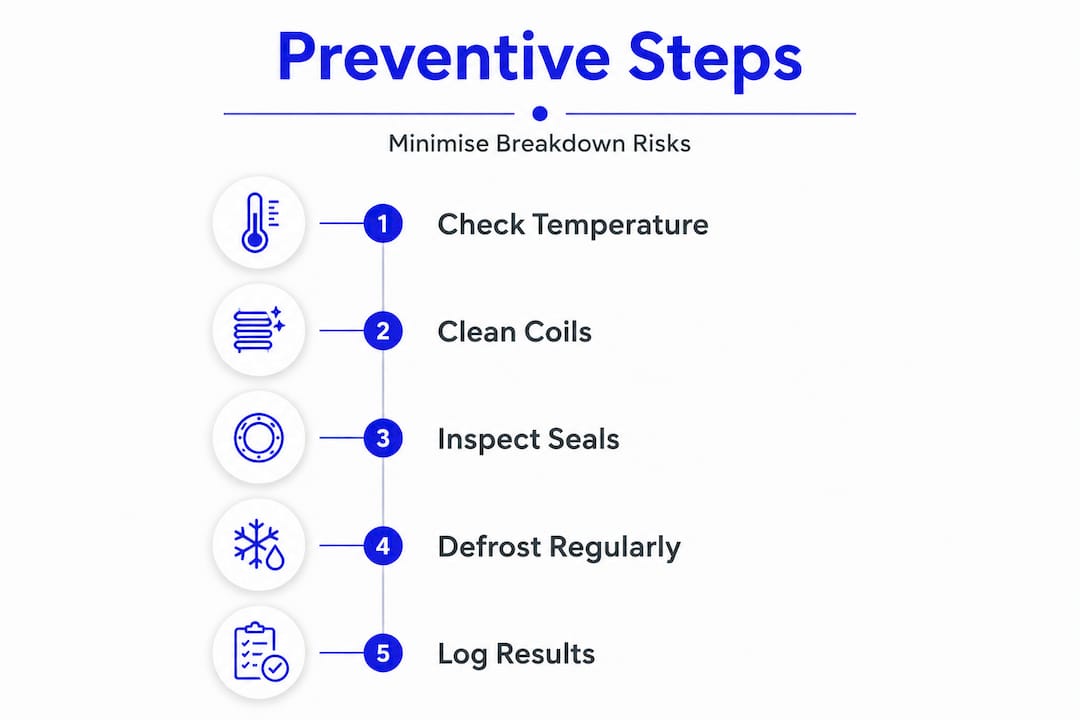
Defrost regularly and correctly. Ice build-up on evaporator coils forces the unit to work harder, consuming more energy and accelerating wear. Follow the manufacturer’s recommended defrost cycle. For manual defrost units, schedule this during low-demand periods.
-
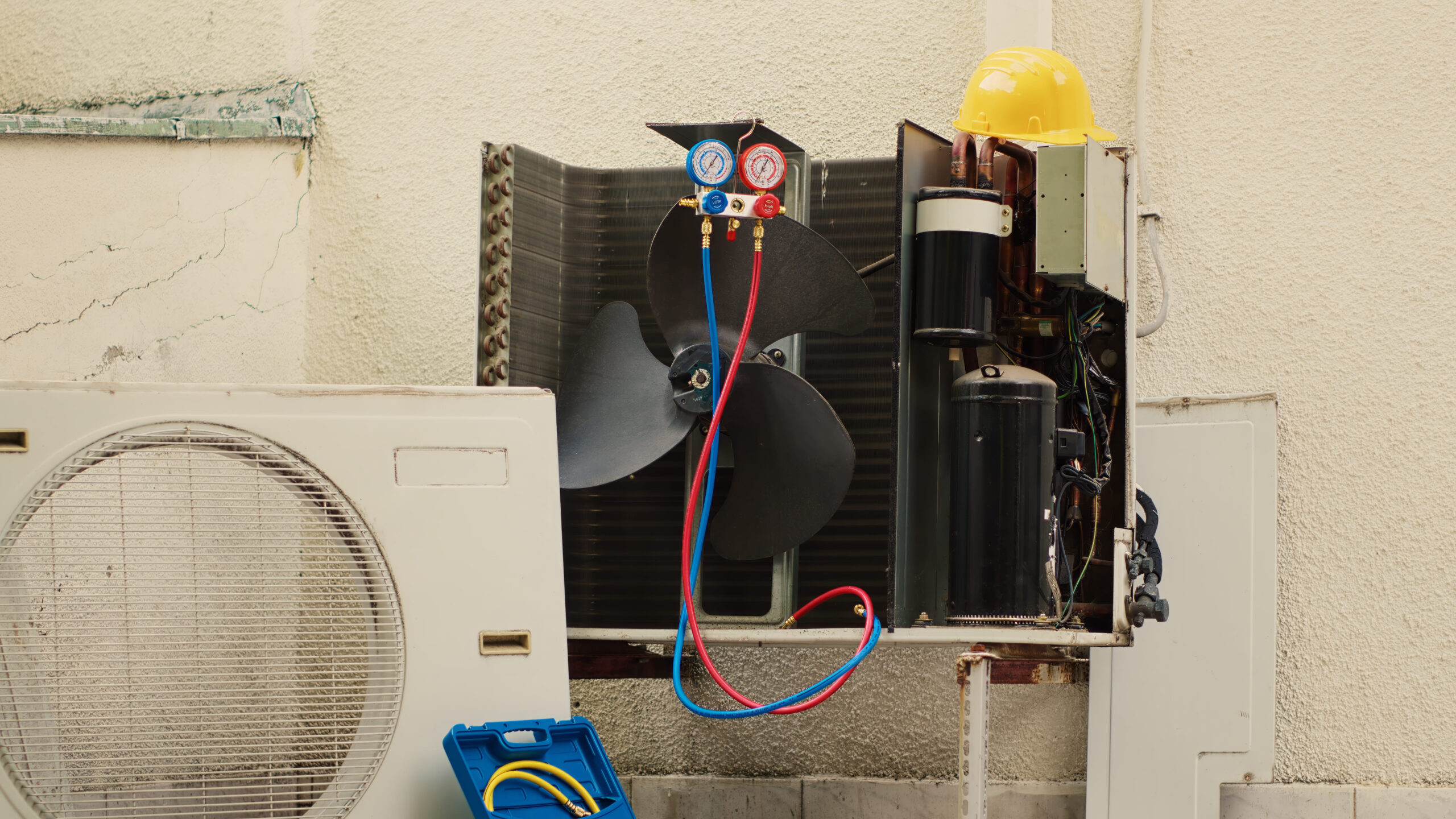
Clean condenser coils every one to two weeks. Dirty coils are one of the leading causes of compressor failure. Use a soft brush to remove dust and grease. In kitchen environments, grease accumulation can be rapid, so check more frequently if your unit is near cooking equipment.
-
Inspect and replace door seals as needed. A worn or cracked door gasket allows warm air to enter the cabinet, forcing the compressor to run continuously. Use the paper test: close a sheet of paper in the door. If it slides out easily, the seal needs replacing.
-
Log temperatures at consistent intervals. Record internal temperatures at least twice daily, ideally at the start and end of service. This creates a data trail that helps you spot gradual temperature drift before it becomes a critical failure. Consistent logging also supports food safety and refrigeration compliance requirements.
-
Check refrigerant levels and electrical connections annually. This step requires a qualified engineer. Low refrigerant is a common cause of poor cooling performance, and loose electrical connections are a fire and safety risk.
-
Schedule a professional service at least once per year. A trained engineer can identify issues that are invisible to the untrained eye, including early-stage compressor wear, refrigerant leaks, and control board faults.
Here is what happens when these steps are skipped versus performed consistently:
| Preventive action | If skipped | If performed |
|---|---|---|
| Defrosting | Ice build-up, reduced efficiency, compressor strain | Consistent cooling, lower energy bills |
| Coil cleaning | Overheating, compressor failure | Extended equipment lifespan |
| Door seal checks | Warm air ingress, food safety risk | Stable internal temperature, compliance |
| Temperature logging | Missed drift, regulatory risk | Early detection, audit-ready records |
| Annual professional service | Hidden faults go undetected | Reduced downtime, peace of mind |
As proactive maintenance data consistently shows, businesses that follow structured preventive routines experience drastically lower rates of emergency downtime.
Pro Tip: Invest in a digital temperature monitoring system with automated alerts. These systems notify you immediately if a unit drifts outside its safe range, even overnight or during closed hours. The cost of the technology is negligible compared to the cost of a single spoilage event.
Troubleshooting: Early warning signs and what to do next
Even with a solid preventive routine in place, refrigeration units can develop issues between scheduled checks. Knowing what to look for means you can act quickly before a minor fault becomes a major failure.
Common refrigeration problems show that certain noises, odours, or inconsistent temperatures are reliable indicators of impending failures. The key is training yourself and your staff to recognise these signals and respond without delay.
Watch out for these early warning indicators:
- Unusual noises, such as rattling, clicking, or loud humming, which can indicate compressor strain, fan motor issues, or loose components
- Inconsistent temperatures, particularly units that cycle between too warm and too cold, suggesting thermostat or refrigerant issues
- Excessive condensation on the exterior of the unit or pooling water inside the cabinet
- Ice build-up on evaporator coils outside of normal defrost cycles
- Unusual odours, including burning smells (electrical fault) or musty smells (mould from blocked drain lines)
- The unit running continuously without cycling off, which indicates the compressor is struggling to reach the set temperature
- Higher than usual energy bills, which can signal that a unit is working harder than it should
Safety warning: If you detect a burning smell or see scorch marks near electrical components, do not attempt to investigate or repair the unit yourself. Switch it off at the mains immediately and contact a qualified refrigeration engineer. Electrical faults in commercial refrigeration carry a serious risk of fire.
When you spot any of these signs, the first step is to check the basics: power supply, thermostat settings, and door seals. If the issue persists after these checks, escalate to a professional engineer without delay. Attempting to diagnose complex refrigerant or electrical faults without the proper training and equipment can make the problem worse and void your warranty.
Verification: Monitoring results and long-term benefits
Prevention only delivers its full value when you can measure it. Tracking your maintenance activities and their outcomes gives you the evidence to justify the investment, satisfy auditors, and continuously improve your approach.
Consistent maintenance yields measurably reduced energy costs and fewer emergency repairs over time. The businesses that see the greatest benefit are those that treat their maintenance logs as a business asset, not just a compliance exercise.
Use a tracking log structured like this:
| Maintenance task | Date completed | Outcome or observation | Action taken |
|---|---|---|---|
| Temperature log review | Daily | Within safe range | No action required |
| Door seal inspection | Weekly | Left door seal showing wear | Seal replaced |
| Condenser coil clean | Fortnightly | Light dust build-up | Cleaned with brush |
| Drain line check | Weekly | Clear, no blockage | No action required |
| Professional service | Annually | Minor refrigerant top-up needed | Engineer attended |
The long-term business benefits of ongoing maintenance and savings extend well beyond equipment reliability:
- Regulatory compliance: Accurate temperature logs demonstrate due diligence to environmental health officers and support HACCP documentation
- Reduced energy costs: Well-maintained units operate more efficiently, often reducing energy consumption by 10 to 15 percent compared to neglected equipment
- Fewer emergency repairs: Planned maintenance catches faults early, dramatically reducing costly emergency call-outs
- Better food quality: Consistent temperatures protect the quality and shelf life of your produce, reducing waste
- Stronger reputation: Customers and inspectors alike notice when a business runs to a high standard
- Insurance and audit readiness: Documented maintenance records can support insurance claims and demonstrate operational competence during audits
Documenting every check, repair, and service visit is not bureaucracy. It is protection. If a unit fails and you face a food safety investigation, a clear maintenance record is your most powerful evidence.
A practical perspective: Why prevention beats repair every time
After more than a decade of working with hospitality and retail businesses across the UK, Qatar, and India, we have seen the same pattern repeat itself. A business owner decides to skip the annual service to save a few hundred pounds. Six months later, a compressor fails at the worst possible moment, and the total cost, including emergency labour, replacement stock, lost revenue, and potential regulatory action, runs into several thousand pounds.
The “repair only when broken” mindset is understandable. When budgets are tight and operations are busy, planned maintenance can feel like an optional expense. But this thinking misses the hidden costs that accumulate quietly in the background. Staff working overtime to manage a crisis. Customers who do not return after a poor experience. The reputational damage that takes months to repair.
We have also seen the false economy of cheap, infrequent servicing. A cursory annual check that does not include coil cleaning, seal inspection, or refrigerant assessment is not maintenance. It is a paper exercise that gives a false sense of security. Genuine prevention requires thoroughness and consistency, not just a signature on a service sheet.
The businesses that genuinely protect themselves understand that failure risks in refrigeration are not random events. They are the predictable result of neglect. Prevention is not a cost. It is an investment that pays for itself every time a breakdown does not happen.
Keep your business running: Expert help for refrigeration reliability
Preventing refrigeration breakdowns is far more achievable when you have the right professional support behind you. At EcoFrost, we work with hospitality and retail businesses to build maintenance programmes that fit their operations, their budgets, and their compliance requirements.
Whether you need a one-off inspection, a structured service contract, or urgent assistance, our team of qualified engineers is ready to help. Explore our professional repair services for fast, reliable support when you need it most. If you are reviewing your equipment setup, our guide to cost-efficient refrigeration solutions can help you make informed decisions that deliver long-term value. Do not wait for a breakdown to take action. Get in touch with EcoFrost today and let us help you keep your business running at its best.
Frequently asked questions
What are the most common causes of commercial refrigeration breakdowns?
Poor maintenance and overloading are among the most frequent causes, alongside dirty condenser coils, power fluctuations, and worn door seals that allow warm air ingress.
How often should commercial refrigeration units be serviced?
Regular maintenance from a qualified engineer is recommended at least once per year, with in-house checks carried out daily and weekly to catch issues between professional visits.
What should I do first if my fridge shows signs of failing?
Check the power supply, thermostat settings, and door seals first. If the problem continues, noises or temperature inconsistency are signs that a qualified engineer should be contacted without delay.
How can regular maintenance impact my operating costs?
Maintenance saves costs by improving energy efficiency and preventing the expensive emergency repairs that result from undetected faults developing into major failures.
Recommended
- Refrigeration troubleshooting guide: reduce downtime in 2026
- Regular refrigeration maintenance: save costs, boost compliance
- Maintain restaurant refrigeration for food safety in 2026
- Why refrigeration fails: causes, risks and maintenance
- The Hidden Costs of Building Out a Restaurant Space (and How to Avoid Them | PepperLot Blog