
TL;DR:
- Poorly specified or neglected insulation can silently compromise cold storage performance, leading to higher energy costs and safety risks. Proper insulation, vapour barriers, and door management are essential for maintaining temperature stability, hygiene, and compliance. Regular inspection and proactive maintenance of insulation systems help prevent failure and extend the lifespan of cold storage facilities.
Most food and beverage business owners assume their cold room works as intended once the refrigeration unit is running. But the temperature your refrigeration system is fighting to maintain can be quietly undermined by insulation that was poorly specified, improperly installed, or simply neglected over time. Insulation is not a passive component. It is the primary defence against heat gain, condensation damage, spiralling energy costs, and failed food safety inspections. Understanding how it works, where it fails, and what to do about it can save your business money, stock, and reputation.
Table of Contents
- Why insulation matters: The foundation of cold storage performance
- Key types of insulation and where they matter most
- Crucial design features: Thickness, vapour barriers, and door management
- Maintenance essentials: Keeping insulation performing for the long term
- A specialist’s view: Why most businesses underinvest in insulation (and what it really costs)
- Turn insight into action with professional cold storage support
- Frequently asked questions
Key Takeaways
| Point | Details |
|---|---|
| Insulation safeguards food | Proper insulation prevents heat gain and moisture, keeping products safe, compliant, and fresh. |
| Material choice is crucial | Selecting the right insulation for each area and maintaining it avoids early failure and energy waste. |
| Design and upkeep go hand-in-hand | Optimal insulation thickness, vapour barriers, and regular checks are key to long-term performance. |
| Investment protects profits | Underinvestment in insulation can lead to major product loss, compliance issues, and high energy bills. |
Why insulation matters: The foundation of cold storage performance
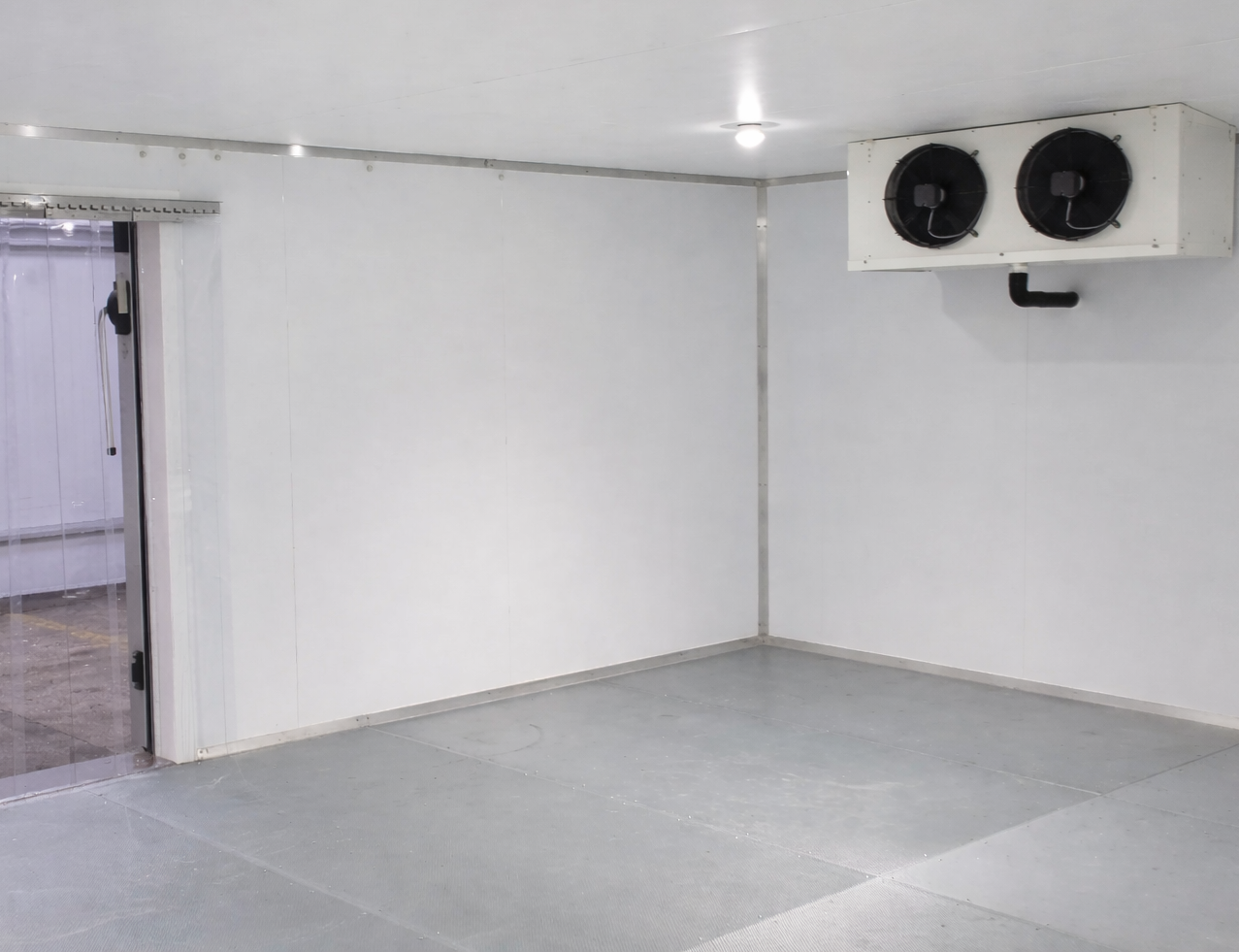
Insulation in a cold room or freezer unit does one essential job: it slows the transfer of heat from the warmer outside environment into the controlled cold space. This process, known as heat transfer, is constant. Without effective insulation, your refrigeration system runs harder, costs more to operate, and is more likely to fail prematurely. Understanding refrigeration risks and insulation together is the starting point for any serious cold storage strategy.
Thermal resistance, often measured as an R-value or U-value, describes how effectively a material resists heat flow. Higher thermal resistance means less heat enters your cold space per hour. For a business storing fresh produce, dairy, meat, or chilled beverages, even a modest rise in ambient temperature inside the cold room can accelerate spoilage and push you outside the temperature ranges required by UK food safety law.
The consequences of poor insulation are not always obvious at first. Common outcomes include:
- Refrigeration systems running continuously without reaching target temperatures
- Elevated energy bills that creep upward month on month
- Condensation forming on walls, floors, or ceilings, creating hygiene and slip hazards
- Mould growth on panel joints or door frames
- Unexpected product spoilage and stock write-offs
- Failed environmental health inspections
One area that is frequently underestimated is the role of vapour barriers. A vapour barrier is a layer within the insulation panel system that prevents warm, moisture-laden air from penetrating the cold room structure. When this barrier is compromised, whether through poor installation, damaged panel joints, or ageing seals, moisture enters the insulation material itself. Once wet, insulation loses much of its thermal resistance and becomes a breeding ground for mould. As best insulation practices confirm, failures in vapour barrier and condensation control can cause moisture ingress that undermines both thermal resistance and hygiene conditions simultaneously.
“A cold room that looks clean on the surface can be harbouring moisture damage deep within its panel system, quietly costing the business thousands in energy and stock losses each year.”
Pro Tip: If you notice condensation on the outer face of your cold room panels, do not dismiss it as a seasonal issue. It is often an early indicator of vapour barrier failure. Act on it promptly before the damage spreads into the panel core.
Investing in quality insulated cold room solutions from the outset, designed around your specific products and operating conditions, avoids the cycle of reactive repairs that drain budgets and disrupt operations.
Key types of insulation and where they matter most
Not all insulation is equal, and the material used in your cold room has a direct bearing on how well it performs, how long it lasts, and how easily it can be maintained. The UK cold storage sector relies on a small number of core materials, each with distinct properties.
| Insulation material | Typical R-value (per 100mm) | Common uses | Key strengths | Key weaknesses |
|---|---|---|---|---|
| PIR (Polyisocyanurate) | High (around 4.5 to 5.5 m²K/W) | Cold room panels, ceilings, floors | Excellent thermal performance, low thickness needed | Can be brittle; moisture damage if vapour barrier fails |
| PUR (Polyurethane) | High (around 4.0 to 5.0 m²K/W) | Walk-in freezers, industrial cold stores | Strong adhesion, good density | Similar moisture vulnerability; off-gassing concerns if damaged |
| EPS (Expanded polystyrene) | Moderate (around 2.5 to 3.5 m²K/W) | Lower-demand chillers, packaging | Cost-effective, lightweight | Lower thermal performance; not suited to very low temperatures |
| Mineral wool | Moderate (around 2.5 to 3.0 m²K/W) | Fire-rated applications, external walls | Excellent fire resistance | Absorbs moisture readily; less suited to high-humidity cold stores |
For most walk-in cold rooms and freezer rooms in the UK food and beverage sector, PIR and PUR foam-core panels are the dominant choice. They offer the best balance of thermal efficiency and panel thickness, which matters when space is limited. However, material choice alone does not guarantee performance. Where and how the material is used is equally important.
Key considerations for material placement include:
- External walls and roofs exposed to direct sunlight or rain require materials and cladding that resist UV degradation and moisture ingress from the outside
- Pipework insulation must be specified for the pipe medium, temperature range, and location, as commercial refrigeration insulation guidance makes clear: insulation underperforms when system interfaces are neglected, including external locations, UV exposure, and wrong insulation types for pipework
- Floor insulation in freezer rooms must support heavy loads whilst maintaining thermal separation from the building substrate
Understanding these distinctions helps you ask the right questions when commissioning a new installation or reviewing an existing one. Addressing cold storage problems and solutions proactively is far more cost-effective than responding to failures after they occur.
Pro Tip: When reviewing an existing cold room, check the condition of insulation at interfaces first. Panel joints, door frames, pipe penetrations, and wall-to-floor junctions are where insulation failures almost always begin. These points are easy to inspect but frequently overlooked during routine visits.
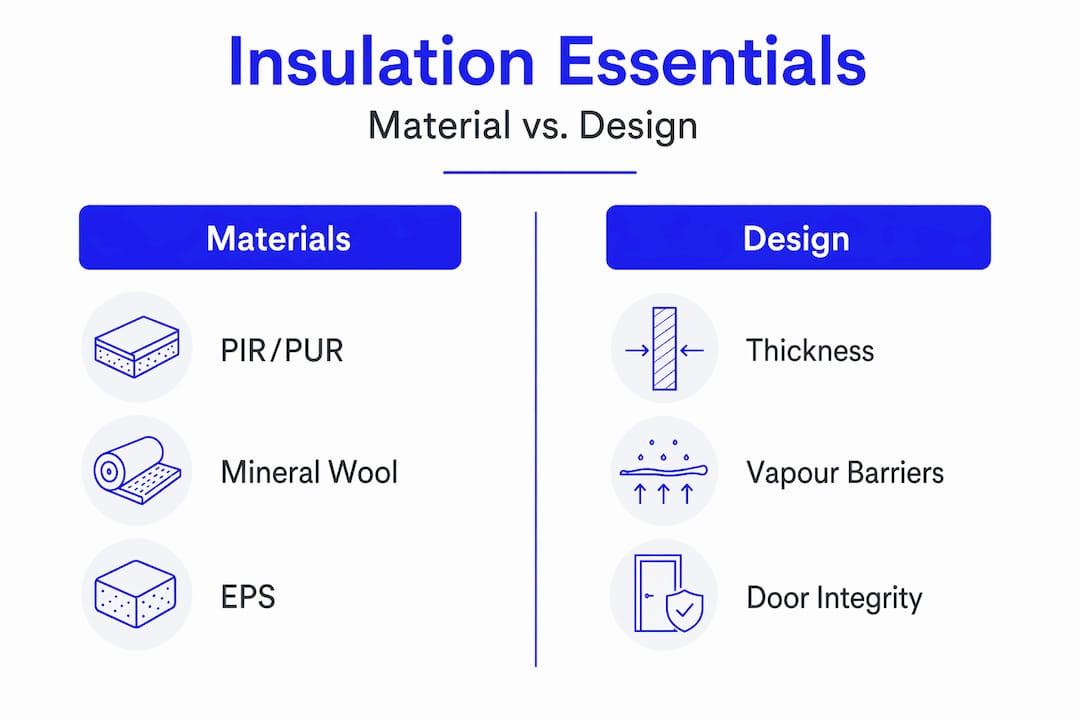
Good practice for maintaining clean insulation surfaces also matters for longevity. Grease, dust, and debris accumulating on panel surfaces can trap moisture and degrade the outer cladding over time.
Crucial design features: Thickness, vapour barriers, and door management
Getting the insulation material right is only the beginning. The thickness of that insulation, the integrity of the vapour barrier system, and the way doors are managed during operation all have measurable impacts on how well your cold store maintains temperature and how much energy it consumes.
The following data illustrates typical insulation thickness guidelines and their relationship to temperature performance in UK commercial settings:
| Application | Temperature range | Recommended insulation thickness | Temperature recovery after door opening |
|---|---|---|---|
| Chiller room | +1°C to +8°C | 80mm to 100mm PIR | Recovery within 10 to 15 minutes |
| Freezer room | -18°C to -25°C | 120mm to 150mm PIR or PUR | Recovery within 20 to 30 minutes |
| Deep freeze store | Below -25°C | 150mm to 200mm PUR | Recovery within 30 to 45 minutes |
For freezer rooms, thicker insulation is standard practice to support colder setpoints and recover temperature after high door-traffic periods. Specifying less than the recommended thickness to reduce upfront costs is one of the most common errors businesses make, and one that generates higher running costs for the entire life of the installation.
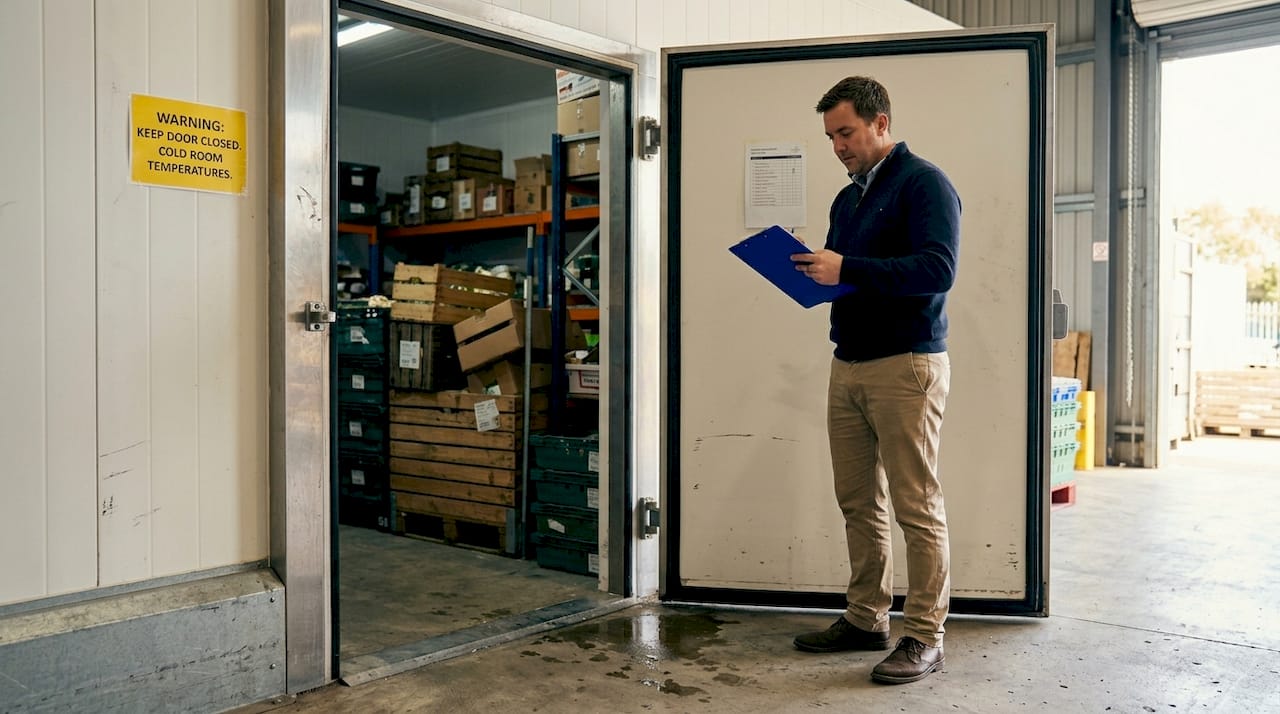
Vapour barrier integrity is equally critical. A correctly installed vapour barrier sits on the warm side of the insulation and prevents moisture-laden air from reaching the cold core. In practice, this means all penetrations, whether for pipework, electrical conduits, or fixing points, must be properly sealed. Any gap becomes a pathway for moisture and a starting point for insulation failure.
To manage door-related heat gain effectively, follow these steps:
- Assess door traffic patterns during peak operating hours and identify which entrances experience the highest frequency of access
- Install strip curtains or air curtains on all high-traffic doorways to reduce warm air exchange when doors are open
- Check door seals and hinges monthly. A worn door seal can increase energy consumption by up to 15% on a busy cold room
- Consider automatic door closers for cold rooms that are accessed by multiple staff throughout the day
- Brief all staff on door management as part of food safety training, since repeated or prolonged door openings during warm weather significantly increase refrigeration load
A poorly managed entrance is one of the most significant contributors to energy loss in commercial cold storage. The impact is not just financial. During hot periods, repeated door openings can push internal temperatures above safe limits, creating an ongoing cold storage safety concern that leaves your business exposed to compliance risk.
Regular attention to freezer room upkeep steps keeps these risks in check and helps you spot issues before they escalate.
Maintenance essentials: Keeping insulation performing for the long term
Even the best-specified insulation system will deteriorate without structured maintenance. Food and beverage businesses are often focused on the refrigeration equipment itself, overlooking the insulation panels, seals, and barriers that make that equipment effective. The signs of insulation failure are usually visible well before they become critical.
Warning signs to watch for:
- Persistent condensation on panel surfaces or door frames
- Visible mould or discolouration around panel joints
- Unexplained rises in energy consumption over several billing periods
- Temperature inconsistencies across different areas of the cold room
- Ice forming on internal walls or floor surfaces in chiller rooms
- Soft or damp patches on insulation panels when pressed
Structuring your inspection routine around three timeframes keeps the risk of insulation failure low:
Daily checks:
- Inspect door seals for visible damage or gaps
- Confirm internal temperature readings are stable and within range
- Check for condensation around door frames and panel joints
Monthly checks:
- Examine panel joints for signs of separation or moisture staining
- Inspect pipework insulation for cracks, missing sections, or discolouration
- Clean and inspect insulation surfaces, paying attention to panel edges and floor junctions
Annual checks:
- Commission a professional thermal survey to identify hidden moisture in panel cores
- Review insulation performance at all external interfaces, including roof penetrations and external pipework
- Assess whether insulation thickness remains appropriate for any changes in product mix or operating hours
As commercial refrigeration insulation guidance highlights, insulation can fail quickly when system interfaces are neglected, particularly at external locations, areas of UV exposure, and pipework junctions where the wrong material type was used at installation. Addressing these edge cases requires a methodical approach rather than ad-hoc repairs.
Pro Tip: Small cracks or breaches in panel joints should be addressed immediately. What appears to be a minor cosmetic issue can allow moisture to enter the panel core within weeks, progressively undermining thermal performance and creating hygiene risks that regulatory inspectors will flag. The repair cost at an early stage is a fraction of the cost of panel replacement.
“Neglecting insulation maintenance in commercial cold storage does not just raise energy costs. It creates a compliance liability that can result in enforcement action, stock loss, and reputational damage at the worst possible time.”
Good refrigeration safety practices extend beyond the mechanical system. Insulation integrity is a food safety issue, not just an engineering one.
A specialist’s view: Why most businesses underinvest in insulation (and what it really costs)
From experience working across the UK food and beverage sector, one pattern stands out clearly: insulation is almost always the line that gets trimmed when a cold room project runs over budget. It is an invisible component. Nobody photographs the panel thickness. Nobody notices the vapour barrier on an opening day. So it becomes the easy saving. And it is almost always a false economy.
The true cost of underinvesting in insulation tends to arrive in waves. First, energy bills run higher than projected from day one, but the difference is easy to attribute to other factors. Then, within two to three years, moisture problems emerge at joints and interfaces. By year five, panel replacement or major remedial work is often on the table, at a cost that far exceeds the original saving. This pattern repeats across businesses of every size.
What makes this particularly frustrating is that the root causes of refrigeration issues are well understood. A system-level view, one that treats insulation, refrigeration equipment, vapour barriers, door management, and maintenance as a single integrated system, produces significantly better outcomes than specifying each element in isolation.
The businesses that manage cold storage costs most effectively are those that build insulation reviews into their capital spend planning on a regular cycle, not as a reactive response to failure. This approach also helps with saving costs on compliance, because well-maintained insulation reduces the risk of unexpected temperature breaches that trigger regulatory scrutiny.
The practical recommendation is straightforward: treat insulation as part of your refrigeration infrastructure, not as a building material. Budget for its maintenance, review it annually, and ensure any new installation or upgrade is specified by engineers who understand both the refrigeration system and the insulation system as a whole.
Turn insight into action with professional cold storage support
Understanding insulation is one thing. Ensuring your cold room is built, maintained, and performing to the standard your business needs is another. EcoFrost HVAC works with food and beverage businesses across the UK to design and install cold storage solutions that are properly specified for your products, your space, and your operating environment.
Whether you are looking at a new cold room for your business, reviewing the performance of an existing installation, or exploring the full range of specialist coldroom solutions for your facility, our F-Gas certified engineers can advise on insulation specification, vapour barrier integrity, and energy efficiency as part of a complete service. We also cover fridge and freezer installation with the same level of care and technical rigour. Get in touch with the EcoFrost HVAC team for a clear, upfront consultation on what your cold storage setup actually needs.
Frequently asked questions
What is the best insulation thickness for a UK cold room?
For freezer rooms, a thickness of at least 120mm PIR or PUR insulation is widely recommended to maintain efficient temperature recovery and support energy performance, with deeper freeze applications requiring up to 200mm. Thicker insulation is standard for colder setpoints to support recovery after high door-traffic periods.
How do vapour barriers protect cold storage insulation?
Vapour barriers prevent warm, moisture-laden air from reaching the insulation core, reducing the risk of moisture ingress, mould growth, and degraded thermal resistance. Without an intact vapour barrier, failures in condensation control can rapidly undermine both hygiene standards and energy efficiency.
Why does cold storage insulation sometimes fail quickly?
Insulation frequently fails ahead of schedule at system interfaces such as external wall junctions, pipe penetrations, and door frames, particularly when unsuitable materials are used or maintenance is not carried out. As insulation collaborative guidance confirms, neglecting these interfaces significantly accelerates deterioration.
Which insulation material is best for outdoor pipework?
For external pipework, insulation specified with UV resistance and suitable for outdoor conditions is essential to prevent rapid degradation. Collaborative insulation practice highlights that using the wrong material type for external locations and pipework is one of the most common causes of premature insulation failure.