
Many facility managers assume their HVAC energy bills are simply the cost of doing business, but this overlooks the transformative potential of modern energy efficient systems. Commercial buildings in the UK, Qatar, and India can reduce operational costs by up to 30% whilst simultaneously meeting sustainability targets and improving occupant comfort. This article explains what energy efficient HVAC systems are, why they deliver measurable financial and environmental benefits, and how you can implement them in your facility to achieve lasting savings and performance improvements.
Table of Contents
- Key takeaways
- Understanding energy efficient HVAC systems
- Benefits of energy efficient HVAC for commercial buildings
- Common misconceptions and comparisons
- Practical steps to implement energy efficient HVAC solutions
- How EcoFrost supports your energy efficient HVAC journey
- Frequently asked questions about energy efficient HVAC
Key Takeaways
| Point | Details |
|---|---|
| Operating cost reductions | Energy efficient HVAC can cut energy bills by up to thirty per cent in commercial buildings while maintaining performance. |
| Lower carbon footprint | They substantially reduce carbon emissions, helping meet sustainability targets and regulatory requirements. |
| Improved indoor air quality | Advanced filtration and smart controls enhance air quality and occupant comfort without increasing energy use. |
| Longer equipment life | Diagnostic capabilities and proactive maintenance extend equipment life and reduce emergency repairs. |
Understanding energy efficient HVAC systems
Energy efficient HVAC systems represent a fundamental shift from traditional climate control approaches. These systems incorporate advanced technologies designed to deliver precise temperature regulation whilst consuming substantially less energy than conventional alternatives. The core difference lies in how they operate: rather than running at full capacity constantly, energy efficient systems adjust output dynamically based on actual demand.
Modern commercial air conditioning installation services now feature variable speed drives, smart thermostats, and high SEER ratings as standard components. Variable speed compressors modulate cooling capacity in real time, eliminating the wasteful on-off cycling that plagues older systems. Heat pumps extract thermal energy from ambient air or ground sources, delivering heating at a fraction of the cost of traditional boilers. Smart control systems learn occupancy patterns and adjust climate settings automatically, ensuring comfort without unnecessary energy expenditure.
Key features that define energy efficient HVAC systems include:
- Inverter technology that adjusts compressor speed continuously rather than cycling on and off
- Zoning capabilities that allow independent climate control for different building areas
- Advanced filtration systems that improve indoor air quality whilst maintaining energy performance
- Integration with building management systems for centralised monitoring and optimisation
- High seasonal energy efficiency ratios that indicate superior performance across varying conditions
Beyond energy savings, these systems deliver measurable improvements in indoor air quality through enhanced filtration and controlled ventilation. This matters profoundly for occupant health, productivity, and satisfaction. Regulatory standards across the UK, Qatar, and India increasingly mandate minimum efficiency thresholds for commercial HVAC installations, making energy efficient systems not just advantageous but often legally required for new builds and major renovations.
Pro Tip: When evaluating HVAC systems, look beyond the initial efficiency rating to consider performance across your facility’s actual operating conditions, including peak demand periods and partial load scenarios where systems spend most of their runtime.
The distinction between energy efficient and traditional HVAC extends to maintenance requirements as well. Modern systems incorporate diagnostic capabilities that alert facility managers to performance degradation before failures occur, reducing emergency repairs and extending equipment lifespan. This proactive approach transforms HVAC from a reactive cost centre into a strategic asset that supports business operations reliably whilst controlling expenses.
Benefits of energy efficient HVAC for commercial buildings
The financial case for energy efficient HVAC systems becomes compelling when you examine actual operational data. Energy efficient systems reduce costs by up to 30% and lower carbon emissions substantially, translating to thousands of pounds in annual savings for typical commercial facilities. These reductions stem from multiple factors: lower electricity consumption, reduced peak demand charges, and decreased wear on equipment that extends replacement intervals.
Environmental benefits align perfectly with corporate sustainability initiatives that many organisations now prioritise. Reducing HVAC energy consumption directly lowers carbon emissions, helping businesses meet regulatory requirements and voluntary environmental commitments. For companies operating across multiple markets, energy efficient HVAC provides a consistent sustainability strategy applicable in the UK, Qatar, and India despite varying regulatory frameworks.
The primary benefits of implementing energy efficient HVAC include:
- Immediate operational cost reduction through lower energy consumption across heating, cooling, and ventilation
- Enhanced occupant comfort via precise temperature control and improved air quality that supports productivity
- Regulatory compliance with evolving energy efficiency standards and building performance requirements
- Increased property value as energy efficient buildings command premium rents and resale prices
- Reduced maintenance costs through modern diagnostics and durable components designed for extended service life
Indoor air quality improvements deserve particular attention because they directly affect occupant health and performance. Energy efficient systems incorporate advanced filtration that removes particulates, allergens, and contaminants more effectively than traditional equipment. Controlled ventilation ensures adequate fresh air exchange without the energy penalty of over-ventilation, maintaining healthy indoor environments efficiently.
Thermal comfort represents another critical benefit often overlooked in purely financial analyses. Consistent temperatures without cold spots or overheated zones improve occupant satisfaction and reduce complaints. For retail environments, comfortable conditions encourage customers to spend more time shopping. In office settings, proper climate control supports concentration and reduces sick days attributed to poor indoor environmental quality.
“Investing in energy efficient HVAC delivers returns that extend far beyond utility bill savings, creating healthier, more productive spaces that support business success whilst reducing environmental impact.”
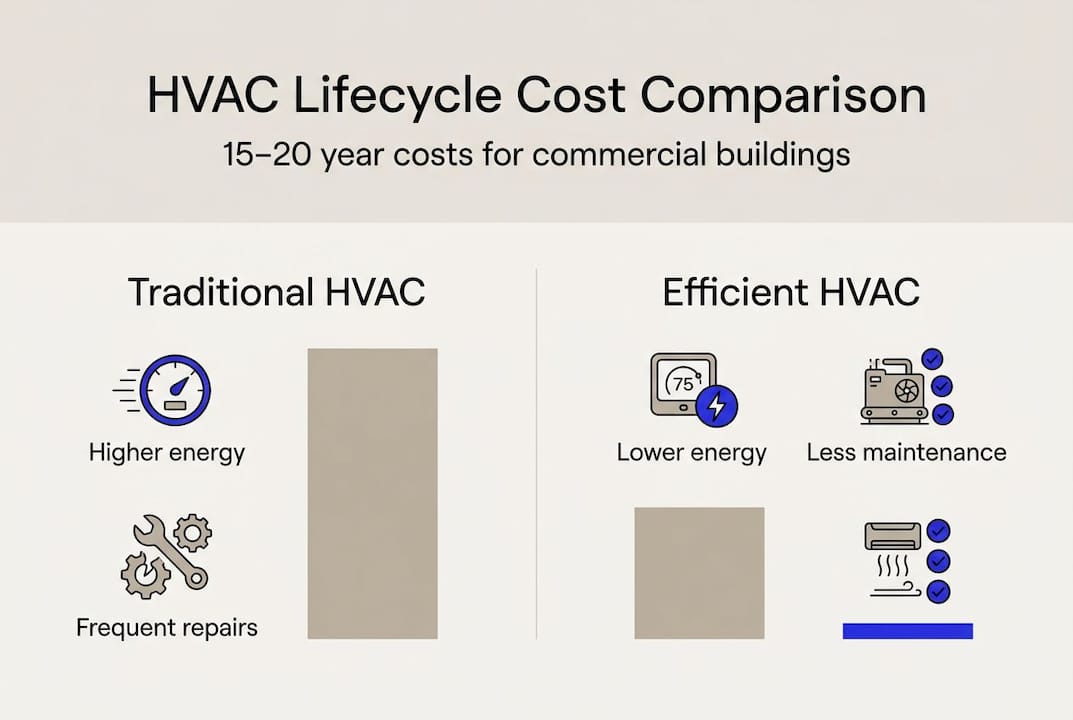
Long-term financial planning must account for lifecycle costs rather than focusing solely on upfront equipment prices. Energy efficient systems typically cost more initially but deliver superior returns through lower operating expenses, reduced HVAC maintenance services requirements, and extended equipment lifespan. Over a typical 15-20 year system life, total cost of ownership favours energy efficient equipment decisively.
Common misconceptions and comparisons
Several persistent myths prevent facility managers from adopting energy efficient HVAC despite clear advantages. The most common misconception centres on upfront costs: many assume energy efficient systems are prohibitively expensive. Whilst initial equipment prices run higher than basic alternatives, payback periods typically range from 3-5 years through energy savings alone. When you factor in reduced maintenance costs and extended equipment life, the financial case becomes overwhelming.
Another widespread belief suggests that energy efficient HVAC costs too much upfront or performs less effectively, yet payback periods remain short with substantial savings over system lifetime. Performance data consistently demonstrates that modern energy efficient systems deliver superior comfort and reliability compared to traditional equipment. The notion that “more efficient means less powerful” reflects outdated thinking from earlier technology generations that no longer applies to current systems.
Comparing HVAC system types reveals important performance distinctions:
| System type | Energy efficiency | Initial cost | Operating cost | Best application |
|---|---|---|---|---|
| Traditional split system | Moderate | Low | High | Small spaces with simple needs |
| Variable refrigerant flow | High | Moderate | Low | Multi-zone buildings requiring flexibility |
| Heat pump system | Very high | Moderate | Very low | Facilities with both heating and cooling needs |
| Chilled water system | High | High | Moderate | Large buildings with centralised plant rooms |
Lifecycle cost analysis provides the most accurate comparison framework. Calculate total expenses over 15-20 years including equipment purchase, installation, energy consumption, maintenance, and eventual replacement. This comprehensive view consistently favours energy efficient systems, even when upfront costs run 20-30% higher than basic alternatives. The key lies in properly sizing systems for actual building loads rather than oversizing, which wastes both capital and operating funds.
Environmental impact comparisons reveal even starker differences. Traditional HVAC systems often use refrigerants with high global warming potential, whilst modern energy efficient alternatives employ environmentally friendly refrigerants mandated by evolving regulations. Energy consumption differences translate directly to carbon emissions: a 30% reduction in HVAC energy use means 30% fewer emissions attributable to climate control.
Pro Tip: Request detailed lifecycle cost analyses from HVAC contractors that include realistic energy prices, maintenance schedules, and equipment replacement timelines to make truly informed decisions rather than focusing solely on initial purchase price.
When selecting HVAC technology for your facility, consider building characteristics, occupancy patterns, and local climate conditions. A system optimised for the UK’s moderate climate requires different specifications than equipment designed for Qatar’s extreme heat or India’s varied regional conditions. Professional commercial HVAC repair services can assess your specific requirements and recommend appropriate technology matched to your operational needs and budget constraints.
Practical steps to implement energy efficient HVAC solutions
Successfully implementing energy efficient HVAC requires systematic planning rather than simply purchasing high-efficiency equipment. Begin by conducting a comprehensive energy audit to understand current consumption patterns, identify inefficiencies, and establish baseline performance metrics. This audit should examine building envelope characteristics, occupancy schedules, existing equipment condition, and utility rate structures to inform system selection and sizing decisions.
Assessing your facility’s specific needs involves several critical considerations:
- Building size, layout, and usage patterns that determine heating and cooling loads
- Local climate conditions and seasonal temperature variations affecting system requirements
- Occupancy schedules and density that influence ventilation needs and operating hours
- Budget constraints for both initial investment and ongoing operational expenses
- Sustainability goals and regulatory compliance requirements driving efficiency targets
Choosing certified, high-efficiency equipment requires careful evaluation of manufacturer specifications, independent testing data, and warranty terms. Look for systems certified by recognised standards organisations and verify efficiency ratings under conditions matching your facility’s operating environment. Equipment oversizing represents a common mistake that wastes capital and reduces efficiency, so insist on proper load calculations performed by qualified professionals.
Engaging professional commercial air conditioning installation services proves essential because proper installation critically affects energy efficiency and system lifespan. Even the most efficient equipment performs poorly when installed incorrectly. Professional installers ensure proper refrigerant charging, ductwork sealing, control calibration, and system commissioning that validates performance meets design specifications.
Establishing comprehensive maintenance schedules maximises long-term efficiency and reliability:
- Schedule quarterly inspections to check refrigerant levels, clean coils, and verify control operation
- Replace filters monthly or according to manufacturer recommendations based on operating conditions
- Conduct annual comprehensive servicing including electrical connections, motor lubrication, and safety controls
- Implement continuous monitoring through building management systems to detect performance degradation early
- Document all maintenance activities and performance metrics to identify trends and optimise service intervals
Monitoring system performance requires establishing key performance indicators and tracking them consistently. Energy consumption per square metre, temperature consistency across zones, and occupant comfort complaints provide valuable feedback on system effectiveness. Modern building management systems automate much of this monitoring, alerting facility managers to anomalies that warrant investigation before they escalate into failures.
Optimising control settings represents an ongoing process rather than a one-time configuration. Seasonal adjustments, occupancy pattern changes, and building modifications all necessitate control updates to maintain peak efficiency. Programmable thermostats and smart controls enable sophisticated scheduling that matches HVAC output to actual needs, eliminating energy waste during unoccupied periods whilst ensuring comfort when occupants arrive.
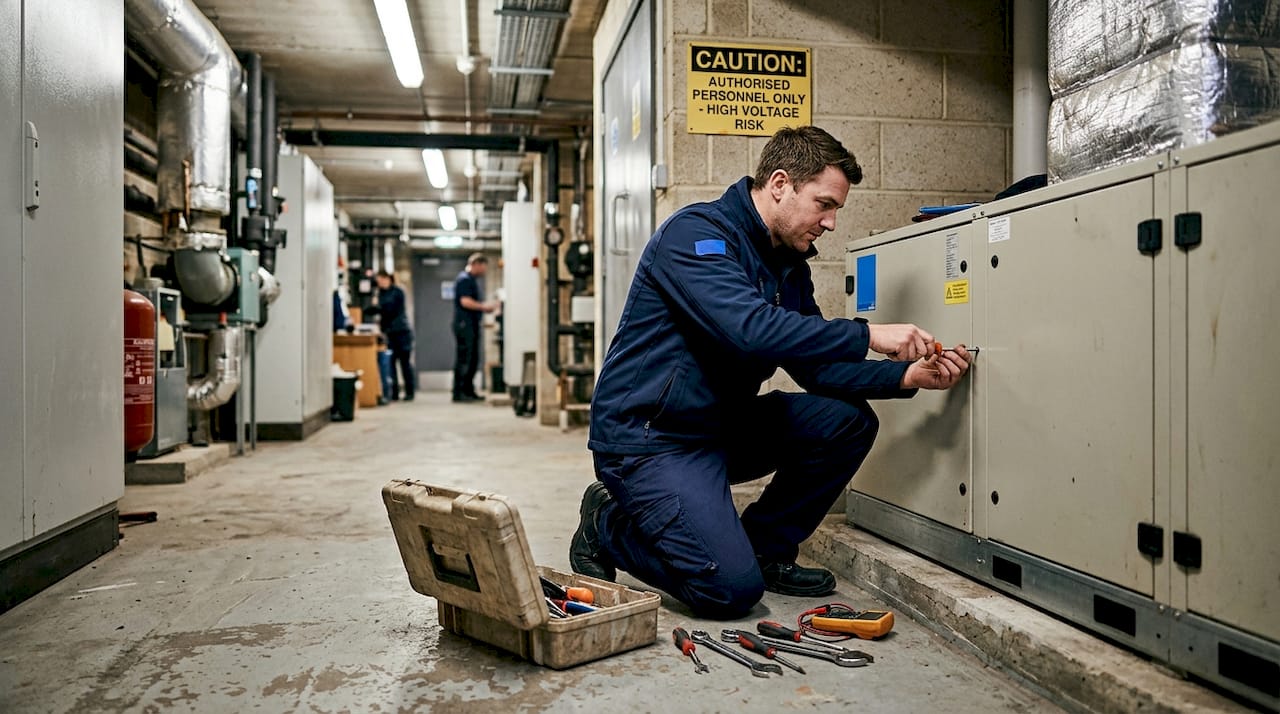
Regular HVAC maintenance services prevent the gradual efficiency degradation that occurs as systems age. Clean coils transfer heat more effectively, properly charged systems operate at design efficiency, and calibrated controls maintain setpoints accurately. The cumulative effect of deferred maintenance can reduce system efficiency by 20-30% over just a few years, completely negating the advantages of energy efficient equipment.
How EcoFrost supports your energy efficient HVAC journey
Transitioning to energy efficient HVAC requires expert guidance and professional implementation to realise the full potential of modern systems. EcoFrost delivers comprehensive commercial air conditioning installation services designed specifically for facilities seeking to reduce energy costs whilst improving occupant comfort. Our engineers assess your building’s unique requirements, recommend appropriate high-efficiency systems, and execute installations that meet exacting performance standards.
Maintaining peak efficiency requires ongoing professional support beyond initial installation. Our scheduled HVAC maintenance services keep your systems operating at design specifications through regular inspections, preventive servicing, and performance optimisation. When issues arise, our responsive commercial refrigeration and air conditioning repair services minimise downtime and prevent minor problems from escalating into costly failures. With over 10 years of experience across the UK, Qatar, and India, we understand the specific challenges facing facility managers in diverse climates and regulatory environments, delivering solutions that work reliably whilst controlling costs.
Frequently asked questions about energy efficient HVAC
How much can energy efficient HVAC systems actually save on operational costs?
Typical commercial facilities achieve 25-35% reductions in HVAC energy costs after upgrading to modern efficient systems, translating to thousands of pounds annually depending on building size and usage. Actual savings vary based on existing equipment condition, building characteristics, and local energy prices, but payback periods of 3-5 years are common.
What maintenance practices are most important for preserving HVAC efficiency?
Regular filter replacement, quarterly coil cleaning, annual comprehensive servicing, and continuous performance monitoring through building management systems represent the most critical maintenance activities. Neglecting these practices can reduce system efficiency by 20-30% within just a few years, completely negating the benefits of efficient equipment.
Are there specific regulations regarding HVAC efficiency I should know about?
The UK, Qatar, and India each maintain building energy codes that specify minimum efficiency standards for commercial HVAC systems, with requirements becoming progressively stricter. New installations and major renovations typically must meet current standards, whilst existing buildings may face retrofit requirements during ownership transfers or major upgrades. Consult local building authorities for specific requirements applicable to your facility.
How does HVAC efficiency affect indoor air quality and occupant productivity?
Energy efficient systems incorporate advanced filtration and controlled ventilation that remove contaminants whilst maintaining healthy fresh air exchange, directly improving indoor air quality. Research demonstrates that proper indoor environmental quality, including temperature control and air quality, can improve occupant productivity by 5-15% whilst reducing sick days, making HVAC efficiency a strategic business investment beyond just energy savings. For related insights on climate control importance, see why refrigeration matters restaurants ensure safety.