
TL;DR:
- Preparedness includes emergency kits, role assignments, and understanding critical time windows for food safety.
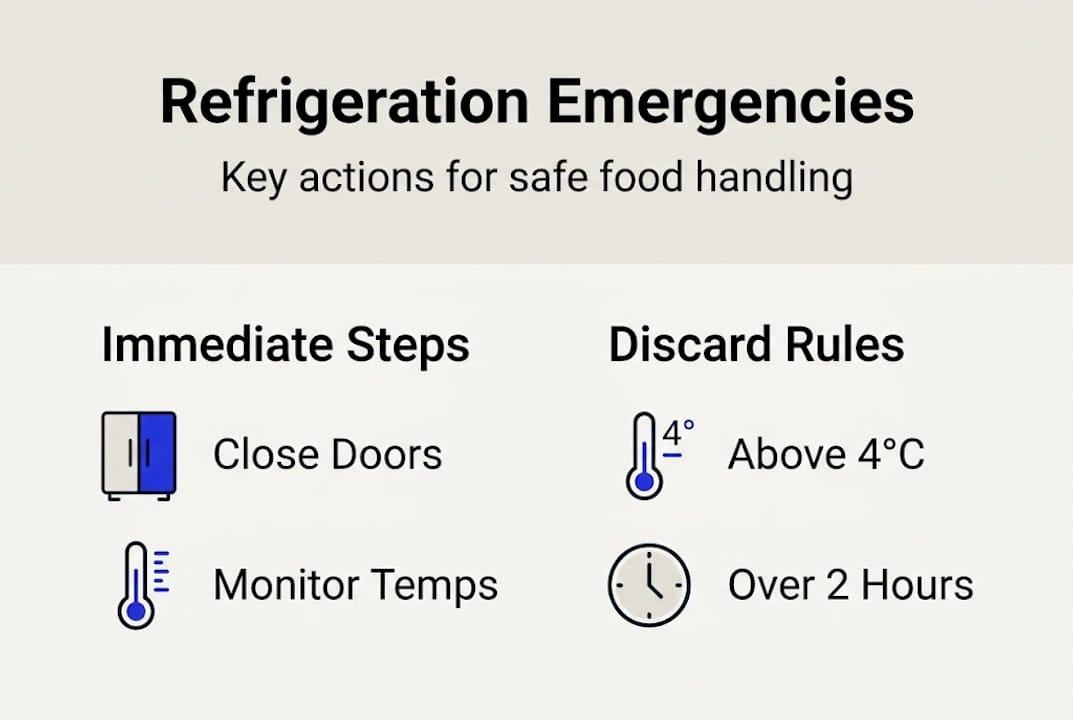
- During an emergency, keep doors closed, record temperatures regularly, and discard foods above 4°C after specified durations.
- Compliance requires detailed documentation of actions and adherence to HACCP standards, with stricter rules than household guidelines.
A refrigeration unit fails at 11pm on a Friday. By Saturday morning, you are facing thousands of pounds in spoiled stock, a potential food safety inspection, and a team that has no clear procedure to follow. For food service managers and hospitality business owners, this scenario is not hypothetical. It is a real operational risk that demands a structured, practised response. This guide walks you through how to prepare for refrigeration emergencies, what to do when one strikes, how to document temperatures for regulatory compliance, and what industry standards actually require of your business.
Table of Contents
- Identifying and preparing for refrigeration emergencies
- Step-by-step procedures during an emergency
- Tracking and recording food temperatures effectively
- Industry standards and regulatory compliance
- What most guides miss about emergency refrigeration procedures
- Find expert support for refrigeration emergencies
- Frequently asked questions
Key Takeaways
| Point | Details |
|---|---|
| Act promptly during outages | Closing refrigerator doors and delegating roles quickly can protect inventory during emergencies. |
| Strict temperature monitoring | Consistently track temperatures and follow discard rules, never relying on odour or taste. |
| Compliance matters | Regulatory standards differ from household rules, so commercial settings require thorough documentation. |
| Edge-case awareness | Understand special scenarios—like flood exposure or partial thaw—to ensure food safety in all circumstances. |
Identifying and preparing for refrigeration emergencies
Having established the importance of rapid response, let’s begin by understanding what qualifies as a refrigeration emergency and how to prepare.
A refrigeration emergency is any event that causes your cold storage to lose the ability to maintain safe food temperatures. The three most common causes are power outages, equipment failure (compressor breakdown, refrigerant leak, thermostat fault), and flooding or physical damage. Each carries its own risks, but all share one critical consequence: your perishable inventory enters what food safety professionals call the danger zone, between 4°C and 63°C, where bacterial growth accelerates rapidly.
Preparation is what separates a costly incident from a manageable one. Every food service operation should maintain an emergency refrigeration kit and a documented response procedure. Strong restaurant refrigeration safety practices begin long before any failure occurs.
Your emergency preparedness kit should include:
- Calibrated backup thermometers (at least two per unit)
- A printed emergency contact list: refrigeration engineer, utility provider, environmental health officer
- Pre-labelled temperature log sheets
- Dry ice or gel packs for short-term temperature maintenance
- A clear staff responsibility chart for emergency roles
One of the most important facts to understand is the critical time window. According to CDC guidance, keeping refrigerator and freezer doors closed during a power outage means a refrigerator stays safe for approximately 4 hours, a full freezer for around 48 hours, and a half-full freezer for about 24 hours. Knowing these windows allows you to make informed decisions rather than reactive ones.
The table below summarises the key time thresholds you need to know:
| Unit type | Door kept closed | Safe temperature window |
|---|---|---|
| Refrigerator | Yes | ~4 hours |
| Full freezer | Yes | ~48 hours |
| Half-full freezer | Yes | ~24 hours |
Pro Tip: Assign a named deputy for every shift whose sole responsibility during a refrigeration emergency is to monitor and log temperatures every 30 minutes. This single step dramatically improves your audit trail and decision-making speed.
Understanding refrigeration safety for restaurants at a deeper level will help you build procedures that are genuinely robust rather than just compliant on paper.
Step-by-step procedures during an emergency
With a clear plan and the right tools, it’s crucial to know exactly what to do when disaster strikes. Here are step-by-step actions to follow.
- Close all refrigerator and freezer doors immediately. Resist the urge to open units repeatedly to check contents. Every opening accelerates temperature rise.
- Record the time the failure was identified. This timestamp is the foundation of your incident log and your compliance defence.
- Delegate roles. One person monitors temperatures; one contacts your refrigeration engineer; one notifies management or the duty manager.
- Do not move hot or warm foods into affected cold units. Introducing heat sources accelerates temperature rise for everything already stored.
- Begin temperature checks at 30-minute intervals. Use your calibrated backup thermometer, not the unit’s internal display, which may be unreliable during a fault.
- Apply the discard rule without exception. Perishable foods above 4°C for more than 2 to 4 hours must be discarded. Never taste-test or rely on smell to judge safety.
- Separate affected stock clearly. Label discarded items and quarantine them away from usable inventory to prevent accidental use.
- Contact your refrigeration troubleshooting specialist as soon as the failure is confirmed, not after you have assessed the damage.
Edge cases require specific handling. If flood water has contacted any food, discard everything, including sealed cans, as contamination risk is too high. Partially thawed items may be safe if ice crystals are still present and the internal temperature remains at or below 4°C. Understanding common refrigeration failure causes helps you anticipate which scenarios are most likely in your specific setup.
Safety rule: The smell and appearance of food are not reliable indicators of bacterial contamination. Pathogens such as Salmonella and E. coli are odourless and invisible. If in doubt, throw it out.
| Food type | Safe if below 4°C | Discard if above 4°C for 2+ hours |
|---|---|---|
| Raw meat and poultry | Yes | Yes |
| Dairy and soft cheese | Yes | Yes |
| Cooked leftovers | Yes | Yes |
| Hard cheese | Yes | Generally safe up to 4 hours |
| Unopened canned goods | Yes | Yes if flood-contacted |
Investing in regular maintenance for compliance reduces the frequency and severity of these events considerably.
Tracking and recording food temperatures effectively
After immediate safety actions, maintaining accurate records is essential for both compliance and inventory protection.
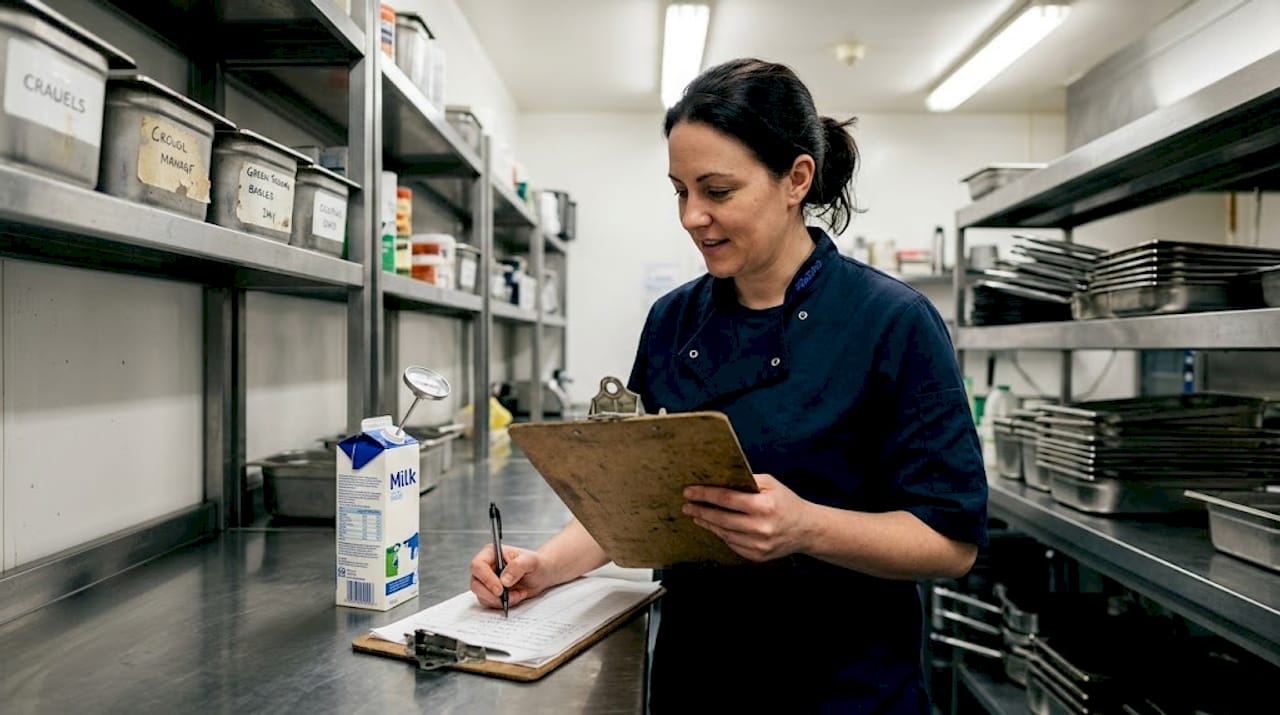
Temperature tracking during an emergency is not just good practice. It is a regulatory requirement. Environmental health officers and food safety auditors will ask to see your records if an incident is reported or investigated. A clear, timestamped log demonstrates that your team acted responsibly and in line with food safety law.
How to set up emergency temperature tracking:
- Designate a single log sheet per unit, clearly labelled with the unit ID and the time the emergency began.
- Record temperature readings every 30 minutes using a calibrated probe thermometer inserted into the food itself, not just the air inside the unit.
- Note the name of the person taking each reading alongside the time and temperature.
- Record every decision: what was discarded, at what time, and why.
- Keep logs for a minimum of three months, or longer if your local authority requires it.
Tools that support effective monitoring:
- Digital probe thermometers with data-logging capability
- Wireless temperature sensors with alert functions for early warning
- Pre-printed emergency log sheets stored with your emergency kit
- Cloud-based monitoring platforms that retain historical data automatically
Pro Tip: If your operation uses digital monitoring systems, ensure they have battery backup. A monitoring system that fails at the same time as your refrigeration unit provides no protection at all.
For operations with walk-in units, following structured freezer safety steps ensures your logging procedures are appropriate for larger-scale cold storage. Hotels and multi-unit operations should also review hotel freezer safety protocols, which address the added complexity of managing multiple units across a single site.
Remember: perishable foods above 4°C for more than 2 to 4 hours must be discarded regardless of appearance. Your records prove that you applied this rule correctly.
Industry standards and regulatory compliance
Rigorous temperature monitoring is only half the battle; understanding and fulfilling regulatory requirements ensures business protection.
Food service businesses in the UK operate under the Food Safety Act 1990 and the Food Hygiene Regulations 2006, both of which require documented evidence of safe food handling. The HACCP (Hazard Analysis and Critical Control Points) framework is the industry-standard approach, and it treats temperature control as a critical control point.
The key distinction in commercial settings is the cumulative danger zone rule. Unlike household guidance, which simply advises discarding food left out for 4 hours, commercial HACCP standards require you to track the total cumulative time food has spent above 4°C across its entire handling history, not just during the emergency itself. Some local authority codes are even stricter, requiring discard after 2 hours.
What your HACCP emergency procedure must include:
- Defined critical limits (maximum safe temperatures for each food category)
- Monitoring procedures with assigned responsibilities
- Corrective actions (what to do when limits are breached)
- Verification steps (how you confirm the procedure worked)
- Record-keeping requirements (what to document and for how long)
| Guideline type | Temperature threshold | Time limit | Documentation required |
|---|---|---|---|
| Household consumer | Below 4°C | 4 hours | None |
| Commercial HACCP | Below 4°C | Cumulative 4 hours | Yes, mandatory |
| Some local authority codes | Below 4°C | 2 hours | Yes, mandatory |
Understanding commercial refrigeration standards is essential before you design your emergency procedures. Compliance is not a one-size-fits-all matter. The right approach to selecting commercial refrigeration and following a structured refrigeration setup guide both contribute to reducing your compliance risk from the outset.
What most guides miss about emergency refrigeration procedures
Most emergency refrigeration guides cover the basics well. Close the doors, log the temperatures, discard above 4°C. But in our experience working with food service businesses across the UK, Qatar, and India, the incidents that cause the most damage are rarely the straightforward ones.
Generic guides rarely address the edge cases that trip up experienced managers. Flood-contacted food must be entirely discarded, even sealed cans, because of contamination risk that goes beyond temperature. Partially thawed stock is only safe if ice crystals remain present and the temperature is confirmed at or below 4°C. Hot foods must never be placed into a struggling cold unit, as this raises the temperature for everything else stored inside.
We also see businesses rely too heavily on their equipment’s built-in displays during a fault. Those displays can be inaccurate precisely when you need them most. A calibrated probe thermometer, used correctly, is your most reliable tool in a crisis.
Finally, the regulatory gap between what a generic guide says and what your specific local authority requires can be significant. Always verify your local codes, and treat your restaurant food safety procedures as a living document that is reviewed at least annually.
Find expert support for refrigeration emergencies
Having explored all aspects of emergency procedures, here is how you can access specialist help and keep your business fully protected.
At EcoFrost, we have spent over 10 years helping food service businesses across the UK, Qatar, and India build refrigeration systems and procedures that hold up under pressure. Whether you need a structured troubleshooting guide to reduce downtime, or want to strengthen your team’s understanding of refrigeration safety insights, we are here to help.
Our team provides compliance-focused maintenance programmes, emergency response planning, and staff training tailored to your operation. From restaurant refrigeration guidance to full commercial system audits, we give you the confidence that your cold chain is protected. Get in touch with EcoFrost today to discuss your requirements.
Frequently asked questions
What is the maximum time food can be safely kept in a powerless refrigerator?
A refrigerator will keep food safe for up to 4 hours if the door remains closed; a full freezer remains safe for approximately 48 hours under the same conditions.
Should I ever taste-test perishable foods after a refrigeration failure?
No. Never taste-test or rely on smell. Discard anything above 4°C for over 2 to 4 hours, as harmful pathogens produce no detectable odour or visible change.
How does commercial food safety differ from household guidelines in emergencies?
Commercial guidelines are considerably stricter, requiring cumulative danger zone tracking and mandatory documentation under HACCP rules, whereas household guidance offers a simpler 4-hour discard rule with no record-keeping requirement.
What should I document during an emergency refrigeration incident?
Record timestamps, temperature readings, actions taken, and all food discards. This documentation supports compliance and provides a clear audit trail if your procedures are ever reviewed by an environmental health officer.