
TL;DR:
- Misunderstanding refrigeration terminology leads to longer repairs and guest discomfort in hotels.
- Core terms like superheat, subcooling, and key system components are essential for effective maintenance.
- Proper language and regular preventive maintenance improve efficiency, reduce costs, and prevent system failures.
Misunderstood refrigeration terminology costs hotels more than most operators realise. When a maintenance manager logs a fault as “unit not cooling” instead of identifying a superheat deviation or a failed expansion valve, engineers arrive unprepared, repairs take longer, and guests notice. The gap between technical language and day-to-day hotel operations is where breakdowns quietly breed. This guide is not written for engineers. It is written for hotel operators and maintenance managers who want to speak the language of their own systems, make smarter decisions, and stop paying for avoidable downtime.
Table of Contents
- Core refrigeration terminology every hotel should know
- How hotel refrigeration systems actually work
- Best practices for maintenance and energy efficiency
- Advanced concepts and modern challenges
- Most hotels still underestimate the power of the right terminology
- Next steps: boost your hotel’s efficiency with expert support
- Frequently asked questions
Key Takeaways
| Point | Details |
|---|---|
| Know vital terms | Understanding key refrigeration terminology is fundamental for effective hotel operations and energy savings. |
| Follow best practices | Routine maintenance using correct terms improves efficiency and extends equipment lifespan. |
| Stay updated | Modern regulations and technology demand fluency in current and evolving refrigeration language. |
| Link language to action | Using proper terminology in logs and communication speeds up service and supports compliance. |
Core refrigeration terminology every hotel should know
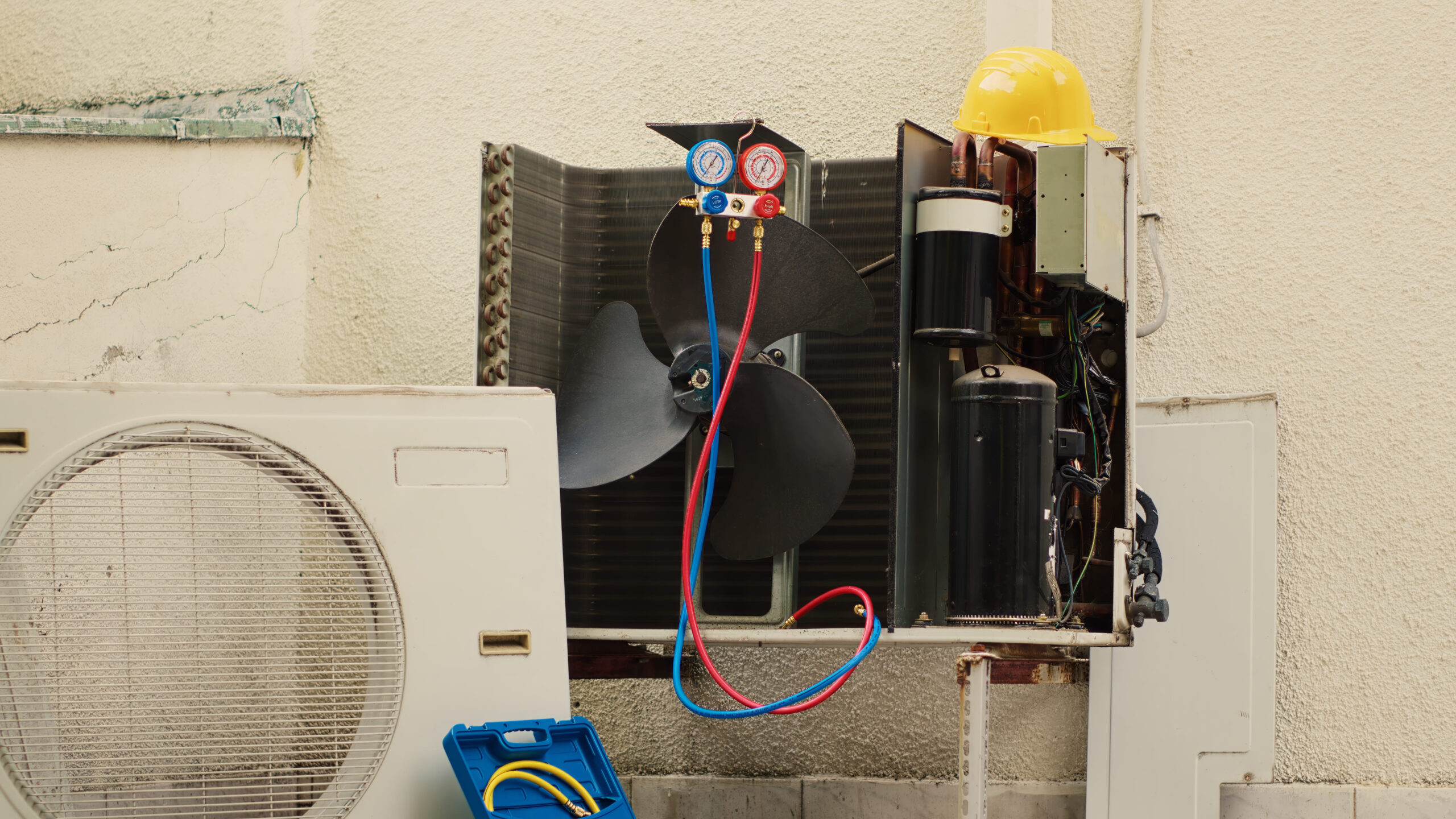
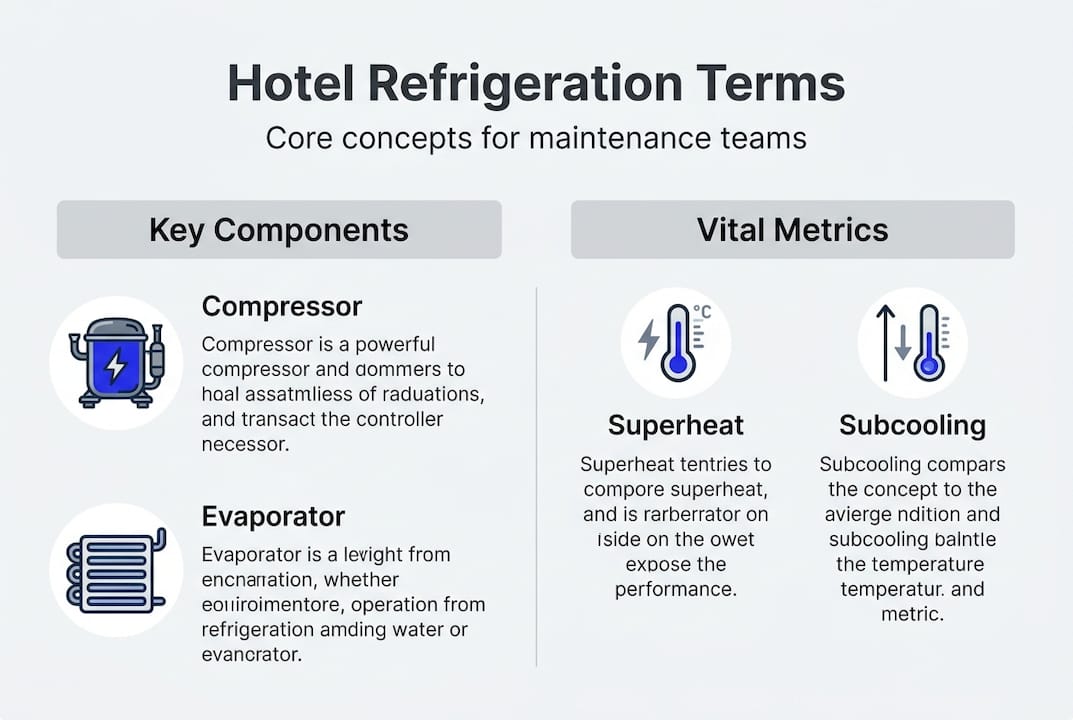
With the importance established, let us break down the core language of hotel refrigeration. Key refrigeration terminology covers components such as the evaporator, condenser, compressor, expansion valve, superheat, subcooling, Coefficient of Performance (COP), defrost cycle, and refrigerants including R-410A, R-32, and ammonia. These are not abstract concepts. Each one describes something physically happening inside your hotel’s systems every hour of every day.
Here is a quick-reference glossary of the terms you will encounter most often across hotel refrigeration types:
| Term | Plain-language meaning |
|---|---|
| Evaporator | The coil that absorbs heat from the space being cooled |
| Condenser | The coil that releases absorbed heat to the outside |
| Compressor | The pump that drives refrigerant around the system |
| Expansion valve | Controls refrigerant flow and drops its pressure |
| Superheat | How far refrigerant vapour exceeds its boiling point |
| Subcooling | How far liquid refrigerant drops below condensing temperature |
| COP | Units of cooling delivered per unit of energy consumed |
| Defrost cycle | Scheduled process to remove ice build-up on evaporator coils |
| Refrigerant | The working fluid that carries heat through the system |
Hotel-specific systems you should also recognise include:
- PTAC (Packaged Terminal Air Conditioner): Self-contained units common in guest rooms, installed through an exterior wall.
- VRF/VRV (Variable Refrigerant Flow/Volume): Multi-zone systems connecting one outdoor unit to many indoor units, offering flexible control.
- DOAS (Dedicated Outdoor Air System): Handles fresh air ventilation separately from temperature control, often paired with VRF.
- Chiller: A large central plant that cools water, which is then circulated to air handling units across the property.
Pro Tip: If superheat readings are too high, refrigerant is not absorbing enough heat, which strains the compressor. If subcooling is too low, liquid refrigerant may flash before the expansion valve, reducing efficiency sharply. Knowing both figures gives you an early warning system that no fault code alone can match.
How hotel refrigeration systems actually work
Now that you know the basic terms, let us see how they appear in real hotel refrigeration setups. At the heart of nearly every system is the vapour compression cycle: refrigerant evaporates in the evaporator, absorbing heat from the room; the compressor raises its pressure and temperature; the condenser rejects that heat outside; and the expansion valve drops the pressure again, restarting the cycle.
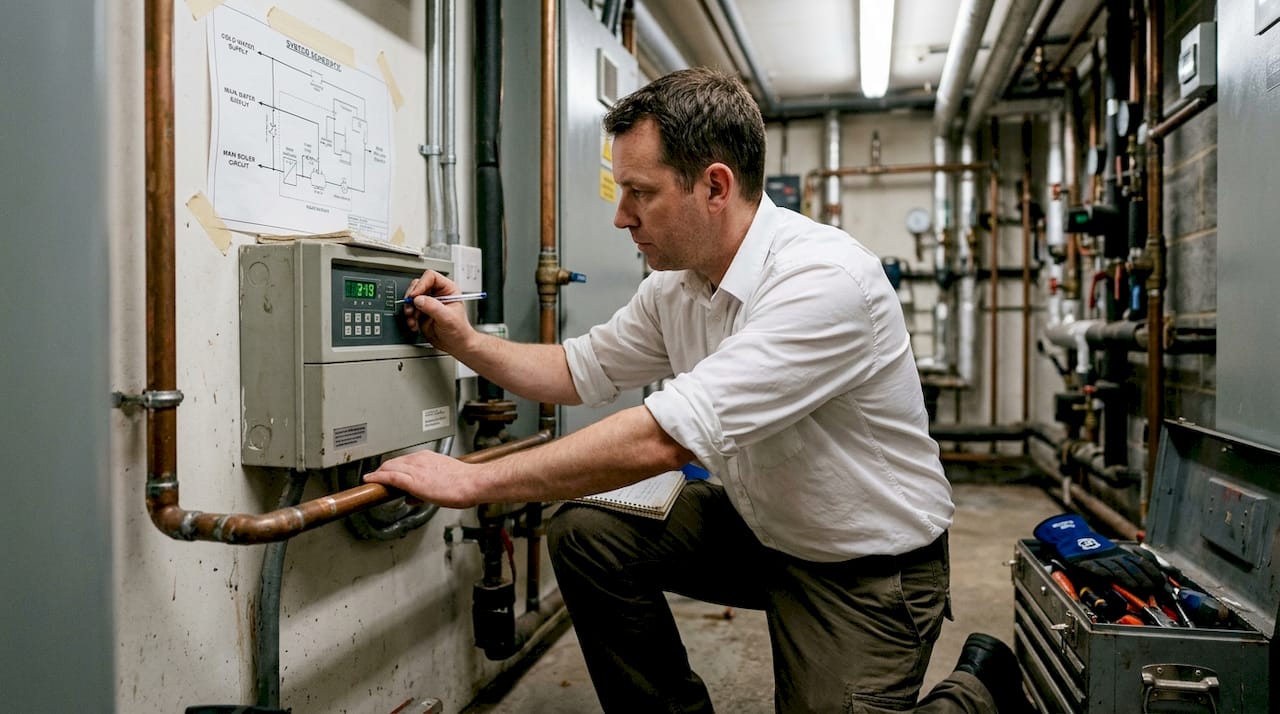
Here is how that cycle plays out across the three main hotel system types:
| System | How it works | Typical use in hotels |
|---|---|---|
| PTAC | Self-contained vapour compression in one wall unit | Individual guest rooms |
| VRF | Refrigerant piped from one outdoor unit to many indoor units | Multi-zone areas, suites, corridors |
| Chiller | Chills water centrally, distributed via pipework | Large hotels, conference centres |
A step-by-step view of the cycle in a PTAC unit:
- Warm room air passes over the evaporator coil. Refrigerant inside absorbs that heat and evaporates.
- The compressor draws in the vapour and compresses it, raising its temperature significantly.
- Hot refrigerant moves to the condenser coil, where outdoor air carries the heat away.
- Cooled refrigerant passes through the expansion valve, dropping in pressure and temperature.
- The cycle repeats, maintaining the set room temperature.
HVAC systems account for 40 to 50% of a hotel’s total energy consumption, which is why understanding system efficiency matters directly to your operating costs. VRF systems achieve Energy Efficiency Ratio (EER) ratings of 15 to 21, compared to just 9 to 10 for standard PTAC units. That gap translates into real savings at scale. For larger properties, hotel chiller systems offer centralised efficiency gains that distributed systems simply cannot match. When selecting commercial refrigeration for a new build or refurbishment, understanding these differences early prevents costly retrofits later.
Best practices for maintenance and energy efficiency
To keep systems running efficiently, apply what you know with these best practice routines. Preventive maintenance (PM) is not just a schedule. It is a language. When your team uses correct terminology in logs and service requests, engineers diagnose faults faster, warranty claims are processed without dispute, and energy waste is caught before it compounds.
A structured maintenance schedule using the right terms looks like this:
- Daily: Check and log temperature readings across all refrigerated zones; inspect for visible leaks or unusual noise; clear airflow around condenser and evaporator coils.
- Weekly: Inspect door gaskets and seals for wear or gaps; confirm defrost cycle is completing correctly; check drain lines for blockages.
- Monthly: Clean condenser coils. Dirty coils increase energy use by 20 to 40%, making this one of the highest-impact tasks on the list. Replace air filters.
- Quarterly: Service evaporator coils and fan motors; carry out refrigerant pressure checks to confirm system is operating within design parameters.
- Annual: Full electrical inspection, refrigerant analysis, and a complete system performance review by a qualified engineer.
For guidance on how these routines connect to food safety obligations, the refrigeration maintenance for safety resource is worth reviewing alongside your existing HACCP documentation. Proper cleaning of refrigeration units is also a discipline in itself, particularly in hotel kitchens where contamination risk is high.
Preventive maintenance reduces operational costs by 25 to 35% and can extend PTAC unit lifespan by up to 100% compared to reactive-only maintenance programmes.
Pro Tip: When logging a fault, always record the specific component and symptom using correct terminology. “Condenser fan motor not running, high head pressure alarm active” gets an engineer to the right part immediately. “AC not working” wastes time and risks misdiagnosis.
Advanced concepts and modern challenges
With basics and daily routines covered, operators must also be fluent in the latest regulatory and technical shifts. The refrigerant landscape is changing rapidly, and the terminology around it carries real compliance weight.
Key concepts to understand now:
- A2L refrigerants: A safety classification for mildly flammable, low-GWP refrigerants such as R-32 and certain HFO blends. These are replacing R-410A in new equipment and require specific handling protocols.
- R-22 phaseout: R-22 is no longer available for new systems. The transition to R-410A and HFO blends is now well underway, with further restrictions tightening through 2026 and beyond.
- Floating head pressure control: A strategy where the system allows condensing pressure to vary with ambient temperature rather than holding it fixed, saving energy during cooler periods.
- Demand defrost vs time-based defrost: Time-based defrost runs on a fixed schedule regardless of ice build-up. Demand defrost uses sensors to trigger the cycle only when needed, reducing energy waste and temperature fluctuations.
- DOAS and ASHRAE 62.1: VRF systems do not supply fresh air. Pairing them with a Dedicated Outdoor Air System is required to meet ventilation standards, and failing to do so can void warranties and breach building regulations.
- Ventilation zoning: Understanding how airflow is divided across zones prevents pressure imbalances that degrade both comfort and system efficiency.
Up to 80% of a hotel’s energy can be attributed to HVAC and refrigeration when modern controls and monitoring are factored in. Staying current on refrigeration and food safety regulations is equally important, as terminology in compliance documents directly mirrors what engineers and inspectors use on site.
Most hotels still underestimate the power of the right terminology
Stepping back from technical specifics, here is the surprising truth we have learned from supporting dozens of hotels across the UK, Qatar, and India: the most expensive maintenance failures rarely stem from system age or poor equipment. They stem from communication breakdowns.
When a maintenance log reads “room too warm” instead of “evaporator coil icing, defrost cycle not initiating,” an engineer spends the first 30 minutes diagnosing what your team already observed. Multiply that across a busy property and you are looking at significant wasted labour costs and extended guest discomfort.
Hotels that invest in training their teams to use correct refrigeration language consistently spot inefficiencies earlier, resolve service calls faster, and maintain stronger warranty positions. The return on that investment is genuinely higher than many capital upgrades. A laminated quick-reference chart in your plant room costs almost nothing. The value it delivers when a junior engineer is troubleshooting at 2am is considerable.
We recommend reviewing the full range of hotel refrigeration types explained to build shared vocabulary across your operations and engineering teams. Terminology fluency is low-cost and high-impact. It is one of the most underutilised operational tools in hotel facilities management.
Next steps: boost your hotel’s efficiency with expert support
If you are ready to take practical steps beyond terminology, EcoFrost can help you translate knowledge into better, more reliable hotel operations.
Understanding why refrigeration fails is the logical next step after mastering the terminology. From there, our team can support you with a full site survey, tailored maintenance planning, and access to commercial air conditioning installation services designed specifically for hospitality environments. If you are still clarifying the difference between HVAC and refrigeration across your property, that resource will help you map your systems accurately before any upgrade conversation. With over 10 years of experience across the UK, Qatar, and India, EcoFrost brings the technical depth and sector knowledge your hotel deserves.
Frequently asked questions
What is the most important refrigeration term for hotel operators to know?
Knowing the difference between superheat and subcooling is vital, as these two readings directly affect system performance, energy efficiency, and early fault detection before a breakdown occurs.
How often should hotel refrigeration systems be professionally maintained?
Hotel systems require daily and weekly in-house checks, with professional annual maintenance recommended as a minimum to maintain efficiency, extend equipment life, and meet compliance requirements.
Do all hotel air conditioning systems use the same type of refrigerant?
No, hotels use a range of refrigerants, but the shift toward low-GWP types such as R-410A and HFO blends is now being driven by tightening regulations and sustainability commitments across the industry.
Why is proper ventilation terminology important for hotel maintenance teams?
Using correct ventilation terms prevents critical errors, particularly with PTAC and VRF systems where incorrect intake or exhaust configuration can void warranties and cause premature system failures.
What is the difference between PTAC and VRF systems in hotel rooms?
PTAC units are simpler and cheaper upfront but noisier and less efficient, while VRF systems offer quiet, flexible multi-zone control at a higher initial cost and greater long-term energy savings.