
TL;DR:
- Proper maintenance and system understanding significantly improve chiller efficiency and longevity.
- Water-cooled chillers perform better in hot climates, while air-cooled units suit milder conditions.
- Proactive monitoring and routine upkeep prevent costly failures and optimize energy savings.
Commercial refrigeration is the backbone of daily operations in food service and hospitality, yet most facility managers treat all large cooling systems as interchangeable. They are not. Best-in-class food processing refrigeration uses just 25 to 35 kWh per cubic metre per year, a figure that separates well-specified commercial chillers from conventional units by a significant margin. This guide will walk you through exactly what a commercial chiller is, how the two dominant types compare, what causes failures in real hospitality environments, and which strategies consistently deliver the greatest efficiency gains. Whether you manage a hotel kitchen, a central production facility, or a multi-site restaurant group, the insights here are built for your decisions.
Table of Contents
- What is a commercial chiller and how does it work?
- Air-cooled versus water-cooled chillers: Which is right for you?
- Key issues affecting chiller efficiency and failures in hospitality environments
- Best practices for maximising chiller efficiency and reliability
- What most businesses miss about chillers: Practical wisdom from field experience
- Explore the next level of commercial chiller performance
- Frequently asked questions
Key Takeaways
| Point | Details |
|---|---|
| Understand core components | A commercial chiller uses an evaporator, compressor, condenser and expansion valve to cool large spaces efficiently. |
| Choose the right type | Air-cooled and water-cooled chillers each have pros and cons, and suitability depends on climate and facility size. |
| Prevent common failures | Fouling, leaks, and poor sizing are leading causes of energy waste and system breakdowns. |
| Boost efficiency with smart practices | Routine cleaning, VSDs, and optimal setpoints significantly reduce costs and extend equipment life. |
What is a commercial chiller and how does it work?
A commercial chiller is a mechanical refrigeration system designed to remove heat from a liquid, typically water or a water-glycol mix, which then circulates through a building or process to cool air, equipment, or stored product. Unlike a standard upright refrigerator or a basic cold room, a chiller operates at a much larger scale and with considerably greater precision, making it the preferred solution for bulk cooling, walk-in freezers, blast chilling, and centralised air conditioning in hospitality venues.
Understanding the difference between HVAC and refrigeration systems helps clarify where chillers sit in the broader picture. A chiller is fundamentally a refrigeration machine, but it integrates with HVAC infrastructure to manage both temperature and humidity across large spaces.
The core components of any commercial chiller are:
- Evaporator: The heat exchanger where refrigerant absorbs heat from the chilled liquid, causing the liquid to cool down.
- Compressor: Raises the pressure of the refrigerant gas. Scroll, screw, and centrifugal compressor types are common, each suited to different capacity ranges.
- Condenser: Releases the absorbed heat to either air or water, depending on the chiller design.
- Expansion valve: Controls refrigerant flow and pressure drop, enabling the cycle to repeat continuously.
| Feature | Commercial chiller | Traditional refrigeration unit |
|---|---|---|
| Cooling medium | Chilled water or glycol | Direct refrigerant |
| Scale | Large, centralised | Small to medium, localised |
| Precision control | High | Moderate |
| Applications | Hotels, central kitchens, food processing | Display cabinets, reach-in fridges |
| Energy management | Advanced monitoring possible | Limited |
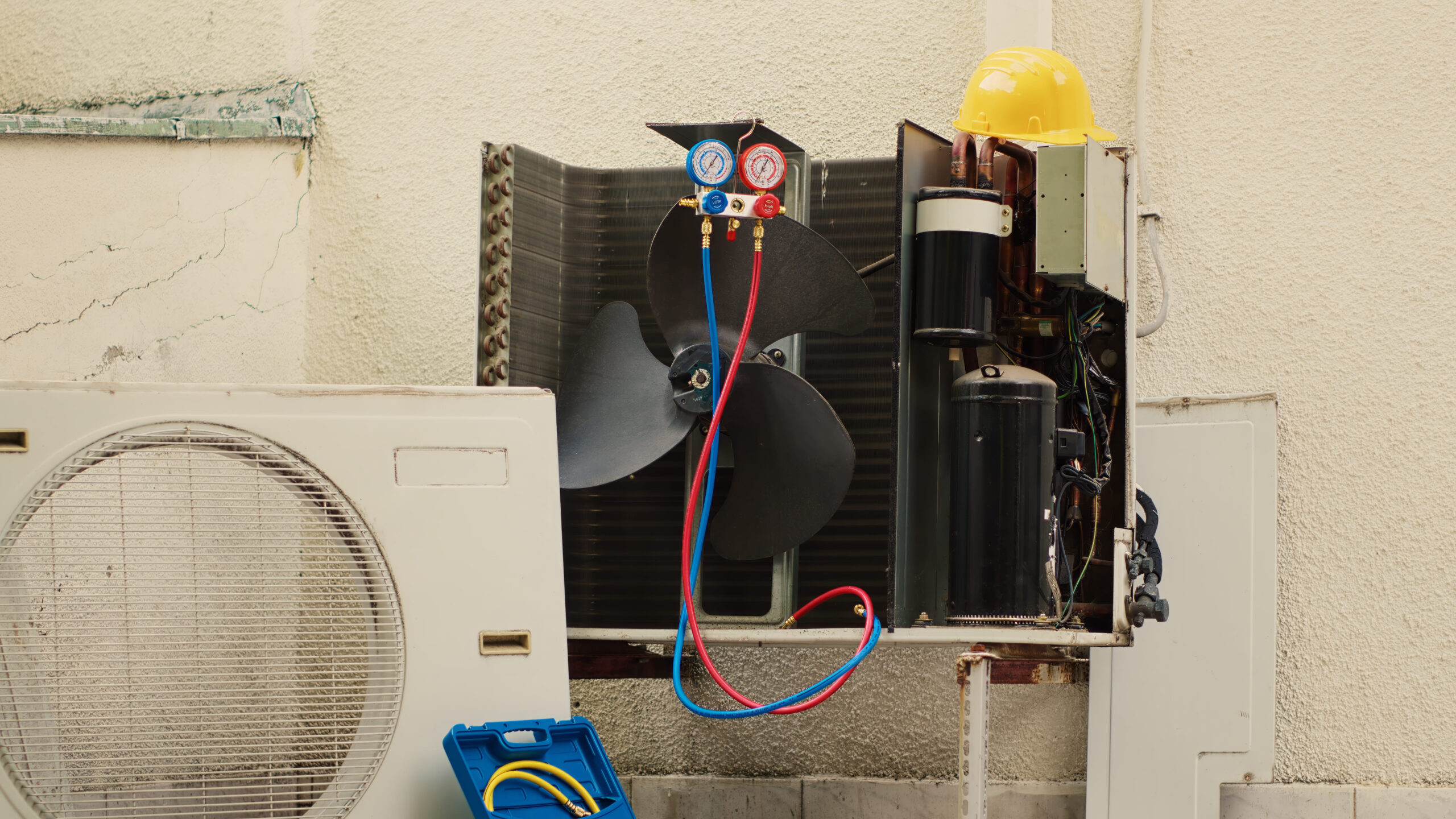
The two principal designs are air-cooled and water-cooled. Air-cooled chillers reject heat through fans and ambient air, while water-cooled chillers use a cooling tower or condenser water loop. Each has a distinct place depending on your facility’s layout, climate, and budget.
Pro Tip: If your site has limited outdoor space or planning restrictions, an air-cooled chiller mounted on a roof or plant room is often the most practical starting point. Always confirm your local ambient temperature range before specifying, as this directly affects rated capacity.
Air-cooled versus water-cooled chillers: Which is right for you?
With a clear picture of how chillers operate, the next decision most facility managers face is choosing between air-cooled and water-cooled designs. Both serve the same fundamental purpose, but they behave very differently depending on environment, building type, and usage intensity.
Air-cooled chillers use fans to dissipate heat into the surrounding air. They are simpler to install, require no cooling tower, and carry lower upfront infrastructure costs. Water-cooled chillers use a condenser water loop connected to a cooling tower, which allows them to operate more efficiently because water transfers heat far more effectively than air.
One critical consideration for food service operators in warmer climates is that hot environments reduce air-cooled chiller efficiency significantly. When ambient temperatures rise above design conditions, an air-cooled unit must work harder to reject heat, consuming more energy and sometimes failing to reach target temperatures during peak service periods.
| Criteria | Air-cooled chiller | Water-cooled chiller |
|---|---|---|
| Installation cost | Lower | Higher (cooling tower required) |
| Energy efficiency | Good in mild climates | Superior in hot climates |
| Maintenance complexity | Lower | Higher (tower cleaning, water treatment) |
| Space requirement | Outdoor or rooftop space needed | Plant room and tower space needed |
| Best suited for | Smaller venues, mild climates | Large hotels, central kitchens, hot regions |
| Water consumption | None | Moderate (evaporative losses) |
For restaurant refrigeration in the UK, air-cooled systems often make practical sense given the temperate climate and the typically smaller plant rooms found in urban sites. However, for large hotels or food production facilities in Qatar or similarly hot regions, water-cooled systems consistently deliver better performance and lower running costs over a full year.
Key factors to weigh when making your selection:
- Climate: Average summer ambient temperatures above 35°C strongly favour water-cooled designs.
- Available space: Rooftop or external yard space suits air-cooled; enclosed plant rooms with tower access suit water-cooled.
- Water availability and treatment budget: Water-cooled systems require ongoing water treatment to prevent scale and biological growth.
- Operational hours: High-intensity, round-the-clock operations benefit most from the superior efficiency of water-cooled systems.
Key issues affecting chiller efficiency and failures in hospitality environments
Even a correctly specified chiller will underperform if common operational issues are left unchecked. In our experience working across food service and hospitality sites, three failure types account for the vast majority of unplanned downtime and inflated energy bills.
-
Fouling of heat exchange surfaces. Scale, biofilm, and debris accumulate on evaporator and condenser surfaces over time. Fouling can increase energy consumption by 10 to 35%, a cost that compounds silently until a maintenance visit reveals the problem. Regular tube cleaning and water treatment programmes are non-negotiable.
-
Refrigerant leaks. Even a modest leak can cause 15 to 20% capacity loss, meaning your system runs longer and harder to achieve the same result. Leaks also carry regulatory implications under F-Gas rules. Operators should schedule leak checks at least twice yearly.
-
Improper sizing. A chiller that is too large short-cycles, wearing out compressors prematurely. One that is too small runs continuously without ever reaching setpoint. Incorrect sizing causes persistent inefficiency and accelerates component wear across the entire system.
“A single fouled condenser tube bundle can add thousands of pounds annually to your energy bill, yet it takes less than a day’s planned maintenance to clean. The cost of inaction far exceeds the cost of the work.”
Understanding why refrigeration fails in commercial settings gives operators a sharper eye for early warning signs. Watch for rising discharge pressures, longer run times to reach setpoint, unusual vibration, and unexplained increases in electricity consumption. These are the signals most operators overlook until the system fails during a busy service.
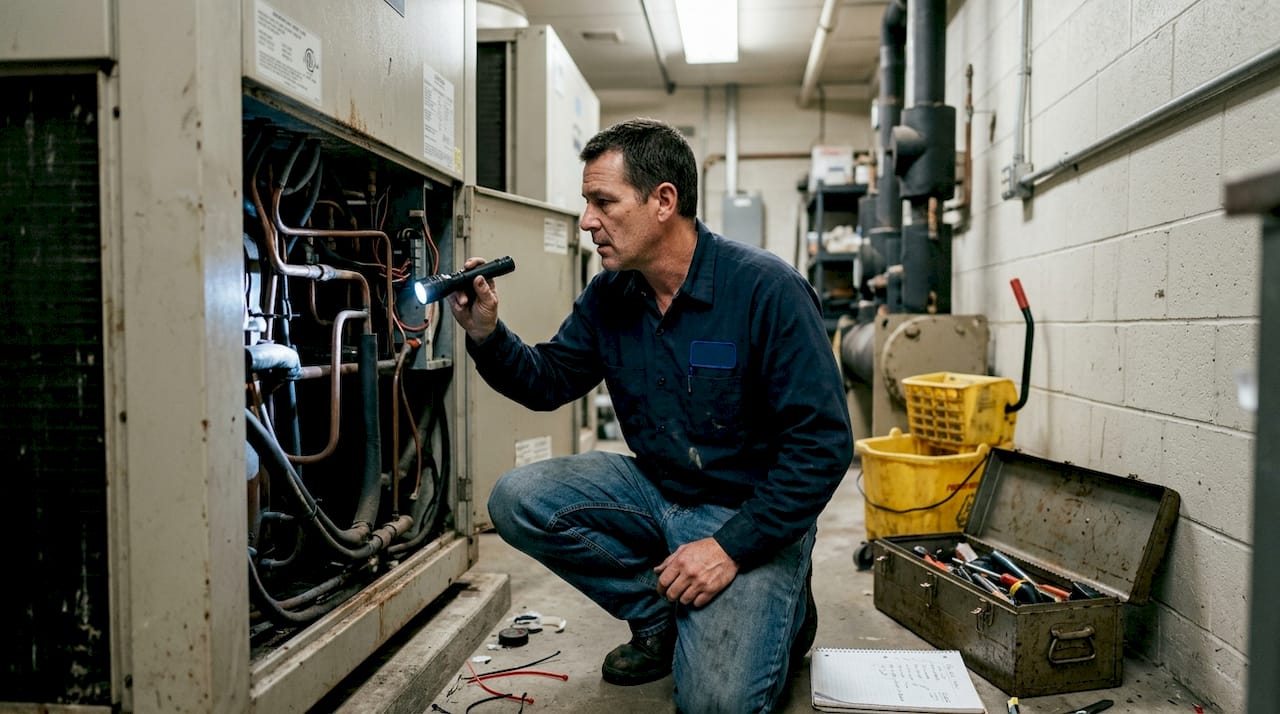
Pro Tip: Review your chiller’s performance data against its original commissioning baseline at least once per quarter. A 10% increase in energy use compared to baseline is a reliable early indicator of fouling or a developing refrigerant issue. Refer to cleaning methods for chillers to build a structured cleaning schedule.
Best practices for maximising chiller efficiency and reliability
With a clear understanding of common failure points, facility managers can move from reactive firefighting to proactive performance management. The following strategies consistently deliver measurable results across food service and hospitality operations.
- Install variable speed drives (VSDs) on compressors and pumps. VSDs save 8 to 15% on energy by matching motor speed to actual demand rather than running at full load continuously.
- Optimise chilled water setpoints. Raising the chilled water supply temperature by just 2°F (approximately 1.1°C) saves 3 to 5% on chiller energy. Many systems run colder than their application actually requires.
- Maintain clean heat exchange surfaces. Routine tube brushing and water treatment directly reduce fouling penalties.
- Schedule predictive maintenance checks. Oil analysis, vibration monitoring, and refrigerant charge verification catch problems before they become failures.
- Monitor and trend key performance indicators. Approach and temperature differences, coefficient of performance, and run hours per degree-day are the metrics that reveal real-world efficiency.
| Strategy | Estimated energy saving | Typical payback period |
|---|---|---|
| Variable speed drives | 8 to 15% | 2 to 4 years |
| Chilled water setpoint optimisation | 3 to 5% per 2°F rise | Immediate (no capital cost) |
| Condenser tube cleaning | Up to 15% | Weeks |
| Predictive maintenance programme | 5 to 10% (avoided losses) | 1 to 2 years |
| Refrigerant leak management | Up to 20% capacity recovery | Minimal (inspection cost) |
Staying current with commercial refrigeration trends is increasingly important as energy prices and regulatory requirements evolve. Operators who invest in upgrading refrigeration efficiency now are better positioned to absorb future cost pressures. A sustainable refrigeration guide can help you map a longer-term roadmap that aligns with both operational and environmental goals.
Pro Tip: Logging daily performance data takes minutes but pays dividends over years. A simple spreadsheet tracking inlet and outlet temperatures, amperage draw, and ambient conditions gives you an early warning system that no alarm panel can replicate.
What most businesses miss about chillers: Practical wisdom from field experience
After more than a decade working across food service, hospitality, and food processing sites in the UK, Qatar, and India, we have observed a consistent pattern. Businesses that invest heavily in the latest chiller technology but neglect structured maintenance and staff training rarely outperform sites running older equipment with disciplined operational habits.
The data backs this up. Monitoring logs for predictive maintenance can prevent compressor failures that cost 40 to 60% of the entire unit’s replacement price. That is a significant financial exposure that no technology upgrade eliminates on its own.
The businesses that genuinely control their chiller costs are those where at least one person on site understands the system well enough to notice when something is slightly off. They read the gauges. They check the logs. They call their service partner before a small anomaly becomes a breakdown during a full hotel occupancy weekend.
Building that culture matters more than the specification sheet. Invest in maintaining refrigeration for food safety as a non-negotiable operational standard, not an optional extra. The return on that discipline, measured in avoided failures, lower energy bills, and consistent food safety compliance, is consistently higher than the return on chasing the newest equipment.
Explore the next level of commercial chiller performance
If this guide has clarified what your operation needs from a commercial chiller, the logical next step is working with a partner who can translate that knowledge into a correctly specified, professionally installed, and well-supported system.
At EcoFrost, we provide end-to-end support from initial site assessment through to fridge and freezer installation and ongoing maintenance contracts. If you manage a hotel or large hospitality venue, our dedicated guidance on hotel chiller efficiency addresses the specific demands of that environment. For operators focused on running costs, our expertise in energy-efficient HVAC systems ensures your investment delivers measurable savings from day one. Speak to our team today to arrange a consultation tailored to your facility.
Frequently asked questions
What are the key components of a commercial chiller system?
The main components are the evaporator, compressor, condenser, and expansion valve, with the condenser using either air or water cooling depending on the system design.
How can I reduce energy consumption in my commercial chiller?
Installing VSDs, keeping heat exchange surfaces clean, and raising chilled water setpoints are the most effective starting points, with combined savings of 10 to 30% achievable. Cold chain benchmarks confirm VSDs alone deliver 8 to 15% and setpoint adjustments save 3 to 5% per 2°F rise.
Which is better for a restaurant: air-cooled or water-cooled chillers?
For most UK restaurants, air-cooled systems offer a practical and cost-effective solution, but hot environments reduce air-cooled efficiency considerably, making water-cooled the stronger choice for hotter climates or high-intensity operations.
What causes commercial chiller failures most often?
The main causes are fouling of heat exchange surfaces, refrigerant leaks, and incorrect sizing, each of which directly impacts energy consumption or cooling capacity.
How does predictive maintenance prevent major chiller breakdowns?
Monitoring performance logs allows engineers and operators to identify developing issues early, avoiding compressor failures that can cost 40 to 60% of the unit’s full replacement value.